


The stage at Rockwell Proscenium Theater is set to become a place where Philippine history is told not through textbooks or monuments, but through movement, music, and the physical intensity of ballet.
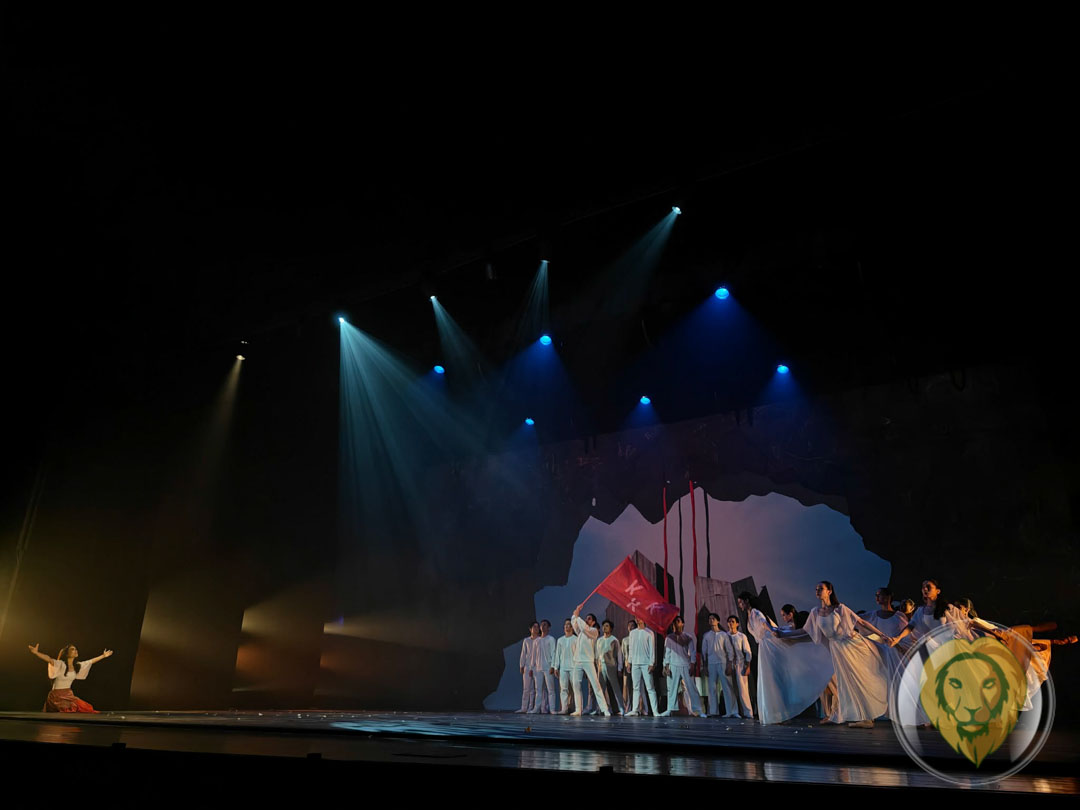
Nearly 30 years after its original premiere, Philippine Ballet Theatre (PBT) is bringing back Gener Caringal’s Andres KKK on August 22 and 23, 2026, as part of the company’s 40th anniversary season.
The revival feels particularly timely.
Rather than beginning its milestone season with a familiar classical favorite, PBT chose a distinctly Filipino story—one that looks at Andres Bonifacio, Gregoria “Oryang” de Jesus, and the people surrounding them through the emotional language of dance.
And this time, a new generation of dancers is carrying the weight of the story.
The role of Andres Bonifacio will be shared by Mathew Davo and Dominador Delmo, giving audiences two different interpretations of the revolutionary leader.

For Davo, the role is a return.
He previously portrayed Bonifacio during PBT’s international tour in 2019, making this revival another opportunity to reconnect with a character he has already inhabited onstage.
Delmo, meanwhile, takes on the role with a strong sense of responsibility.
Preparing to become Bonifacio required more than learning choreography. He immersed himself in the hero’s life and history while undertaking the physical preparation necessary to portray a character whose story demands both strength and emotional depth.
On stage, Bonifacio is not simply the familiar revolutionary figure from history lessons.
He is a man confronted by hardship, relationships, difficult choices, and an uncertain future.
That human dimension is one of the strongest elements of Caringal’s interpretation.
Caringal’s Andres KKK does not present Bonifacio as an invincible figure.
Instead, the production explores the person behind the historical image—a man shaped by poverty and suffering, but also driven by compassion and an unwavering belief in his countrymen.
His power comes not from being separated from ordinary Filipinos but from being one of them.
That perspective gives the dancers an enormous amount to work with.
@lionheartv Andres KKK Live is set to take the stage at the Proscenium Theater on August 22 and 23, bringing a historic story to life through dance, music, and theater. Following its full dress rehearsal, the highly anticipated production is ready to showcase powerful performances and compelling storytelling, offering audiences a striking theatrical experience. #AndresKKKBalletLive #AndresKKK #ProsceniumTheater #LionhearTV #Rawrnation ♬ Epic History – Space Kitchen
The physicality of ballet allows Bonifacio’s internal struggles to become visible. Tension, determination, fear, tenderness, and sacrifice can all be communicated through movement, turning historical events into something audiences can experience rather than simply learn.
With a libretto by Lilia Quindoza Santiago and an original score by Jesse Lucas, the production combines storytelling, choreography, and music to create its own interpretation of the Philippine Revolution.
While Bonifacio remains at the heart of the production, Gregoria “Oryang” de Jesus gives the story another emotional perspective.
Sophia Tiangco and Jessa Tangalin alternate in the role, bringing their own interpretations to one of the most important women in Bonifacio’s life.
For Tiangco, Oryang’s story connects strongly with Bonifacio’s message of unity.
That idea becomes particularly resonant in a time when Filipinos can find themselves divided by different opinions and circumstances. Her portrayal invites audiences to consider the strength that can come from standing together.

Tangalin approaches Oryang through another powerful theme: sacrifice.
Her character carries the emotional consequences of a revolution that is not experienced solely through battles and political decisions. There is also the pain of losing people, dreams, and a sense of security.
Through Oryang, the production allows audiences to see the revolution from a deeply personal perspective.
The revival also carries a personal significance for PBT Artistic Director Ronilo Jaynario.
Jaynario portrayed Bonifacio when Andres KKK first premiered in 1996.
Almost three decades later, he now returns to the production from a different position—guiding a new generation of dancers as they take on the characters he once performed.
For Jaynario, the ballet is not merely a historical retelling.
It is a tribute to the struggles of Filipinos.
That philosophy is reflected in the production’s approach to Bonifacio. Rather than placing him on an unreachable pedestal, Andres KKK presents him as someone whose greatest strength came from his connection with ordinary people.
The revolutionary leader becomes a symbol of what people can accomplish when they share a common purpose.
There is a reason PBT chose to bring back Andres KKK now.
The production arrives at a time when conversations about leadership, unity, national identity, and the need for meaningful change remain part of everyday Filipino life.
But the ballet does not simply ask audiences to look backward.
It also asks them to look at the present.
What does courage look like today?
What does serving others actually require?

And if Filipinos continue to look for heroes, what responsibility belongs to ordinary citizens themselves?
Those questions make the revival more than an anniversary presentation.
It becomes a conversation between Philippine history and the audience sitting inside the theater.
Perhaps the most compelling part of experiencing Andres KKK is seeing how much can be communicated without relying on conventional dialogue.
A dancer’s movement can suggest resistance.
A pause can communicate grief.
A physical confrontation can capture the tension of a revolution.
A partnership between dancers can reveal love, trust, or sacrifice.

The result is a different way of encountering Bonifacio’s story—one that appeals not only to audiences familiar with Philippine history but also to younger viewers who may be seeing the story through an entirely new medium.
For PBT, that is an important part of keeping the work alive.
The ballet may have been created nearly three decades ago, but its themes continue to find relevance because the questions at its center remain universal.
PBT’s 40th anniversary could have been an occasion simply to celebrate the company’s history.
Instead, the company is using the milestone to revisit a production that is deeply connected to Philippine identity.
Andres KKK carries the legacy of Caringal, Santiago, and Lucas, but it is now being interpreted by artists who bring their own experiences and perspectives to the work.
Davo and Delmo give Bonifacio two distinct identities on stage.
Tiangco and Tangalin bring Oryang’s story into sharper focus.

And Jaynario, having once danced the title role himself, now helps guide the production from the perspective of an artistic director.
Together, they create a bridge between the ballet’s past and present.
When the lights come up at Rockwell Proscenium Theater, audiences will not simply be watching the story of a national hero.
They will be watching dancers attempt to understand the people behind the history.
That may be the most powerful reason to see Andres KKK.
Bonifacio is remembered for his courage, but the ballet also asks audiences to remember his humanity.
Oryang is remembered alongside him, but her story reminds us that heroism also carries personal costs.
And the revolution itself becomes more than a chapter in Philippine history—it becomes a reflection on unity, sacrifice, and collective responsibility.
For two performances on August 22 and 23, Philippine Ballet Theatre will bring that story back to life.

Nearly 30 years after its first bow, Andres KKK returns with new dancers, renewed purpose, and a question that remains as relevant as ever:
If we are still waiting for heroes, perhaps it is time to ask what we can do to become one ourselves. (with reports from Shania Haluber)
