

What happens when life takes away almost everything you thought was yours?
A job disappears. A loved one dies. A dream gets derailed. Then, while you’re still trying to figure out how to put yourself back together, you’re suddenly entrusted with a child who now depends on you.

‘Life After You’ builds its story around that uncomfortable reality: life can change without asking whether you’re ready.
And while the film doesn’t always handle its many ideas as smoothly as it could, its strong ensemble—led by Bela Padilla and Maricel Soriano—gives the movie the heart it needs to survive its uneven storytelling.
Bela Padilla still holds the title of being ‘mapanakit’. This time, however, she doesn’t need a complicated love story to hurt you.
The pain in ‘Life After You’ comes from losing the future you imagined for yourself and being forced to construct another one from circumstances you never chose.
Padilla is particularly effective because of the carefree and rebellious energy she naturally brings to her character. You understand why losing her independence and her dreams would be devastating. Her spontaneity also makes many of her scenes feel natural rather than overly manufactured for drama. But this is also where one of my frustrations with the movie begins.
With an actress as dramatically capable as Padilla, I expected the material to hurt more.
The film creates several situations that could have resulted in powerful confrontations, yet it often pulls back just when the emotions could have exploded. There is pain, certainly, but the screenplay doesn’t always squeeze everything it can from it.
Ironically, the movie sometimes works better when it stops trying to make us cry.
Padilla and the rest of the cast are genuinely funny, and the comedy provides some of the film’s most enjoyable moments.
Ryza Cenon’s appearance may be limited, but her chemistry with Padilla is immediately believable.

Their line delivery has the casual rhythm of siblings who have known each other’s habits for years. Nothing about their interaction feels forced, which makes it unfortunate that Cenon’s screen time is so short.
In fact, their chemistry is strong enough to make me want another film centered entirely on the two of them—whether as sisters or best friends.
More time with Cenon’s character could have also strengthened an important part of the screenplay. Since the child becomes a major element of the story, the film could have better established the family circumstances surrounding the child, including why Padilla’s character knows so little about the other side of the family.
The movie eventually asks us to invest heavily in this situation, so stronger groundwork would have made the succeeding conflict more convincing.
Then Maricel Soriano enters a scene, and you remember what genuine star presence looks like. Luha man o tawanan, she still knows how to make a moment register.
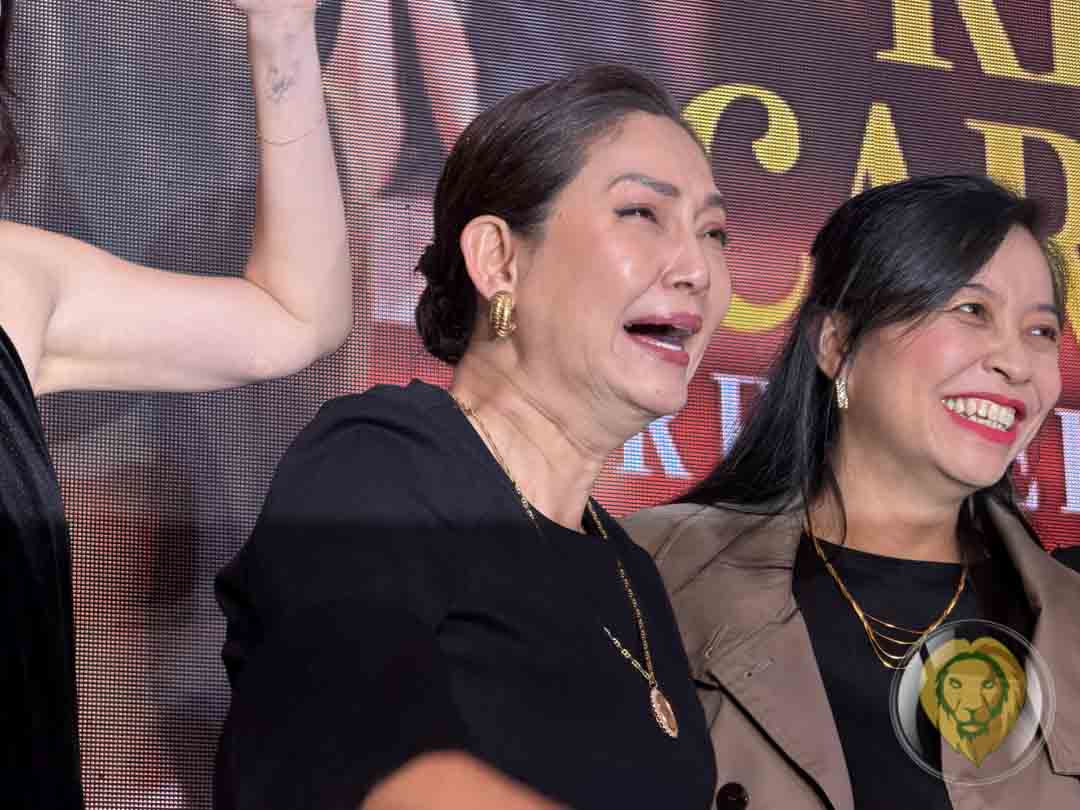
There are portions where Soriano seems to struggle slightly, but even then, the brilliance of the Diamond Star remains visible. She possesses the kind of presence that can make an ordinary scene suddenly feel important simply because she’s in it.
And yes, kaya pa rin niyang magpakilig. Gardo Versoza’s role is fairly easy to figure out from his first appearance. I already had an idea where his character was heading, and the succeeding scenes proved me right. But predictability doesn’t hurt their chemistry.
Soriano and Versoza produce a different kind of kilig—warmer, more mature and refreshingly understated. Versoza also knows not to overpower the story. His character is genuinely supporting rather than an unnecessary romantic subplot trying to steal the movie. Hawak pa rin ni Maricel Soriano ang “Diamante.”
Marlo Mortel is a good actor, and his actual age isn’t necessarily inappropriate for the role. Visually, however, he still looks younger.

Even with facial hair, that baby-faced quality remains, and there were moments when I had to convince myself that he fit the character’s supposed stage in life.
That’s not really a criticism of his acting. Mortel commits to the role. It’s more of a casting perception that occasionally becomes distracting.
Krissha Viaje, meanwhile, unfortunately doesn’t leave the same impression. I understand that she’s playing a supporting character, but the role doesn’t have enough bite. I kept waiting for the character to make a stronger impact, yet she never fully registers.

There’s even a funny moment where she is supposedly present in the scene but is positioned in such a way that her face is obscured. It unintentionally sums up the problem: the character is there, but you barely feel her.
Two supporting performances deserve mention.
Andrea Babierra may not have one of the biggest roles, but she made an impression on me. Her prim-and-proper demeanor works naturally for her character as a teacher. You don’t simply see Andrea playing a teacher—you actually believe that this woman could walk into a classroom and teach.
MJ Cayabyab, meanwhile, brings one of the movie’s most pleasant energies. Nakaka-good vibes siyang panoorin. He captures the personality of that close friend who will tease you mercilessly one minute and help you without hesitation the next. It’s a familiar friendship dynamic, but he makes it feel genuine.
These smaller performances matter because Life After You is ultimately at its best when its characters simply interact with one another.
The actors are the life of ‘Life After You’. That’s really the movie’s saving grace.
When the screenplay becomes messy, they keep it grounded. When the drama isn’t strong enough, they find humor. When certain developments feel too convenient, the performers provide enough sincerity to make you stay invested.

The film has plenty of ingredients for an emotionally devastating family drama, but it doesn’t always know how to maximize them. Even its use of ‘Habang May Buhay’ illustrates this problem. It’s a beautiful and extremely dramatic song. On paper, it sounds perfect for a movie dealing with loss, family and perseverance.
But in execution, the song sometimes feels emotionally mismatched with what is happening onscreen. The music is telling you that something monumental is occurring while the scene itself doesn’t always reach the same emotional intensity.
The result is a soundtrack occasionally doing more dramatic work than the screenplay.
The ending also wasn’t what I expected. Without spoiling anything, I thought ‘Life After You’ was moving toward something more confrontational. There are conflicts that seem ready to explode and conversations that appear destined to provide emotional closure. Instead, the film eventually chooses a more conventional resolution.
It’s not necessarily a bad ending. It just feels safer than the story preceding it.
I wanted the characters to confront certain realities more directly. I wanted the film to close some of its emotional threads through dialogue and confrontation rather than simply moving toward the kind of ending audiences may already expect. Still, what remains after the credits is surprisingly hopeful.
‘Life After You’ isn’t really about romance, even if it contains moments of kilig. It’s about what remains when your plans disappear.
It’s about friendship coming from unexpected people. It’s about becoming responsible for someone else without necessarily surrendering your own dreams. It’s about allowing people to change their minds instead of permanently judging them according to who they used to be.
And for viewers who approach the story through faith, there’s also the idea of “God’s interruptions”—that what initially looks like an inconvenience or derailment may eventually become a redirection.
That message could easily become preachy, but the film largely avoids becoming cringey about it.
Instead, it leaves us with a simple thought: your original dream may disappear, but that doesn’t mean you’re no longer allowed to dream.
‘Life After You’ isn’t perfect. Its storytelling gets messy, some supporting characters need more development, its dramatic potential isn’t completely exhausted, and the ending plays things safer than I would have preferred.
But there’s also a lot to like.
It’s funny when it needs to be, touching without constantly begging for tears, and powered by performers who understand how to bring warmth to imperfect material.
Bela Padilla remains effortlessly relatable. Ryza Cenon makes you wish she had more screen time. Gardo Versoza understands the value of restraint. Andrea Babierra and MJ Cayabyab make smaller roles memorable.
And Maricel Soriano? The Diamond Star still shines.
Ultimately, ‘Life After You’ understands that unexpected circumstances can completely derail the journey you’ve planned.
But life isn’t defined only by what happens to you.
It’s also defined by what you decide to do afterward.
Because when everything changes, life can still be patterned after you.