

At the Improv Art Gallery, changing skies take on a deeper meaning as artist Ana Knicolai Mendoza invites audiences into a whimsical world shaped by emotions, memories, and personal experience through her solo exhibition, Nikolai’s Ever-Changing Sky.
The exhibition also marks the launch of Mendoza’s first book of the same title, bringing together two forms of storytelling—visual art and literature—to explore mental health in a way that remains accessible to both children and adults.
Written by Hazel Pascua and illustrated by Mendoza, Nikolai’s Ever-Changing Sky uses one of the most familiar sights in everyday life—the sky—to explain something that can sometimes be much harder to put into words: changing emotions.
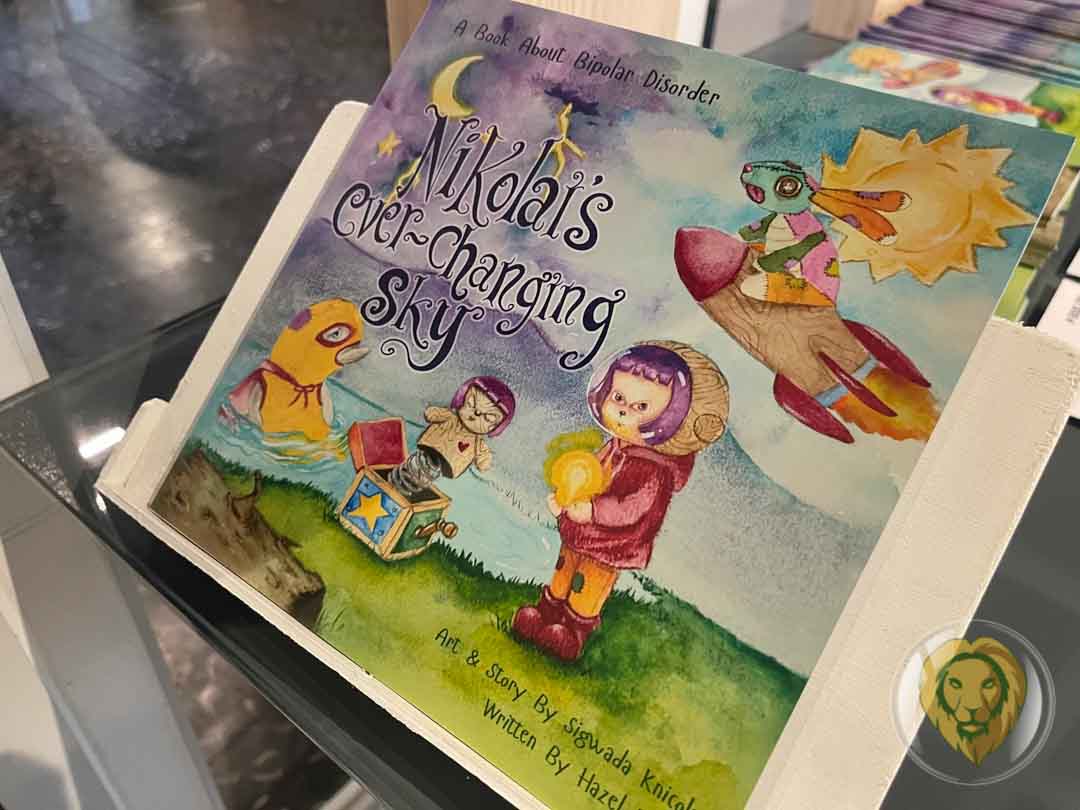
Clouds, sunshine, and the different conditions in between become a gentle metaphor for emotional highs and lows. Instead of presenting these experiences through complicated terminology, the book and exhibition translate them into images and stories that audiences can more easily understand.
The concept is particularly personal for Mendoza, whose lived experience with bipolar disorder serves as an important source of inspiration for the exhibition.
Rather than separating the difficult moments from the hopeful ones, Nikolai’s Ever-Changing Sky brings them together as part of a larger emotional journey.
At the center of that journey is Mendoza’s signature character, #TheWoodenAstronaut, which serves as part of the imaginative universe surrounding the exhibition.
Through playful artworks and storytelling, Mendoza transforms personal experiences into a visual world where emotional changes become something that can be explored rather than feared.
The result is an exhibition that does not rely solely on the traditional gallery experience. Its connection to the picture book gives the artworks another layer of storytelling, allowing visitors to encounter the themes of the exhibition through both images and narrative.
That combination also makes the subject of mental health feel less intimidating.
For younger audiences, the changing-sky metaphor provides a simple way to recognize that feelings can shift from one moment to another. For adults, the same imagery can offer a more personal reflection on emotional experiences, empathy, and the importance of understanding what others may be going through.
The exhibition explores themes of mental health, empathy, self-discovery, resilience, and hope, with Mendoza drawing from her own experiences to create a space where these subjects can be approached with greater openness.

At the Improv Art Gallery, the artworks become part of a larger conversation—one that encourages visitors to look beyond the surface of emotions and consider the experiences that may exist behind them.
The presence of The Wooden Astronaut adds a playful dimension to that conversation. Rather than presenting mental health through a purely serious or clinical lens, Mendoza’s visual language allows the subject to exist within an imaginative world.
It is an approach that reflects the central idea of Nikolai’s Ever-Changing Sky: understanding does not always have to begin with complicated explanations.
Sometimes, it can begin with a picture.
Sometimes, it can begin with a story.

The exhibition’s connection to Mendoza’s first book further strengthens that message. Written by Pascua and brought to life through Mendoza’s illustrations, the picture book provides a narrative entry point into the same themes explored through the artworks.
For children, the story offers a gentle way of understanding emotions. For adults, it can serve as a reminder that emotional changes are part of being human and that people experiencing them deserve understanding rather than judgment.
The exhibition also creates an opportunity to challenge the stigma often associated with conversations about mental health.
By placing personal experience alongside playful imagery and accessible storytelling, Mendoza presents mental health as something that can be discussed with compassion and curiosity.
The work does not attempt to make every emotional experience look the same. Instead, it acknowledges the changing nature of feelings and the different emotional seasons people may experience.
That sense of movement is reflected in the exhibition’s central metaphor. Like weather, emotions can shift. A cloudy moment can give way to sunshine, while a bright day can change unexpectedly.
What remains constant is the need for understanding.
For Mendoza, transforming her lived experience into art and a children’s book also allows a deeply personal subject to reach a wider audience.
Together with Pascua’s writing, her illustrations create a bridge between personal storytelling and a broader conversation about empathy and mental health.
Nikolai’s Ever-Changing Sky ultimately offers a different way of entering that conversation. It does not begin with diagnoses, statistics, or complicated language. Instead, it begins with familiar images, an imaginative character, and the simple idea that feelings can change.

At the Improv Art Gallery, those ideas unfold across Mendoza’s artworks and the pages of her first book, creating a space where children and adults can pause, look, read, and reflect.
And much like the sky that inspired its central metaphor, the exhibition leaves room for every kind of emotional weather—cloudy, bright, uncertain, hopeful, and everything in between.
At its heart, Nikolai’s Ever-Changing Sky offers a gentle reminder that every emotional season deserves understanding, compassion, and hope. (with reports from Lau Balocos)