
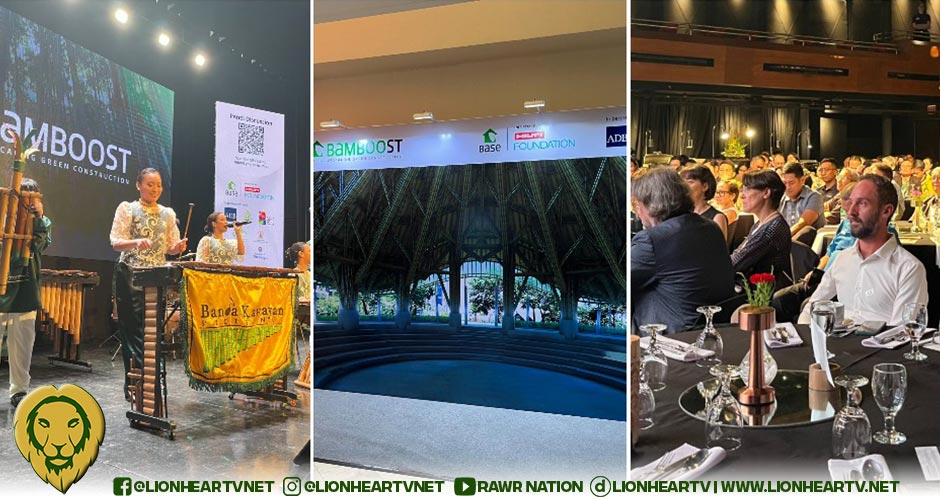
As the construction industry continues to explore more sustainable building materials, bamboo is gaining attention for its potential to bridge architectural innovation, structural engineering, and environmentally conscious design. These possibilities took center stage at the 5th Annual Bamboost Forum, which brought together professionals, researchers, architects, educators, and advocates to examine how bamboo can contribute to the future of construction.
Held on September 30, 2026, at the Globe Auditorium of the BGC Arts Center in Taguig City, the forum carried the theme “Bamboo Unboxed: Designing the Future of Construction.” The gathering featured discussions on bamboo architecture, engineered bamboo systems, construction value chains, international projects, scientific research, and the development of standards for unconventional building materials.

The program highlighted the growing breadth of work surrounding bamboo, moving beyond its familiar use in traditional structures and examining its potential in contemporary architectural and engineering applications.
Through presentations from local and international experts, the forum explored the opportunities and challenges involved in expanding bamboo construction. Its discussions covered not only the material’s design possibilities but also the technical research, industry coordination, and regulatory frameworks needed to support its wider adoption.
The 5th Bamboost Forum opened with remarks from Maricen Jalandoni, president of BASE Bahay Foundation and Asia Liaison of the Hilti Foundation.
The opening set the stage for a program focused on understanding bamboo from several perspectives, including its place in construction, its potential for architectural innovation, and the research required to establish its suitability for structural applications.

Although bamboo has long been used in building and design, its application in contemporary construction raises questions that extend beyond aesthetics and material availability. Construction professionals must consider how bamboo is processed, how structural components are connected, how buildings perform under different conditions, and how standards can support safe and reliable use.
These considerations formed part of the wider conversation at the forum, where speakers approached bamboo through the interconnected fields of construction practice, engineering, architecture, research, and policy.
The event also reflected the importance of collaboration in developing a stronger bamboo ecosystem. Expanding the material’s role in construction requires contributions from multiple sectors, including researchers who study its physical properties, architects who explore its design potential, engineers who assess its structural behavior, and industry stakeholders who work across the value chain.
Under the theme “Bamboo Unboxed,” the forum provided a platform for these perspectives to come together around the question of how bamboo can be developed and applied in the built environment.
One of the forum’s first major discussions addressed the practical challenges and opportunities involved in bringing bamboo construction to a wider scale.
Engr. Luis Felipe Lopez, general manager of BASE Bahay Foundation, led the session titled “Addressing Bamboo Construction Barriers: Value Chain, Construction, Research, and Innovation.”
The discussion examined several areas that influence the development of bamboo construction, from the value chain supporting the material to construction practices, research, and innovation.
A construction material’s potential depends on more than its physical characteristics. Its availability, processing, supply arrangements, technical development, and integration into established building practices can also influence how it is used in projects.

For bamboo, strengthening the value chain is an important part of the broader conversation about expanding its applications. The material must be considered within a system that connects production and processing with design, engineering, construction, and the requirements of the finished structure.
Research and innovation also play a role in addressing the technical questions associated with bamboo-based building systems. As interest in engineered applications grows, scientific and engineering work becomes increasingly important in understanding material performance and supporting its use in construction.
By bringing these concerns together in one discussion, the session positioned bamboo construction as a multidisciplinary undertaking that requires coordination between research and industry practice.
The session also provided context for the forum’s wider focus: unlocking bamboo’s potential involves identifying not only what the material can offer, but also what must be addressed to support its practical application.

The forum broadened its perspective through a presentation by Aoife O’Sullivan, co-founder and director of Una Gama, who discussed the bamboo value chain and projects in Sri Lanka.
The presentation introduced an international perspective to the event’s discussions, extending the conversation beyond local construction practices and highlighting work involving bamboo in another national context.
Examining projects across different countries can help broaden understanding of how bamboo is being approached in various settings. The material’s role in construction is connected to the conditions in which it is sourced, processed, designed, and used, making regional experiences a relevant part of the wider discussion.
O’Sullivan’s presentation on Sri Lanka’s bamboo value chain and projects complemented the earlier session on construction barriers by adding an international dimension to the topic.

Together, the sessions reflected the forum’s interest in examining bamboo as part of a broader ecosystem, rather than treating it solely as an alternative building material. The value chain, project development, technical research, and construction practices all contribute to how the material may be applied in different contexts.
The international perspective also reinforced the value of knowledge exchange among professionals and organizations working on bamboo-related initiatives.
Architecture took the spotlight in a session led by Jed De Guzman, chair of the UAP Philippine Bamboo Project, who presented on bamboo architecture.
The presentation focused on the possibilities of using bamboo in architectural design, adding a design-oriented perspective to the forum’s discussions of construction and engineering.
Material selection can influence the appearance, function, and structural approach of a building. For architects, exploring bamboo involves considering how its characteristics can be incorporated into a design while responding to the requirements of a project.

The subject also expands the conversation around sustainable construction by asking how materials can be used in ways that connect design objectives with broader environmental considerations.
Bamboo architecture therefore sits at the intersection of creative exploration and technical application. While design can reveal new possibilities for the material, successful implementation also depends on an understanding of construction methods and structural requirements.
De Guzman’s presentation formed part of the forum’s wider effort to examine bamboo from different professional perspectives. By placing architecture alongside discussions of research, engineering, and standards, the program highlighted the relationship between design innovation and the technical work needed to support it.
The technical side of bamboo construction was explored further in a presentation by Andry Widyiwiyatnoko, a lecturer at Institut Teknologi Bandung.

Widyiwiyatnoko discussed connection behavior and the structural reliability of engineered bamboo systems, focusing on issues relevant to the material’s use in scalable construction.
Connections are an important consideration in structural systems because individual components must work together to support the intended design. In engineered bamboo construction, understanding how connections behave is part of evaluating the reliability of the overall system.
The subject is particularly relevant when considering applications beyond small or traditional structures. Scaling a construction system requires attention to how its components perform, how they are assembled, and whether the system can meet the demands of its intended use.
Engineered bamboo also brings the material into a more technical discussion about structural design. Its application depends on research and engineering methods that help establish how bamboo components behave under different conditions.

Widyiwiyatnoko’s session complemented the architectural presentation by addressing the structural considerations behind bamboo-based design. Together, the two discussions illustrated how design ambitions and engineering knowledge must work alongside one another when developing new construction approaches.
The focus on connection behavior and structural reliability also connected with the forum’s earlier discussion of construction barriers, reinforcing the importance of research and technical development in expanding bamboo’s role in the built environment.
The program continued with presentations on international bamboo projects and research, further broadening the range of approaches considered during the forum.
Diana Barrera-Salazar of Bauhaus Earth presented the Bambu Baru Project, bringing a project-based perspective to the event’s discussions.
The presentation formed part of the forum’s examination of bamboo-related initiatives and the ways projects can contribute to a wider understanding of the material’s possibilities.

Research was also a central subject in a presentation by Luisa Molari, assistant professor at the University of Bologna, who discussed the mechanical characterization and constitutive modeling of bamboo for structural applications.
Mechanical characterization and constitutive modeling are relevant to understanding how a material behaves and how that behavior can be represented for engineering analysis. For structural applications, this type of research can contribute to the technical knowledge used in assessing materials and informing design decisions.
The subject connects scientific investigation with practical construction requirements. Before a material can be incorporated confidently into structural systems, engineers need appropriate ways to understand and describe its mechanical behavior.
Molari’s presentation added a research-focused dimension to the forum, complementing the sessions on construction barriers, architecture, and engineered bamboo connections.

Together, these discussions illustrated the range of expertise involved in advancing bamboo construction, from project development and design to the scientific study of material properties.
One of the forum’s key topics was the development of standards for unconventional building materials.
Kent Harries, professor at the University of Pittsburgh, discussed the challenges and opportunities involved in developing codes and standards for “nonconventional” materials.
The subject addressed an important consideration in the wider adoption of alternative construction materials: technical innovation must be accompanied by appropriate methods for evaluating and applying those materials in the built environment.

Standards and building codes provide frameworks that guide construction practices and help establish requirements for materials and building systems. For materials that are less conventional within established construction frameworks, developing suitable standards can present distinct challenges.
Bamboo’s use in structural applications makes this discussion particularly relevant. Architects and engineers need reliable technical information, while construction stakeholders must understand the requirements that apply to the systems they design and build.
The development of codes and standards is therefore connected to the broader challenge of moving from experimentation and research toward wider practical use.
Harries’ presentation placed this issue within the forum’s larger discussion of bamboo’s future. While innovation can introduce new ways to use a material, its integration into construction also depends on the frameworks through which its performance and applications are assessed.
The session highlighted the importance of considering technical research and standards development alongside architectural creativity and engineering innovation when exploring alternative materials for the built environment.

The forum also featured the Indayog Project, presented by Carol Pobre, exhibit manager of the BGC Arts Foundation.
The presentation introduced another dimension of bamboo-related work, complementing the forum’s emphasis on construction, architecture, and engineering with a focus on design and creative applications.
Including the project in the program reflected the range of ways bamboo can enter conversations about the built environment and material innovation. Its relevance extends across professional disciplines, with different practitioners exploring the material through design, research, construction, and other applications.
The Indayog Project’s place in the program also connected the forum’s technical discussions with the creative environment of the BGC Arts Center, where the event was held.
Although the supplied event information did not detail the project’s individual works or technical features, its presentation formed part of the forum’s broader exploration of bamboo-related design and applications.

The day concluded with a panel discussion that brought the speakers together for a broader exchange of ideas, followed by the closing program.
The panel served as the final shared discussion in a program that had approached bamboo from several directions, including construction value chains, international projects, architectural design, structural engineering, material research, standards, and creative applications.
The range of subjects covered during the forum underscored the interconnected nature of bamboo development. Questions about structural performance cannot be separated from research, just as architectural possibilities must be considered alongside construction methods and applicable standards.
Similarly, strengthening the bamboo value chain involves looking beyond the material itself to the different participants and processes that contribute to its use.

By bringing together speakers with expertise in different fields, the forum created an opportunity to consider these topics within the same conversation.
The closing panel and program marked the end of the event’s discussions, bringing the day’s presentations together under the shared theme of designing the future of construction.
The 5th Annual Bamboost Forum demonstrated the breadth of issues involved in considering bamboo for contemporary construction. Its program moved from practical barriers and international value chains to architecture, engineered systems, scientific research, standards development, and creative projects.
Rather than presenting bamboo as a simple solution to the construction industry’s sustainability challenges, the forum examined the range of work required to better understand and develop its applications.
The discussions highlighted the importance of connecting architectural vision with engineering knowledge, research with construction practice, and material innovation with the development of appropriate standards.
They also underscored the role of collaboration in building a stronger ecosystem around bamboo. Professionals working in different disciplines bring distinct expertise to the material’s development, and their contributions can help address different aspects of its use in construction.
Under the theme “Bamboo Unboxed: Designing the Future of Construction,” the forum opened a wider conversation about bamboo’s place in a changing built environment.
Its central message was that unlocking the material’s potential requires more than recognizing its possibilities. It calls for continued research, technical understanding, innovation, and cooperation among the people and organizations working to advance sustainable construction. (with reports from Aljay Nevarez)