
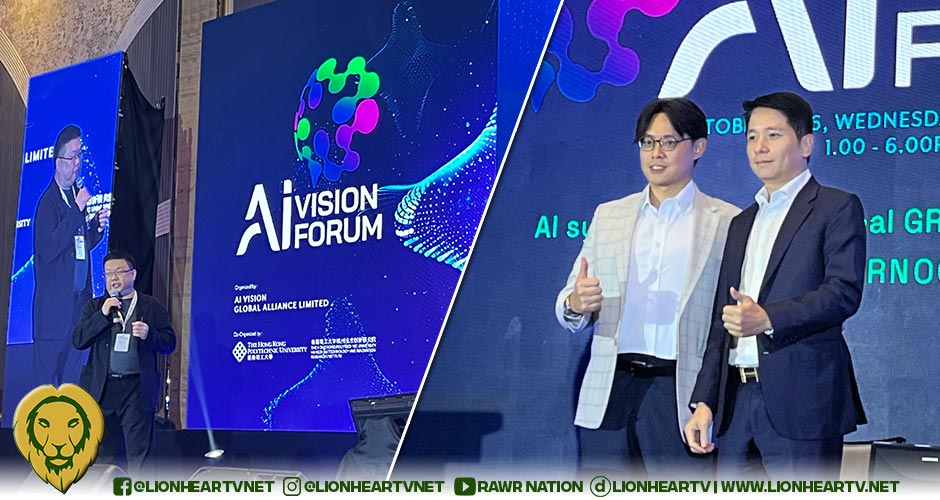
Artificial intelligence took center stage at Shangri-La The Fort Manila in Bonifacio Global City, Taguig, on October 28, 2026, as AI Vision Forum Manila 2026 brought together more than 500 business leaders, enterprise decision-makers, technology professionals, and public-sector representatives to explore how AI systems can support business growth, operational efficiency, and digital transformation.
Organized by AI Vision Global Alliance Limited, with The Hong Kong Polytechnic University Hangzhou Technology and Innovation Research Institute as co-organizer, the forum gathered eight AI platforms and eight cloud partners for live demonstrations, expert presentations, cloud partner keynotes, a technology panel discussion, and executive business matchmaking.
Under the theme “AI systems that drive real growth, efficiency and scale,” the event focused on AI applications described by the organizers as already operational and available for businesses to adopt. The program covered a range of business functions, including website development, search engine optimization, content production, customer service, sales and marketing, specialized claims management, and the cloud infrastructure needed to support growing digital operations.
The forum’s focus reflected a shift in the business conversation around artificial intelligence. While companies have increasingly experimented with individual AI tools, integrating these applications into established workflows remains a separate challenge. AI Vision Forum Manila 2026 sought to demonstrate how different systems could support specific business needs, with technology providers available to discuss implementation requirements directly with prospective users.
The Philippine Chamber of Commerce and Industry (PCCI) and the Federation of Filipino-Chinese Chambers of Commerce and Industry, Inc. (FFCCCII) attended the event, extending the discussion to the broader Philippine business community.
The forum centered on the practical question of how businesses can move beyond testing AI applications and begin incorporating them into daily operations.

Companies may use separate systems for website management, marketing, customer inquiries, sales, and data management. Coordinating these functions can require significant time and resources, particularly for smaller organizations with limited personnel and technical capacity.
The platforms presented at the Manila event addressed different parts of this process. Some were designed to help users build digital products with AI agents, while others focused on attracting online traffic, creating multilingual content, managing customer conversations, or supporting specialized professional workflows.
The organizers positioned these systems as potential tools for companies seeking to improve their capabilities without having to develop every component internally.
For Philippine businesses, the discussion carries particular relevance. The country’s service economy, international outsourcing industry, and continuing digital transformation efforts have created demand for technologies that can help organizations serve customers more efficiently, including those based overseas.
Language requirements are also an important consideration. Businesses serving local and international markets may need to communicate in English, Filipino, and other languages, depending on their customers and operations. AI adoption must therefore account for the language capabilities of a chosen system, its compatibility with existing workflows, and the handling of personal information under applicable regulations, including the Data Privacy Act of 2012.
The event also presented AI as a way to increase the capacity of existing teams. Rather than focusing exclusively on workforce reduction, the discussions highlighted how technology could help employees manage more tasks, handle larger volumes of information, and support business expansion.

The forum featured eight platforms presented on equal terms, each addressing different needs across the digital business environment. Together, their demonstrations covered product development, online visibility, customer acquisition, communication, and specialized workflow support.
HowOne introduced an AI app-building platform designed around what it calls the “One-Person Company.” Presented by Daniel Chen, Senior Vice President and Product Lead, the platform allows users to describe a product in plain language and use AI agents to help build, launch, and operate it.
The approach is intended to make digital product development more accessible to founders and smaller teams that may not have the resources to maintain a full engineering department.
Traditionally, taking a product idea from concept to launch can involve multiple stages of development and coordination. HowOne’s model aims to bring several of those activities into an AI-supported workflow, allowing a user to describe a concept and have AI agents assist with its execution.
For entrepreneurs and businesses exploring digital services, this type of platform may provide another way to test ideas and develop applications. Its practical value, however, will depend on the nature of the product, the complexity of the requirements, and the level of human oversight needed.
Duck Reels, described in the event materials as a Philippine AI short-drama company, demonstrated its in-house production tool for developing short dramas for its viewing application, DuckVerse.
The live demonstration was led by Professor Peter Ng, Advisor to Duck Reels and Assistant Professor at The Hong Kong Polytechnic University. He was joined by Kalye Tang, Product Partner and Chief Product Operation Officer at DuckVerse.
The tool shows how AI can be incorporated into digital entertainment content development, helping turn a premise into a short drama.
For content teams, AI-assisted production offers a way to explore how parts of the creative workflow can be supported by technology. The demonstration placed content creation alongside the forum’s other business applications, showing how AI tools are being developed for industries beyond conventional office productivity.
A3SEO presented an AI-operated traffic system that builds websites, produces content, and helps convert visitors across more than a dozen languages. The platform was represented by Patwin Ng, Chief Operating Officer of A3 AI LAB.
The presentation addressed the relationship between online visibility and business growth. For organizations that depend on digital channels to reach potential customers, maintaining websites, producing relevant content, and monitoring search performance can require continuous attention.
A3SEO’s system is designed to bring these activities together through an AI-supported process.
Its associated engine, TRXY, was also presented at the forum as an AI SEO intelligence and execution system. According to the event materials, TRXY uses 42 AI agents to monitor website pages, identify and correct issues, and measure the effects of changes.
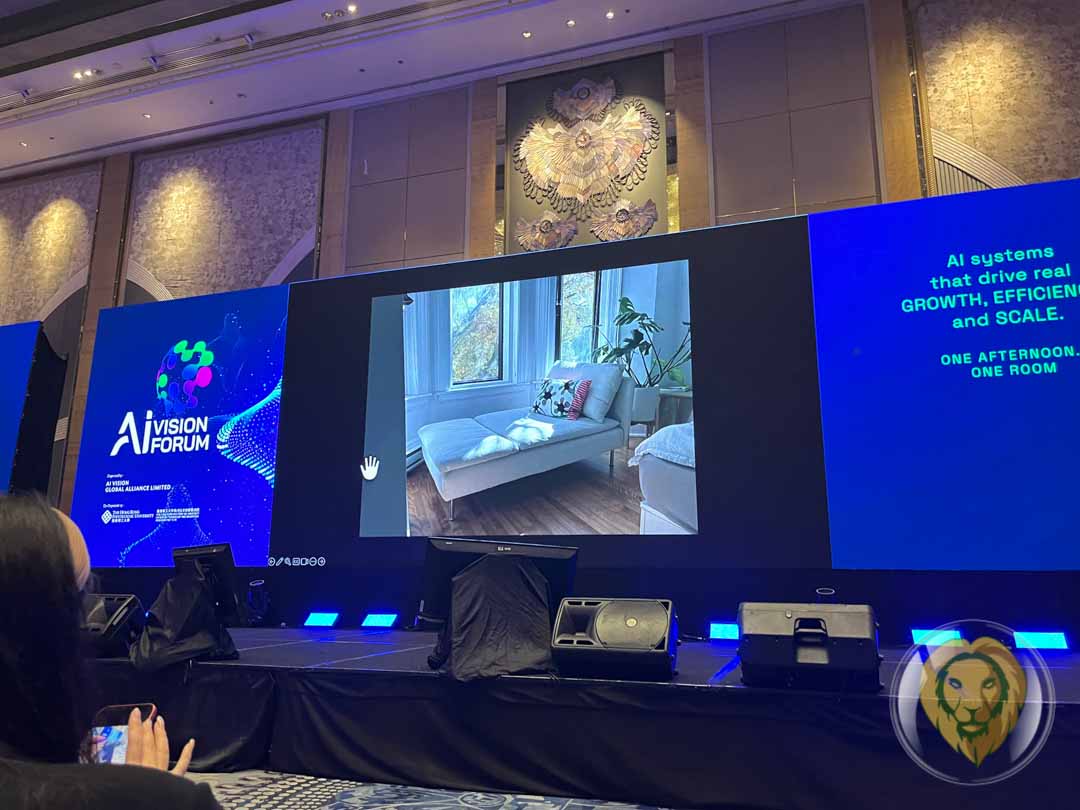
The system works alongside a company’s search engine optimization team, with strategic direction remaining under human oversight. This distinction is important to its stated role: AI agents support monitoring and execution, while the SEO team continues to guide the overall strategy.
For businesses managing extensive websites or serving customers in multiple languages, these systems offer an approach to coordinating repetitive optimization tasks and tracking website performance. The extent of their contribution would depend on the business’s existing digital presence, objectives, and implementation requirements.
R2Y2 presented an AI traffic growth platform intended for businesses, e-commerce brands, and agencies seeking to improve their organic online visibility.
Presented by Alfa Wong, Chief Marketing Officer, the platform helps businesses use information about what their target markets search for to attract organic traffic.
Understanding search demand can help organizations identify the subjects and products potential customers are looking for online. R2Y2 is designed to support that process, connecting market search behavior with efforts to generate relevant website visits.
The platform’s inclusion in the program reflected the forum’s broader emphasis on using AI to support customer acquisition and digital marketing activities.
RunLink presented a platform designed to manage a company’s commercial funnel through a single engine, covering activities from AI-produced multilingual content and media buying to sales conversations in private chat.
The platform was represented by Chu Bo, Executive Partner of RunLink Global.

Its approach focuses on connecting activities that may otherwise be handled by separate teams or tools. Marketing content, advertising, and sales conversations all contribute to how a business attracts prospective customers and moves them toward a purchase or other commercial outcome.
RunLink is designed for businesses serving global markets, according to the event materials. Its emphasis on multilingual content and connected commercial processes reflects the needs of companies reaching audiences across different markets.
The presentation formed part of the forum’s wider examination of how AI can support the transition from generating online interest to engaging potential customers.
Soric presented its approach to identifying, evaluating, and implementing AI solutions suited to individual business needs. The company was represented by Co-Founder Nas Arcayan.
Its CustomerOps system answers calls and brings conversations from WhatsApp, Viber, and Messenger into one place. The system also reviews customer interactions, allowing businesses to centralize communication across several channels.
For organizations that receive inquiries through multiple platforms, managing conversations separately can make it harder to maintain a unified view of customer interactions. A centralized system offers a way to organize those communications and support customer service operations.
Soric’s presentation highlighted customer operations as one area where AI can assist with recurring tasks and information management. For businesses considering such systems, implementation would need to account for their communication channels, service requirements, and the appropriate handling of customer data.
S.H.I.E.L.D. demonstrated an AI system designed for work-injury management and insurance claims teams.

The system estimates expected sick leave, tracks the progress of individual recoveries, and flags unusual patterns for professional review. Qualified professionals retain responsibility for decisions.
Unlike platforms focused primarily on digital marketing or content creation, S.H.I.E.L.D. addresses a specialized workflow in which information must be assessed in the context of individual cases.
Its demonstration illustrated how AI can help organize information and identify patterns that may require further examination. In such applications, human oversight remains essential because the system is intended to support professional judgment rather than replace the people responsible for evaluating claims and making decisions.
The platform’s inclusion broadened the scope of the forum, demonstrating how AI applications can be directed toward specific operational needs beyond conventional business automation.
While AI applications formed a central part of the program, the forum also examined the infrastructure required to operate them reliably.
Cloud services and supporting technologies can influence how businesses deploy applications, manage data, monitor performance, and respond to changing demand. For AI platforms, these considerations become particularly important as usage grows and systems move from development into production.
Two technology providers presented their services during the event’s keynote segment: TiDB and TrueWatch.

TiDB, powered by PingCAP, presented a distributed SQL database designed for AI and real-time workloads. The platform combines transactional data, vector search, and analytics in one system.
Predee “PD” Kajonpai, Senior Solution Architect, represented TiDB at the forum.
The presentation addressed the role of database technology in supporting applications that need to work with operational data and AI-related workloads. As businesses develop digital products and connect more processes, the systems storing and processing their information become an important part of the overall technology environment.
TrueWatch presented a unified observability platform designed to monitor systems ranging from cloud infrastructure to large language model applications operating in production.
The company was represented by Choy Dian Chun, Pre-Sales Solutions Architect.
Observability tools help organizations monitor the behavior and performance of their technology systems. In an environment where applications rely on several connected services, monitoring can help teams understand how their systems are operating and identify issues that require attention.
TrueWatch’s presentation placed operational monitoring alongside database technology as part of the infrastructure needed to support AI applications after deployment.
The program continued with a Cloud Tech Panel Discussion involving representatives from Alibaba Cloud, Cloudflare, Huawei Cloud, and Oracle.
The panelists were Gary Huang, Solution Architect at Alibaba Cloud; Brian Han, Manager, Solution Engineering, iGaming and Web3 at Cloudflare Asia Pacific; Tey Kou Fuh, Regional Sales Director at Oracle; and Romulo Gapuz Jr., Chief Technology Officer of Huawei Cloud Philippines.
The discussion brought cloud infrastructure providers into the same program as AI platform developers and business decision-makers. This gave attendees an opportunity to consider the infrastructure requirements that accompany the adoption and expansion of AI-powered systems.
For businesses, choosing an AI application is only one part of deployment. Organizations also need to assess the infrastructure required to support it, how it will interact with existing systems, and how capacity can be managed as usage changes.
The forum highlighted the potential of cloud services to help businesses scale according to demand rather than committing to all their future infrastructure requirements in advance. Actual costs, however, vary according to a company’s needs and the services it selects.
The cloud presentations and panel discussion also complemented the demonstrations by giving participants access to providers responsible for the underlying technologies that can support AI applications.
Beyond the presentations, executive business matchmaking connected technology providers with corporate decision-makers throughout the afternoon.
The exhibition area allowed attendees to discuss their requirements directly with the teams behind the platforms. Questions about pricing and deployment timelines were handled through these conversations rather than the stage program, with providers available to review individual business needs and arrange follow-up discussions.
The arrangement recognized that companies differ in their operational processes, technical resources, and business objectives. A system suitable for one organization may require different configurations or levels of integration for another.
By bringing technology providers and prospective business users together, the forum created opportunities to discuss how the systems presented could fit particular operations.
The organizers also recommended a measured approach to AI adoption: businesses should begin with a clearly defined area, such as customer inquiries, document processing, or marketing tasks, and expand after results can be measured.

Starting with a specific use case gives organizations an opportunity to assess whether a system addresses the problem it was selected to solve before extending its use to additional functions.
The forum’s discussions also underscored the importance of considering local business requirements when evaluating AI systems.
Philippine organizations serving domestic and international customers may need tools that support multiple languages, work within existing processes, and handle customer information appropriately. These requirements can affect the suitability of a platform and the way it should be implemented.
Compliance with the Data Privacy Act of 2012 is one consideration for businesses using systems that process personal information. Organizations need to assess their responsibilities for collecting, using, and protecting data when introducing new technology into customer service, marketing, and other business functions.
Cost and deployment timelines are also important factors, particularly for small and medium-sized enterprises. Cloud-based systems may offer ways to access technology without building all the necessary infrastructure in advance, but the actual investment depends on the selected platform, usage, and implementation requirements.
The event’s emphasis on operational systems encouraged businesses to assess AI in terms of defined needs and measurable outcomes rather than adopting technology simply because it is available.
AI Vision Forum Manila 2026 was the second edition of the series, following its inaugural event in Kuala Lumpur on August 4, 2026. The first forum attracted more than 150 industry leaders, corporate decision-makers, technology providers, and investors for live demonstrations involving six AI platforms.
Following the Manila edition, the series is scheduled to continue in Barcelona and Hong Kong, with additional Southeast Asian editions to be announced.
The Manila event took place from 1 p.m. to 6 p.m. at Shangri-La The Fort Manila in Bonifacio Global City, Taguig. Attendance was complimentary and strictly by registration.
AI Vision Forum is an enterprise AI and cloud technology forum series organized by AI Vision Global Alliance Limited, with The Hong Kong Polytechnic University Hangzhou Technology and Innovation Research Institute as co-organizer. Its stated purpose is to bring businesses, AI platforms, and cloud partners together to discuss technology adoption and infrastructure requirements within the same setting.
The Manila edition brought that approach to the Philippine business community, presenting eight AI platforms alongside cloud technology providers and opportunities for direct engagement between companies and technology teams.
As organizations continue to evaluate how artificial intelligence can contribute to their operations, the forum placed the focus on practical implementation: identifying a business challenge, choosing a suitable system, ensuring that the underlying infrastructure can support it, and measuring the results. (with reports from Aljay Nevarez)