


The recent fire incident in HK has sparked conversations over the use of bamboo poles in construction. People are concerned— how safe is bamboo against fire?
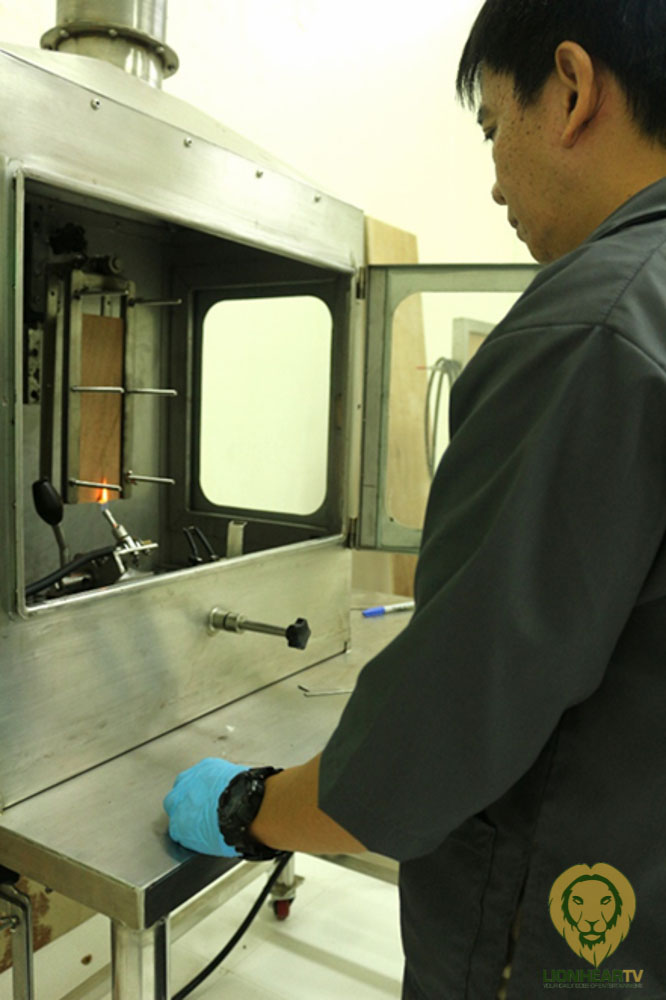 DOST-FPRDI’s Fire Testing Laboratory evaluates samples under ISO 11925-2 (Ignitability) and ASTM E69 (Combustibility) standards, and is open to the public.
The DOST-Forest Products Research and Development Institute (DOST-FPRDI) has been advancing research initiatives to ensure that bamboo remains not only a sustainable and affordable material, but also a fire-safe construction and building component.
DOST-FPRDI Director and bamboo expert, Dr. Rico J. Cabangon, noted that similar to any organic material, bamboo is naturally combustible when exposed to fire. “With proper testing, drying, treatment, and the use of fire-safety technologies, the risk of ignition and flame spread can be significantly reduced,” he added.
Bamboo has been used as a versatile construction material due to its properties. As some species can be harvested in just a few years, it is a more sustainable option than timber. This non-timber forest product also naturally absorbs carbon dioxide throughout its growth, helping reduce the environmental footprint. Compared to metals and other conventional materials, it is much more cost-effective in terms of processing and labor costs.
The Institute has been exploring ways to develop fire-retardant technologies that will slow down or stop the spread of fire and reduce its intensity by interfering with combustion.
One of DOST-FPRDI’s previous studies focused on developing a fire-retardant using nano-sized montmorillonite clay— an affordable, less toxic alternative to imported chemicals. It is a protective layer designed to slow ignition and minimize flame spread. According to the study, the application of nanoclays in wood products can enhance their fire resistance. While this patented study was initially focused on wood, the same technology is now being considered for bamboo applications.
Building on these efforts, the Institute is also developing bamboo-based cellulose nanofiber aerogel from kauayan-tinik (Bambusa spinosa Roxb.) as a sustainable and less hazardous fire-retardant additive for construction insulation, including bamboo materials. Designed to be safe for humans and the environment, this technology can potentially help builders, homeowners, and communities make safer homes.
Ensuring that every material meets safety standards, the Institute also operates the Fire Testing Laboratory. The lab evaluates the fire resistance of wood and non-wood materials, including bamboo, by applying a small match-sized flame to vertically oriented specimens for 15 or 30 seconds. It examines ignitability, which determines how easily a material catches fire, and combustibility, which assesses how easily a material ignites and burns by exposing it to heat.
In the next years and with more advanced machines, the laboratory will expand its capabilities to test larger materials for local building contractors and construction materials developers.
“We understand the concerns people have about bamboo and fire safety, which is why we have been taking proactive steps to address them,” said Dr. Cabangon. “Through expanding our testing services and research, we aim to ensure that bamboo remains a credible material for building and construction.”
Meanwhile, DOST Secretary Renato U. Solidum, Jr. noted that DOST has long-running programs supporting bamboo, including efforts to ensure its safety not only in construction, but in other applications. He noted that “while hazards cannot always be predicted, they can be mitigated through research and appropriate technology.”
Looking ahead, the Institute aims to intensify its research in this area to support stakeholders in the construction industry, as well as the general public, to ensure a safer and more reliable use of bamboo and other forest products.
The development of a fire-retardant using nano-sized montmorillonite clay is one of the initiatives of the Department of Science and Technology (DOST) aimed at providing science-based, innovative, and inclusive solutions across four strategic pillars: human well-being, wealth creation, wealth protection, and sustainability. These pillars embody the mantra OneDOST4U: Solutions and Opportunities for All. For more information, visit www.dost.gov.ph
