


Just weeks ahead President Ferdinand Marcos Jr.’s State of the Nation Address (SONA), more than 150 student leaders and young budget champions from across the country gathered on July 7, 2025, at Chardonnay by Astoria in Pasig City for the X-Ed Amplify National Budget Congress—the biggest youth-led gathering focused on education budget reform and advocacy in the Philippines.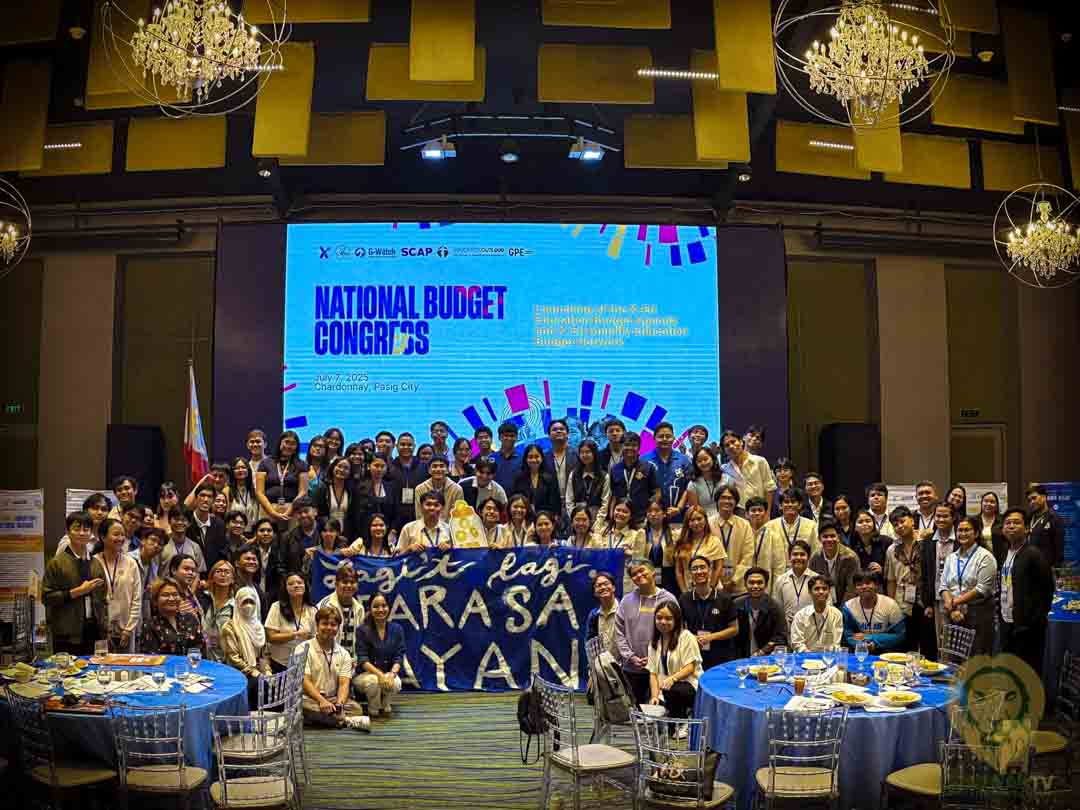
At the Congress, student leaders launched the 2026 X-Ed Inclusive Education Budget Agenda and introduced the X-Ed Amplify Bantay Budget Network, a national platform to deepen youth engagement in education budgeting and policy reform. The event was organized under the AmplifyEd Campaign of Multiply-Ed (X-Ed), a national initiative led by the Center for Youth Advocacy and Networking (CYAN) and Government Watch (G-Watch).
Key guests included DBM Secretary Amenah Pangandaman, DBM Assistant Secretary Romeo Matthew Balanquit, DepEd Assistant Secretary Dexter Galban (via video message), and Prof. Flora Arellano of E-Net Philippines.
₱437 BILLION NEEDED TO FILL SENIOR HIGH SCHOOL GAPS, SAYS X-ED MONITORING
Multiply-Ed’s grassroots monitoring across 90 public senior high schools nationwide revealed alarming shortages in classrooms, textbooks, teachers, laptops, and support programs—especially for marginalized learners. Based on these findings, Multiply-Ed estimates that at least ₱437 billion is needed to fully address basic education input gaps in all public senior high schools. Of this amount, ₱1.6 billion is needed immediately to respond to urgent needs in X-Ed–covered schools.
“Klaro ang datos. Ramdam ang kakulangan. Maraming paaralan ang kulang sa classrooms, upuan, textbooks, teachers, laptops, at support programs para sa mga estudyanteng nasa laylayan,” said John Elsisura, National Campaign Coordinator of AmplifyEd. “Sa darating na 2026 budget cycle, taos-puso po naming hinihiling na sana’y mapakinggan at maikonsidera ninyo ang panawagan namin. Fix the Gaps. Fund the Margins. Push for an Inclusive Education Budget Agenda.”
Multiply-Ed’s 2026 Education Budget Agenda also outlines alternative funding sources, showing how governments can realign existing resources and optimize existing funds to close education gaps without sacrificing fiscal discipline.
“This isn’t just about figures—it’s about fairness,” said Leizl Adame, Executive Director of the Center for Youth Advocacy and Networking (CYAN). “We’re not asking for new money; we’re asking for better decisions. We’ve studied the audit reports, traced idle funds, and identified programs that can be realigned—not slashed, but refocused. Engaging the national budget may seem technical—even intimidating—but it’s one of the most powerful acts of citizenship. When we engage the budget, we engage the soul of public governance.”
YOUTH CALL: OPEN THE BICAM
Student leaders issued a strong call to “Open the Bicam”, referring to the traditionally closed-door bicameral conference committee deliberations on the national budget. The call was raised during a panel on budget processes and transparency.
In response, DBM Asec. Balanquit welcomed the proposal, affirming the agency’s support for greater public access and transparency in budget deliberations.
DEMAND: RELEASE THE ALLOCATION LIST, SCRAP CONFIDENTIAL FUNDS
Multiply-Ed also urged the Department of Budget and Management (DBM) to release a detailed education budget allocation list, citing its community-based monitoring that revealed transparency gaps and limited access to data on education spending.
Addressing concerns over confidential funds previously allocated to the Department of Education (DepEd), Asec. Balanquit clarified that DBM would no longer allow confidential funds in civilian agencies without a legal mandate. He emphasized that reforms are underway to ensure greater accountability in public spending.
Fix the Gaps. Fund the Margins. Push for an Inclusive Education Budget Agenda.
Multiply-Ed’s AmplifyEd Campaign calls on the government to prioritize long-neglected programs for marginalized learners, including Indigenous Peoples’ Education (IPEd), Special Education (SPED), Gender and Development (GAD), and Madrasah education which remain underfunded and inconsistently implemented across schools.
Addressing learning losses requires a strong commitment to fixing the gaps in basic education input programs and funding the margins—especially for marginalized learners. A responsive and accountable budget that prioritizes the most critical needs of schools is key to amplifying our education sector and achieving a #MalayangEdukasyonPH.
