

After the successful holding of the 2025 National Science, Technology, and Innovation Week in Laoag City, the Department of Science and Technology (DOST) opens on November 24, 2025 the last leg of its 2025 Regional Science, Technology, and Innovation Week (RSTW) in the National Capital Region (NCR), which will run for three days until November 26, 2025.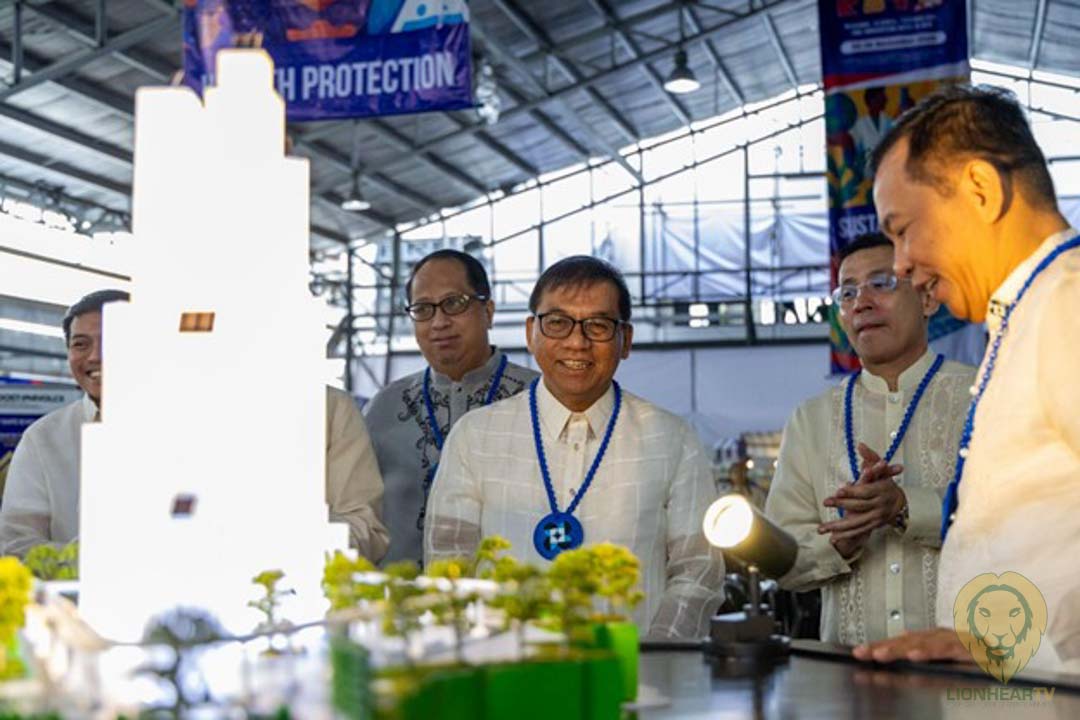
Department of Science and Technology (DOST) officials gaze through at a 3D model of Metro Manila’s polycentric urban map illuminated during the opening ceremony of the 2025 Regional Science, Innovation and Technology Week of the DOST-National Capital Region (DOST-NCR) on November 24, 2025 at the Technological Institute of the Philippines – Quezon City. Inspired by the DOST ILAW Framework—Ilaw, Linang, and Lawig—the installation symbolizes how innovation (Ilaw), capacity-building (Linang), and sustained development (Lawig) come together to guide NCR toward a brighter, more resilient future. (Photo from Patrick James Lee Alfonso, DOST-STII)
This year, the RSTW in NCR is conducted under the PAMAMARISAN or the Pasig, Mandaluyong, Marikina, San Juan Clustered Area Science and Technology Office of the DOST-NCR, in partnership with the Technological Institute of the Philippines (TIP) Quezon City, as the host institution of the activity.
DOST-NCR Regional Director Romelen T. Tresvalles offered a glimpse of the event’s theme “Building Smart and Sustainable Communities.”
“The theme “Building Smart and Sustainable Communities” is more than just a vision statement. It is a call to action. A reminder that even as we marvel at technology’s speed, we must never forget its purpose — to uplift lives, to narrow divides, and to leave no one behind,” she said.
Dr. Angelo Quirino Lahoz, TIP President, is honored to host the said event, saying that “it aligns with TIP’s school-wide commitment to providing the right ecosystem for collaboration and innovation.”
This is supported by DOST Undersecretary for Regional Operations Sancho A. Mabborang, who said that the celebration of the RSTW in a university is a significant feat that is filled with symbolism.
He said that as the university shapes future leaders— offering hope by turning aspirations into reality, and generating solutions through knowledge, innovation, and technology— the RSTW is for young people.
“You are the reason why we are working to leverage science to provide opportunities and solutions. The reason we are seeking to establish smart and sustainable communities in the country. For a future that is bright and healthy for you to live in,” he said.
The occasion also sees the turnover of the locally contextualized Readiness and Needs Assessment Tool, a project developed by the TIP-Quezon City in partnership with DOST-NCR.
The tool aims to empower MSMEs to embrace innovation, improve productivity, and strengthen their competitiveness in an ever-evolving business landscape.
Moreover, exhibit goers can expect an exciting lineup of activities—from interactive science exhibits and hands-on games to e-sports–themed challenges, technobazaars, and various science competitions.
There will also be technology and research forums, a smart city studio, technical consultations, and seminar series and trainings for a wide range of audiences, including students, teachers or faculty, differently abled persons, senior citizens, out-of-school youth, MSMEs, private organizations, community entrepreneurs, and the LGU.
Meet Juana
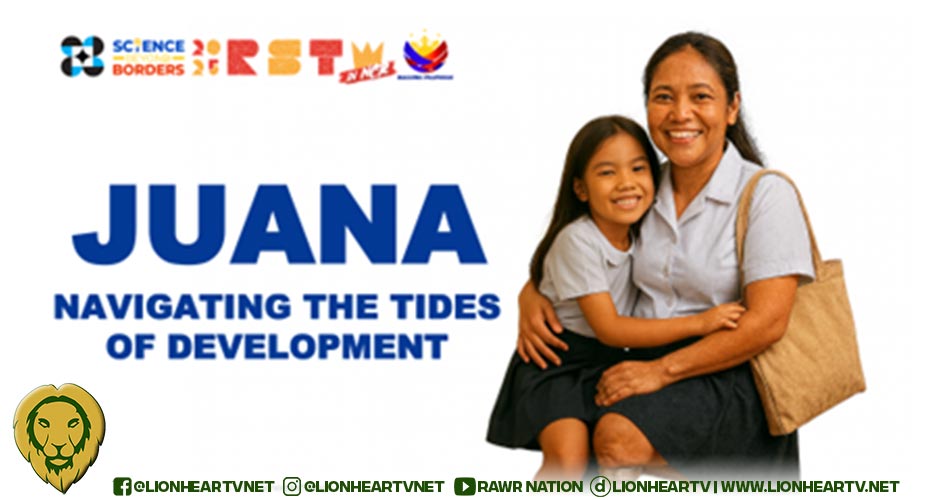
To better illustrate the Department’s call for inclusive, people-centered development, DOST Secretary Renato U. Solidum introduced Juana, an artificial intelligence-generated character representing millions of Filipinos who have faced many forms of subtle and systemic exclusion in the face of development.
A solo parent, teacher with a disability, and commuter, the Secretary said that Juana’s story highlighted how systemic barriers of development—from inaccessible infrastructure to climate risks—can reinforce exclusion.

He said that this is the reason why the Department has been pushing for the Smart and Sustainable Program, a people-centric and technology-driven strategy to facilitate the transformation of communities toward becoming smart and sustainable since 2023.
“What we strive for is the balance of both—technology that empowers people, and development that can endure. This is the kind of inclusive future we are working toward,” he added.
He also emphasized that inclusive smart and sustainable communities are not just for the big cities nor for the digital literates, but for people from all walks of life.
“Smart and sustainable communities are for them, for the students to improve their learning capacities, workers to ease their daily operations, urban farmers and fisherfolks, senior citizens, persons with disabilities. When driven by inclusive science and technology-based solutions, we can create a better picture of a Filipino’s daily lived realities,” he expounded.
Continuing Juana’s story, the Secretary envisions that in 2035, government, private sector, and communities adopt a ‘universal accessibility’ standard for all future projects.
“PWD-friendly digital platforms, smart home systems, and mobility tools become mainstream and affordable. A robust support ecosystem for solo parents emerges—financial, emotional, logistical, and educational,” he said, adding that Juana may live in a community safe from hazards, with access to technology and infrastructure for persons with disabilities.
This will happen as DOST, in the year 2025, “chose to talk to, and include the most vulnerable and marginalized in planning and building smart and sustainable communities.”
The 2025 RSTW is one of the many initiatives of the Department of Science and Technology (DOST) aimed at providing science-based, innovative, and inclusive solutions across four strategic pillars: human well-being, wealth creation, wealth protection, and sustainability. These pillars embody the mantra OneDOST4U: Solutions and Opportunities for All. For more information, visit www.dost.gov.ph
