


Unkabogable Star Vice Ganda delivered one of the most emotional and talked-about moments of the 51st Metro Manila Film Festival (MMFF) after winning Best Actor in a Leading Role for the film ‘Call Me Mother’.

While the trophy marked a career milestone, it was Vice’s deeply personal acceptance speech that left a lasting impact—particularly her public apology to her husband, Ion Perez, and her candid admission of wanting to finally become a mother.
Vice has long been known for box-office hits filled with loud humor and over-the-top comedy. For years, even critics would often leave her movies with the same refrain: entertaining, profitable, but familiar. ‘Call Me Mother’, however, proved to be a turning point.
Directed by Jun Robles Lana, the film showcased a more restrained, emotionally grounded Vice Ganda—far from the constant shouting and attention-seeking antics audiences had grown accustomed to. Playing an LGBTQIA+ individual who becomes an adoptive parent to a child abandoned by his biological mother (played by Nadine Lustre), Vice delivered a performance that resonated deeply with viewers and critics alike.
Many initially approached the film with hesitation, expecting another “usual” Vice Ganda outing. Instead, the movie offered a balance of humor and heartbreak, with scenes that drew both laughter and tears—particularly those involving Vice, child actor Lucas Andalio, and the extended “Pamilya de Guzman.”
During her MMFF acceptance speech, Vice revealed why the role felt so personal. She admitted that year after year, she and Ion had planned to have a child—but those plans were repeatedly postponed due to work, obligations, and responsibilities.
Addressing Ion directly, Vice said she wanted to apologize for continuously delaying their shared dream of parenthood, describing each postponed plan as a quiet loss they both carried.
“Kaya gusto kong mag-sorry kay Ion dahil taun-taon pinaplano naming magkaanak, pero dahil sa dami ng iniisip ko at obligasyon ko at trabaho ko at napakaraming gusto ko pang gawin, taun-taon, hindi rin namin naitutuloy yung plano namin.”
“Kaya parang taun-taon, namamatayan din kami ng anak. Kaya sana magkaroon pa ako ng mahaba pang buhay para… at sana makapagdesisyon na rin ako para maibigay ko na yun sa pamilya namin.”
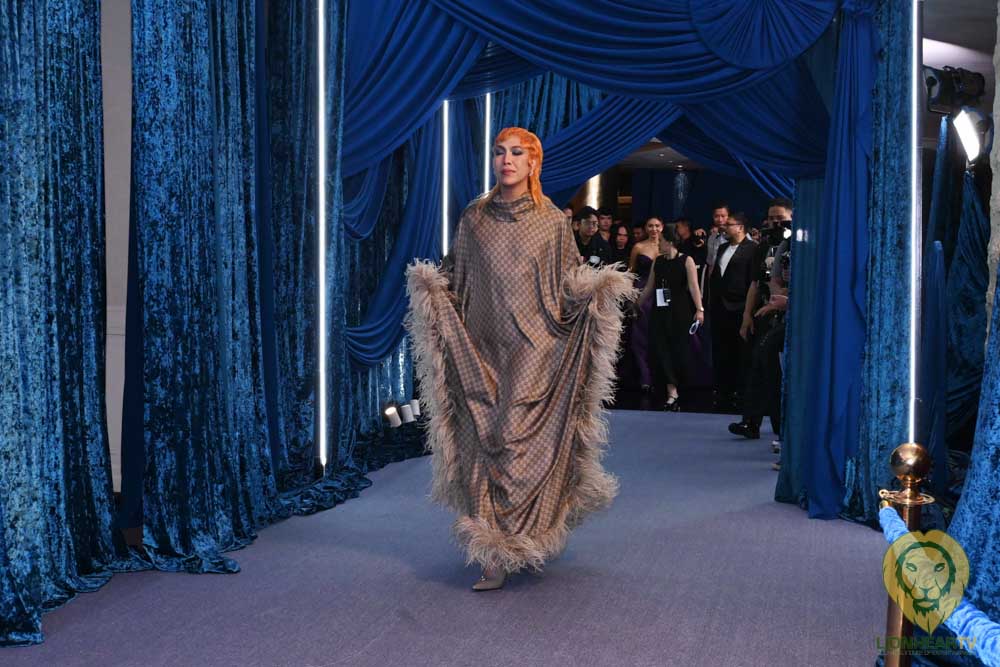
Her words struck a chord not just because of their honesty, but because they mirrored the very fear her character faced in ‘Call Me Mother’: not the fear of being incapable of loving a child, but the fear of not being allowed—or not being ready—to choose that life.
Vice went on to say that she truly wants to raise a child of her own, emphasizing that motherhood is not defined by giving birth alone, but by the capacity to love, protect, and build a home.
“Kasi gusto ko na talagang maging nanay, kasi gusto ko na magmahal ng bata na sarili ko, na akin, na puwedeng-puwede dahil nanay talaga ako. Maraming-maraming salamat po. Salamat.”
Vice’s Best Actor win—triumphing over performances by Zanjoe Marudo (UnMarry), Piolo Pascual (Manila’s Finest), and Carlo Aquino (Bar Boys: After School)—felt symbolic. It marked not just professional recognition, but a validation of growth.
She dedicated the award to her family, her “showbiz mothers,” her colleagues, and most especially to Ion, whom she described as her partner, husband, soulmate, and best friend.
More than the statuette, what lingered with audiences were Vice’s final words: a declaration that she is ready—not just to play a mother on screen, but to become one in real life.
With ‘Call Me Mother’ now considered one of Vice Ganda’s most meaningful films to date, many are wondering what kind of role Director Jun Robles Lana—or other filmmakers—will offer her next. Can this performance be matched, or even surpassed?
