
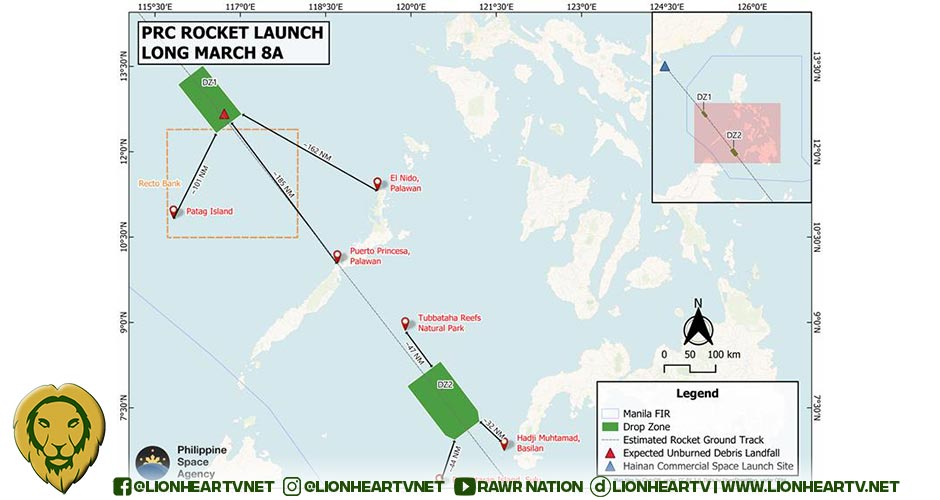

The Philippine Space Agency (PhilSA) confirms the launch of theLong March 8A rocket from the People’s Republic of China. Expected debris from the rocketlaunch was projected to have fallen within the identified drop zones: approximately 162 NM awayfrom El Nido, Palawan, 185 NM away from Puerto Princesa, Palawan, and 101 NM away fromPatag Island (DZ 1); and 32 NM away from Hadji Muhtamad, Basilan, 44 NM away fromPangutaran Island, Sulu, and 47 NM away from Tubbataha Reefs Natural Park (DZ 2). The firstdrop zone is within the Philippine Exclusive Economic Zone (EEZ) while the second drop zone iswithin Philippine archipelagic waters.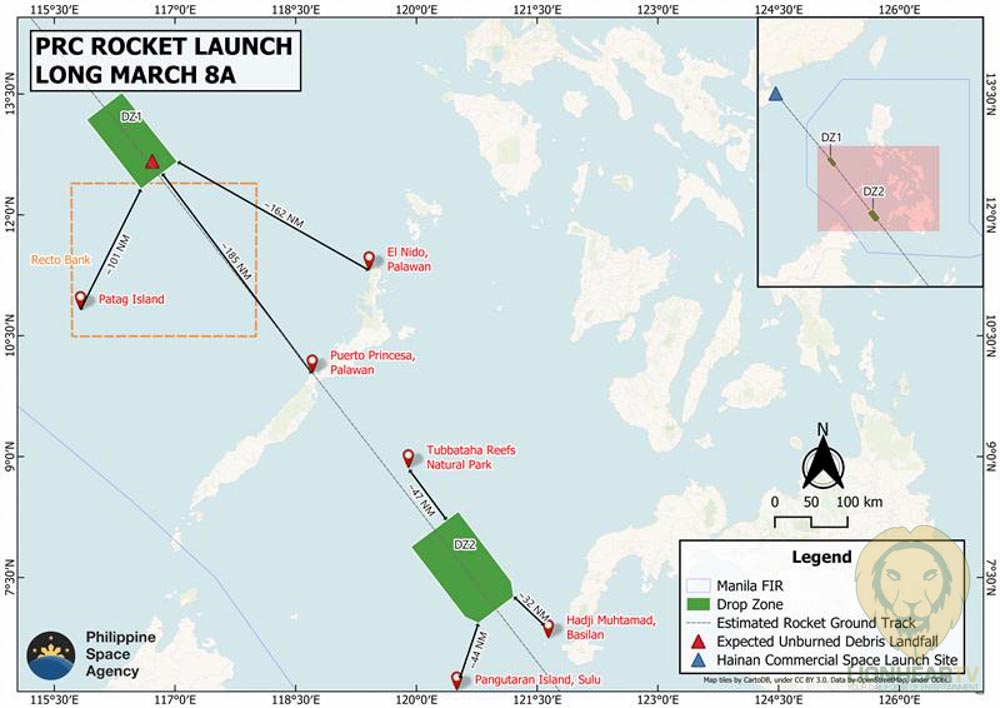
The Long March 8A rocket was launched from the Hainan International Commercial LaunchCenter in Wenchang, Hainan at around 3:49 AM PhST on 13 March 2026.Details of the rocket drop zone were disclosed through a Notice to Airmen (NOTAM) warning ofan “aerospace flight activity.” PhilSA disseminated a pre-launch report to relevant governmentagencies and authorities prior to the launch.Estimated drop zones of the Long March 8A launch on 13 March 2026Unburned debris from rockets, such as the booster and fairing, are designed to be discarded asthe rocket enters outer space. While not projected to fall on land features or inhabited areas,falling debris poses danger and potential risk to ships, aircraft, fishing boats, and other vessels
Republic of the PhilippinesOffice of the PresidentPhilippine Space Agencythat will pass through the drop zone. There is also a possibility for the debris to float around thearea and wash toward nearby coasts. Additionally, the possibility of an uncontrolled re-entry tothe atmosphere of the rocket’s upper stages returning from outer space cannot be ruled out atthis time.PhilSA reiterates its advice for the public to inform local authorities if suspected debris is sighted.PhilSA also cautions against retrieving or coming in close contact with these materials that maycontain remnants of toxic substances such as rocket fuel.
