
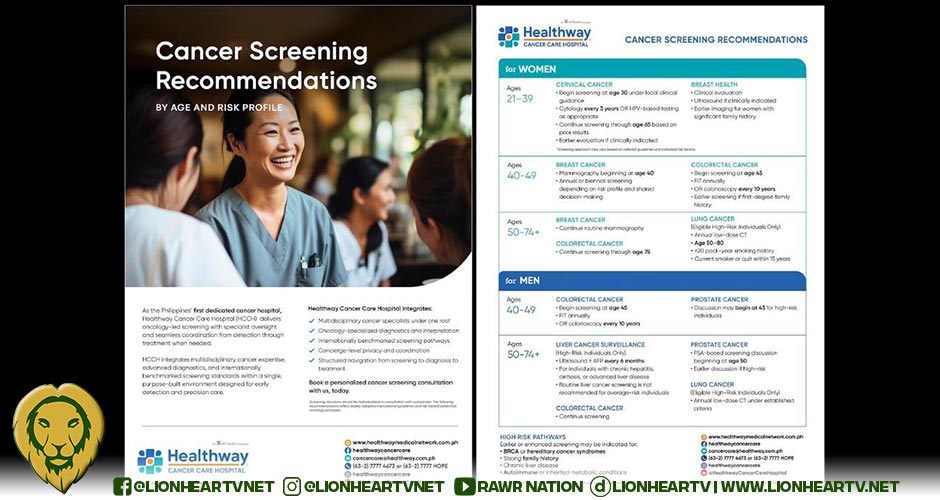

The life you’re building with the people you love rests on one non-negotiable: your health. We plan careers, milestones, and celebrations. But protecting the future you envision often begins with something far simpler – showing up for regular screening.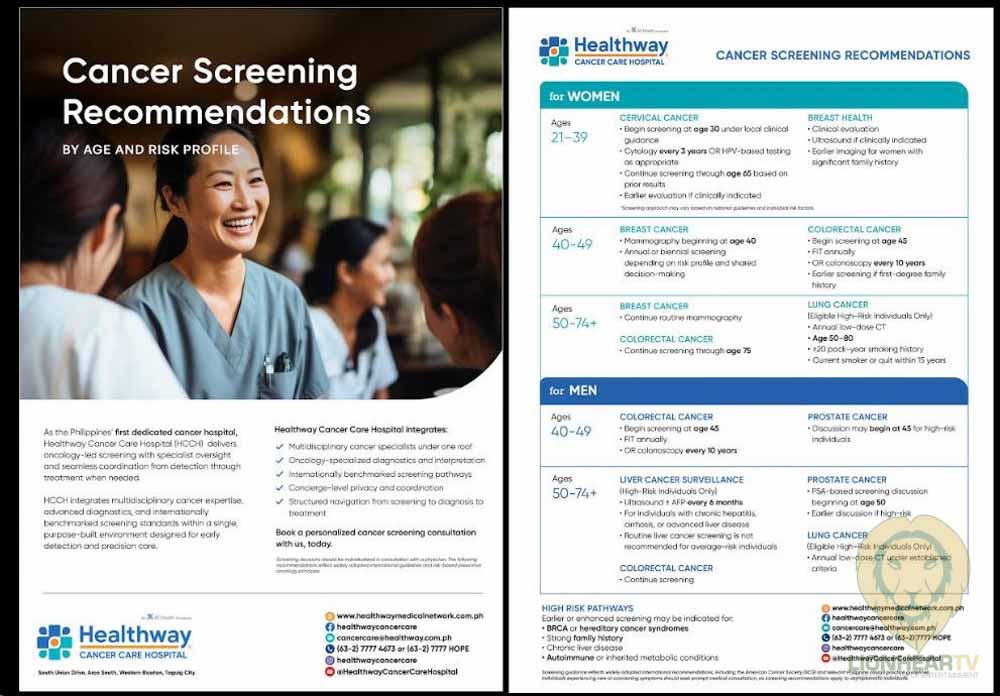
As the Philippines’ first dedicated cancer hospital under Ayala Healthcare Holdings (AC Health), Healthway Cancer Care Hospital (HCCH) is making essential cancer screenings more accessible through preferential rates until May 14, 2026 — encouraging Filipinos to turn awareness into action.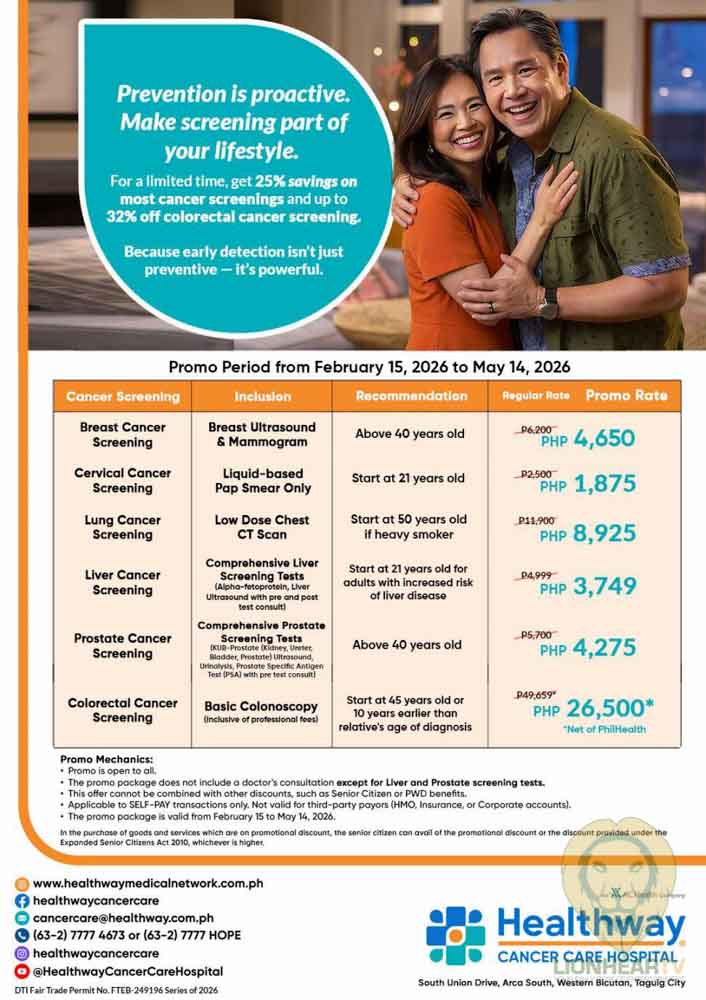
Here’s what to know — who each screening is for, what happens during the exam, and how to prepare so showing up feels informed, not intimidating.

 Your Blueprint for a Protected Future: The Six Essential Screens
1. Breast Cancer Screening
Early-stage breast cancer is often highly treatable — especially when detected before symptoms appear.
Who it’s for:
Women aged 40 and above for routine mammography (annual or biennial, based on risk and physician guidance)
Women aged 21–39 for clinical breast evaluation, with ultrasound if clinically indicated
Earlier imaging for those with a strong family history or hereditary risk
Continued routine mammography beyond age 50 remains important, based on individual risk and physician guidance.
What to expect: Breast ultrasound and/or mammography, depending on age and risk profile.
How to prepare: Avoid deodorants, powders, or lotions on the day of the exam. Wear a two-piece outfit for convenience.
2. Cervical Cancer Screening
Cervical cancer is one of the most preventable cancers when screening is consistent.
Who it’s for:
Women beginning at age 30 under local clinical guidance
Cytology (Pap smear) every 3 years or HPV-based testing as appropriate
Continued screening through age 65, depending on prior results
Earlier evaluation if clinically indicated
What to expect: A Pap smear or HPV-based screening test to detect early cellular changes.
How to prepare: Avoid vaginal medications, douching, or intercourse 24–48 hours prior. Schedule outside of menstruation if possible.
3. Colorectal Cancer Screening
Colorectal cancer often develops quietly. Screening interrupts that trajectory.
Who it’s for:
Adults beginning at age 45
Annual FIT testing, or colonoscopy every 10 years (or as clinically indicated), depending on individual risk and physician guidance
Earlier screening if there is a first-degree family history
Screening is typically continued through age 75, depending on overall health.
What to expect: Colonoscopy or stool-based testing depending on the chosen pathway.
How to prepare: For colonoscopy, follow prescribed bowel preparation and arrange transportation due to sedation.
4. Lung Cancer Screening (Eligible High-Risk Individuals Only)
For eligible individuals, annual low-dose CT can significantly improve early detection rates.
Who it’s for:
Adults aged 50–80
With a 20 pack-year smoking history or more
Current smokers or those who quit within the past 15 years
What to expect: Annual low-dose CT scan under established eligibility criteria.
How to prepare: No special preparation required. Remove metal objects before the scan.
5. Liver Cancer Surveillance (High-Risk Individuals Only)
For high-risk individuals, consistent liver surveillance can detect changes early — often before symptoms surface.
Who it’s for:
Individuals with chronic hepatitis, cirrhosis, or advanced liver disease
Screening typically involves ultrasound ± AFP testing every 6 months
Routine liver cancer screening is not recommended for average-risk individuals and should only be done under physician guidance.
What to expect: Blood panel and/or imaging depending on clinical risk.
How to prepare: Usually no fasting required but confirm with your provider.
6. Prostate Cancer Screening
Prostate cancer screening typically begins with a PSA-based discussion with your doctor, with testing recommended where appropriate.
Who it’s for:
Discussion may begin at age 50
As early as age 45 for high-risk individuals
Earlier conversation for those with strong family history
What to expect: PSA-based screening discussion and blood test if appropriate.
How to prepare: Avoid strenuous exercise 24–48 hours prior. Inform your physician of recent infections or procedures.
When Screening Should Start Earlier
Earlier or enhanced screening may be indicated for individuals with:
Confirmed BRCA1 / BRCA2 genetic mutations or hereditary cancer syndromes
Strong family history of cancer (especially first-degree relatives)
Chronic liver disease
Autoimmune or inherited metabolic conditions
Screening timelines are not one-size-fits-all — they are personalized decisions guided by risk and medical history.
A Clearer Way Forward
What makes screening effective isn’t just access — it’s clarity. At HCCH, screening is designed to be interpreted within an oncology-led environment, where specialists guide next steps if further evaluation is needed, providing confidence around early action.
The life you’re building deserves protection — not someday, but now. These preferential rates are available for a limited time until May 14, 2026. Learn more about HCCH’s screening programs or schedule a consultation at Healthway Cancer Care Hospital.
