


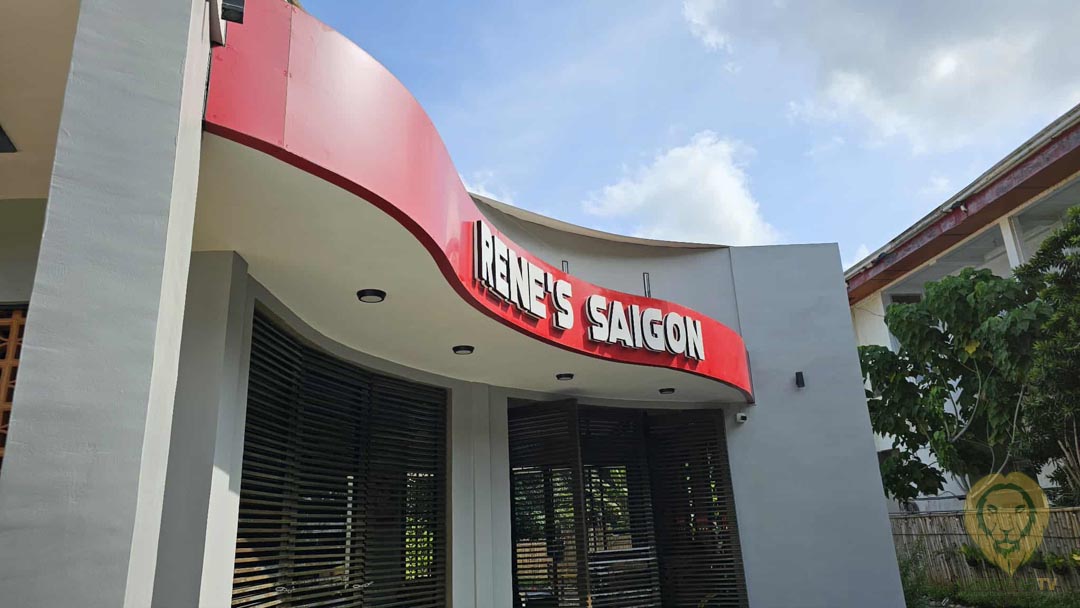
In the heart of Palawan, where terracotta bricks imported from Vietnam line the walls and the aroma of simmering bone broth fills the air, Rene’s Saigon stands as more than just a restaurant.
It is a testament to survival, sacrifice, and a mother’s unwavering dedication to preserving her culinary heritage in a foreign land.
Raymond Sabio, the youngest son of the restaurant’s founder, sits in the establishment’s second branch, surrounded by authentic Vietnamese design elements carefully curated by a Vietnamese architect.
“Yung family namin, Rene’s Saigon—Rene is my older brother, and I’m the youngest. And then the legacy, syempre, Rene’s Saigon, is legacy ni nanay ito eh,” he shares, his voice carrying both pride and reverence.
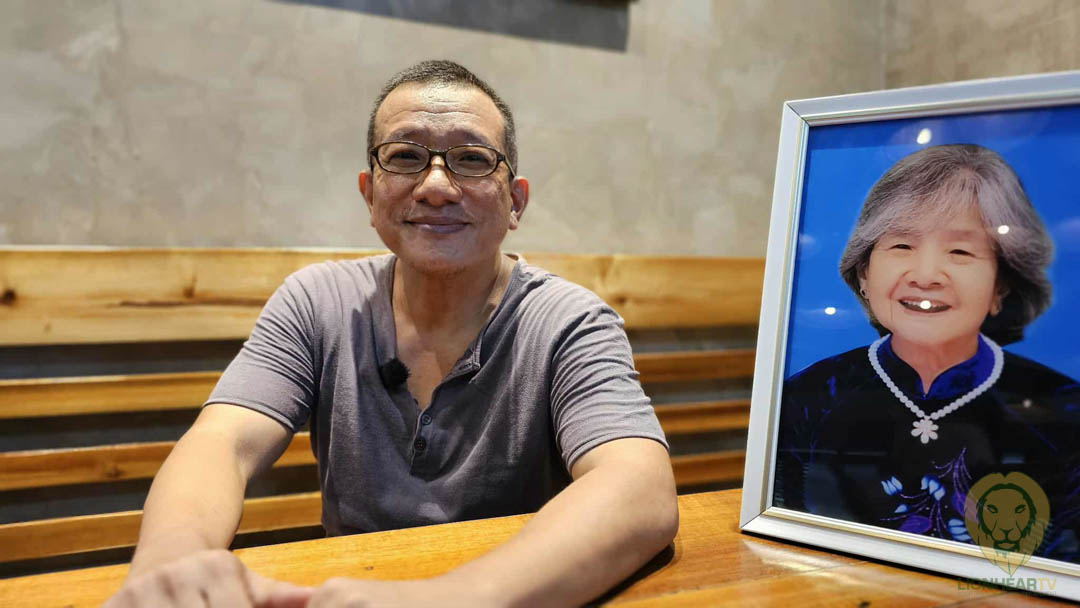
The story begins in 1975, when Auntie Hai, originally from Ben Tre, arrived in Manila with her sons after leaving Vietnam. Her husband, a Filipino who had worked in Saigon, had preceded them. But his passing in the early 1980s left the family facing an uncertain future. It was then that Auntie Hai made a decision that would change not only her family’s destiny but also Palawan’s culinary landscape.
“Yung story ni nanay, we came here, 1975,” Raymond recalls. “Nag-umpisa si nanay na magtinda-tinda ng Vietnamese food noong nasa Mandaluyong pa kami, when we first arrived in the Philippines.”
When the Vietnamese Refugee Camp opened in Palawan in the late 1980s, Auntie Hai worked at Phở Restaurant inside the camp as one of the chief cooks. But her entrepreneurial spirit could not be contained within camp walls.
“Soon, siya yung nag-umpisa na mag-gawa ng mga noodles sa labas ng kampo, to cater to the mainstream Palaweños.”
Raymond emphasizes: “Actually, we started noong panahon ng refugee camp dito sa Palawan.”
Other Vietnamese refugees followed her lead, and over time, the phenomenon multiplied, creating what would become a distinctive part of Palawan’s food culture.
Pho or Chao Long?
Ask any Palaweño about Vietnamese food, and they’ll likely mention chao long. But here lies a fascinating linguistic twist.
“Sa Vietnamese, we call the noodle soup ‘pho.’ Pho is actually a term used for rice noodle,” Raymond explains. “Ang chao long, in Vietnamese term, it’s rice porridge, or lugaw, with pork innards.”

The confusion began during the refugee era. A Vietnamese vendor selling chao long introduced it by its name when Filipinos were asking for pho. The mistranslation stuck—and has since become part of Palawan’s food culture.
Today, Rene’s Saigon makes a deliberate effort to use the correct terminology.
“We’d like to call it pho, because we want to celebrate authentic Vietnamese cuisine, and not to downgrade sa pagkain. We also want to celebrate the correct expression ng pagkain in Vietnamese terms,” Raymond emphasizes.
What sets Rene’s Saigon apart is its strict adherence to authenticity.
“We are proud to say that we are truly authentic. It started from the soup base,” Raymond says.
The restaurant’s pho requires bone broth simmered for more than ten hours.
“Yung mga ingredients namin, halos galing lahat sa Vietnam—yung mga main ingredients ng soup. Ang hindi lang galing sa Vietnam, yung meat, kasi syempre it has to be fresh. But then, yung mga dry spices, it comes from Vietnam. And then, yung noodles, galing sa Vietnam ‘yun.”
While the foundation remains unchanged, Rene’s Saigon has adapted to modern dining trends.
“Ang mga pagkain namin ngayon dito, we don’t use MSG. Yun ang pinakatrend, because I live in Australia, and even in the US,” Raymond explains. “Pero yung pinaka-recipe, galing lahat kay nanay ‘yun.”

No discussion of Rene’s Saigon is complete without mentioning its legendary banh mi.
Raymond’s older brother, Rene, learned the craft from Mr. Xuan, considered the best banh mi artisan in the refugee camp. Back then, the process was a well-guarded secret, and becoming an apprentice required hard labor and persistence. It took Rene more than a year to master.
“Yung equipment namin galing pa ng Vietnam. Yung palaman, yung ham, kami ang gumagawa niyan. And yung mayonnaise, lahat kami ‘yun,” Raymond shares.
The result is a banh mi comparable to those found in Vietnam, Melbourne, Sydney, or Los Angeles.
As Filipinos travel more and develop a taste for Vietnamese cuisine, Rene’s Saigon has also adapted to local preferences.
“Since nandito kami sa Palawan, we need to cater sa local taste ng mga Palaweños. So mas bawas ‘yung anghang, and second, mas bawas yung spices. Kasi if you go to Vietnam and taste the pinaka-authentic na Vietnamese flavor, heavy ‘yung spices. And then yung iba hindi sanay—kasi daw lasang gamot. So yun, binawasan namin.”
This balance between authenticity and accessibility defines the restaurant’s approach. For first-timers, Raymond recommends approachable dishes like fresh spring rolls.
“Lahat ng items namin dito, we are geared towards popular taste,” he says.

The restaurant’s reputation was validated when the Vietnamese Ambassador, passing through Puerto Princesa, made an unplanned stop at Rene’s Saigon. Auntie Hai personally welcomed him and served a meal that represented true Vietnamese cuisine.
“If you can look at this place—this is our second branch. Ang pinaka-main branch namin, yung sa Bangkaw-Bangkaw,” Raymond notes, adding that the main branch carries dishes not found elsewhere.
For him, the restaurants are more than businesses. They are a mission.
“We really wanted to promote yung pinaka-authentic,” he says, explaining how even the terracotta bricks were imported from Vietnam to create an authentic atmosphere.
In every bowl of pho, every crispy banh mi, and every carefully prepared dish, Auntie Hai’s legacy continues to simmer—a reminder that food is not just sustenance but also a bridge between cultures, a keeper of memories, and a testament to resilience.
As Raymond puts it: “We want to nurture our mother’s legacy, and to celebrate Vietnamese food culture in the most honest and authentic way.”
