

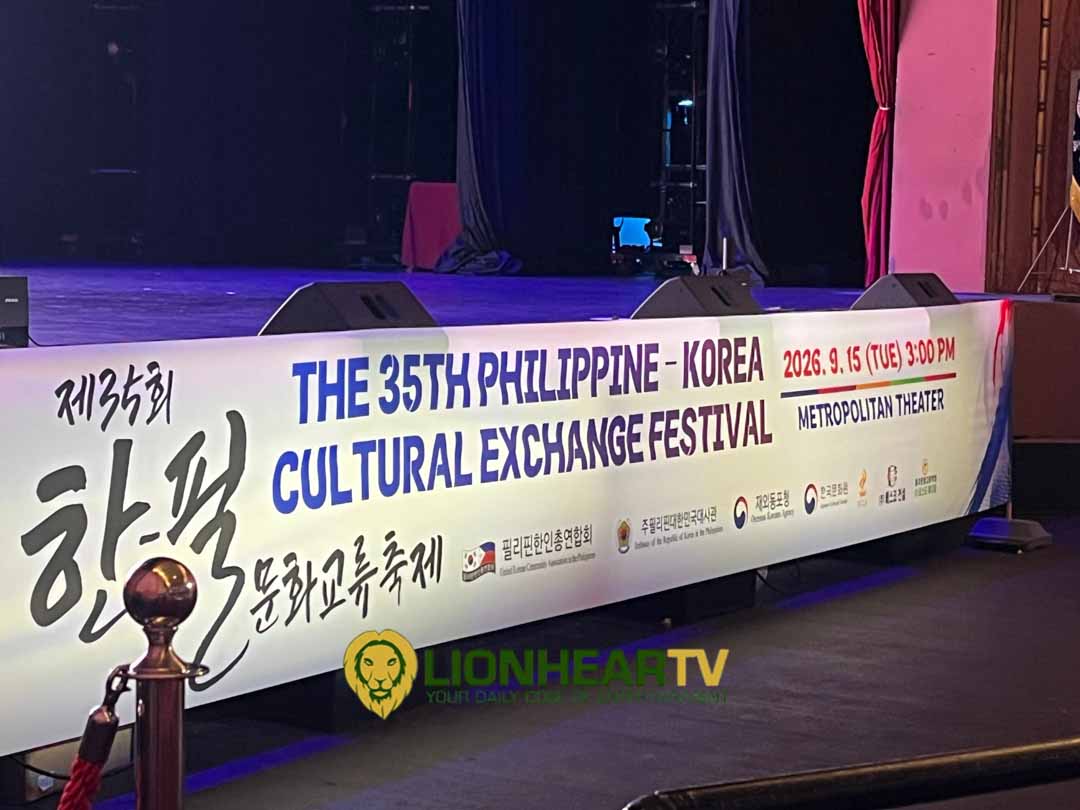
The historic Metropolitan Theater became a gathering place for Filipino and Korean culture as the 35th Philippine–Korea Cultural Exchange Festival brought together performers, artists, and cultural enthusiasts for a celebration centered on friendship, creativity, and the continuing exchange between the Philippines and Korea.
The festival offered a mix of cultural presentations and contemporary entertainment, allowing audiences to experience different forms of artistic expression throughout the program. From the ceremonial opening to the performances and competitions, the event highlighted how culture can bring people together through shared appreciation for music and the arts.

One of the significant moments of the celebration was the gong ceremony, which served as a symbolic part of the program. The sounding of the gong represented unity and friendship while emphasizing the continuing cultural connection between Filipinos and Koreans.
The ceremony also set the tone for an event that moved between traditional cultural elements and modern entertainment.
Adding a visual dimension to the celebration was the Southeast Asia Gallery, where guests could explore artworks and cultural displays representing the region’s diverse heritage and creativity. The gallery complemented the stage performances by giving attendees another opportunity to engage with culture through visual art.
The spotlight eventually shifted to the festival’s singing and dancing competition, where participants took the stage to demonstrate their performance skills.
The competition reflected the enthusiasm surrounding Korean popular culture, particularly among Filipino fans who have embraced Korean music and performance styles. At the same time, the participants brought their own personalities and interpretations to their performances, making the competition another highlight of the festival.
The event also featured EXIT, a Korean acapella group that provided one of the program’s distinct musical moments.
Without relying on the traditional setup of a full instrumental backing band, the group showcased the possibilities of vocal performance and brought its own musical character to the Metropolitan Theater stage. Their appearance also strengthened the Korean component of a program designed specifically around Philippine-Korea cultural exchange.

Following EXIT’s performance, the singing and dancing competition continued, giving more participants their moment in the spotlight as they performed before the festival audience.
The program later welcomed KAIA, adding a P-Pop highlight to the celebration.
The Filipino girl group brought an energetic performance to the festival, giving the audience a chance to see a homegrown act become part of an event that celebrates both Filipino and Korean entertainment and cultural connections.
KAIA’s appearance also provided a contemporary Filipino perspective to the festival. With P-Pop continuing to develop alongside the country’s growing interest in Korean popular culture, their participation showed how music and performance can serve as a shared space for audiences from both cultures.
While the performances provided much of the evening’s entertainment, the festival also made room to recognize the participants who competed in the singing and dancing competition. The awarding ceremony acknowledged the performers whose efforts stood out during the competition, giving the program a celebratory conclusion to the competitive portion of the event.
The winners’ announcement was followed by a prize draw, adding another interactive element for those who attended the celebration.
Throughout the program, the combination of cultural displays, live music, dance, and competition kept the event moving between different forms of entertainment. The result was a celebration that did not limit cultural exchange to formal presentations but also allowed audiences to experience it through the music and performances they enjoy.
The 35th Philippine–Korea Cultural Exchange Festival ultimately brought together two cultures through a program that balanced symbolic traditions with contemporary entertainment. The gong ceremony reflected the festival’s message of friendship, while the Southeast Asia Gallery provided a space for visual culture. Meanwhile, the singing and dancing competition, EXIT’s acapella performance, and KAIA’s P-Pop stage gave the celebration its entertainment-driven energy.
Held at the Metropolitan Theater, the festival underscored the role of cultural events in creating opportunities for Filipinos and Koreans to connect beyond language and geography. Through music, dance, art, and live performances, the celebration continued its tradition of highlighting the shared appreciation between the two communities. (with reports from Aljay Nevarez)