
American storm chaser Josh Morgerman of iCyclone corrected the widespread belief among Filipinos that the Sierra Madre Mountain Range significantly weakened Super Typhoon Uwan (international name: Fung-Wong) as it crossed Northern Luzon.
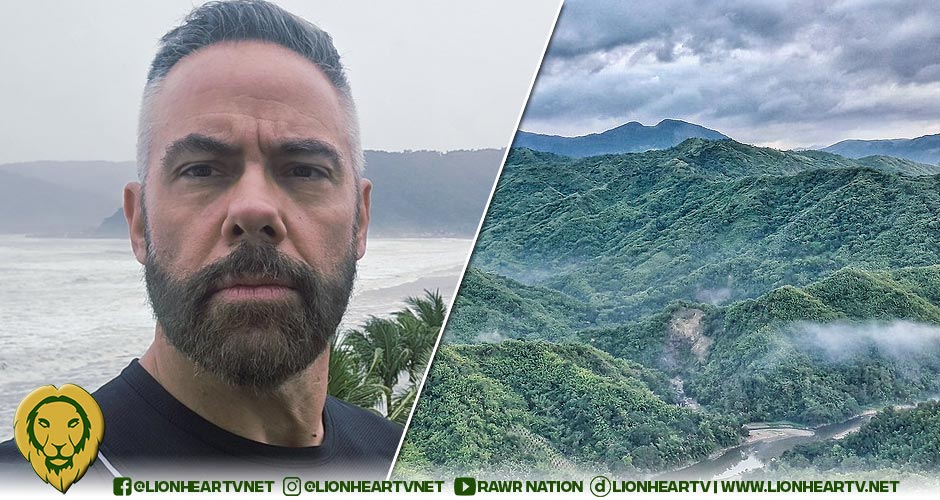
In a Facebook post, Morgerman — who arrived in the Philippines on November 8, 2025, to document the Category 5 typhoon — said that while the Sierra Madre does affect typhoons, it does so after landfall, not before.
“Many folks are posting misinformation about the Sierra Madre Mountains in the Philippines,” Morgerman wrote.
“Let me set the record straight: The Sierra Madre chain weakens typhoons after they make landfall on the east coast of Luzon. These mountains do not protect the east coast of Luzon, which regularly experiences some of the strongest tropical cyclone impacts in the world.”
Morgerman’s clarification aligns with the Department of Science and Technology (DOST), which also released a detailed explanation of the mountain range’s actual impact.
In its official statement, the DOST said the Sierra Madre “can help slow down and slightly weaken” the winds of incoming storms, particularly in the northeastern part of Luzon, but it cannot provide full protection from strong typhoons.
“Maaaring sabihing nakatutulong ang Sierra Madre Mountain Range bilang panangga sa mga bagyo sa Luzon sapagkat may kakayahan itong bahagyang pahinain o bagalan ang lakas ng hanging dala ng bagyo,” the DOST explained. “Gayunman, hindi ito nagbibigay ng ganap na proteksyon laban sa matitinding epekto ng mga ito.”
The agency also emphasized that storms generally do not weaken significantly within the first six hours after landfall, even when crossing mountain ranges.
According to research by Dr. Gerry Bagtasa and Dr. Bernard Alan Racoma published in the Philippine Journal of Science (2023), heavy rainfall and flooding remain the primary causes of damage during typhoons—more than the winds themselves.
The DOST clarified that it is actually the Cordillera Mountain Range that has a greater impact in weakening wind strength.
“Ang Cordillera Mountain Range ay may mas malakas na epekto sa pagpapahina ng hangin kaysa Sierra Madre,” the agency noted.
While the Sierra Madre helps shield the Cagayan Valley, it can reduce wind strength by about 1–13%, but also increases rainfall west of the mountains—including in Metro Manila—by 23–55%.
The Climate Change Commission has long emphasized Sierra Madre’s crucial role beyond typhoon mitigation.
It houses 40% of the Philippines’ forest cover, supports 3,500 plant species (58% endemic), and serves as a 1.4-million-hectare carbon sink that helps regulate the country’s climate.
“Through carbon sequestration, the forests absorb carbon dioxide from the atmosphere, helping regulate temperature, stabilize weather patterns, and provide healthy habitats for wildlife,” the CCC explained.
The DOST concluded by underscoring the importance of protecting the Sierra Madre from deforestation, mining, and destructive activities, calling it a vital source of biodiversity and natural resources.
Meanwhile, as Super Typhoon Uwan lashed the country, Filipino netizens flooded social media with artworks, animations, and tributes depicting Sierra Madre, the Cordilleras, and the Caraballo Range as heroic “guardians” of Luzon — a symbolic reminder of the need to preserve the nation’s natural shields against disaster.