

Climate science can now forecast disaster days, sometimes even weeks, in advance. Yet across Asia, climate finance still arrives largely after the damage is done.
Closing that gap is no longer a theoretical exercise. It is an urgent leadership challenge, and one that the 2026 Asian Conference on Climate Change and Disaster Resilience (ACCCDR) is built to address.
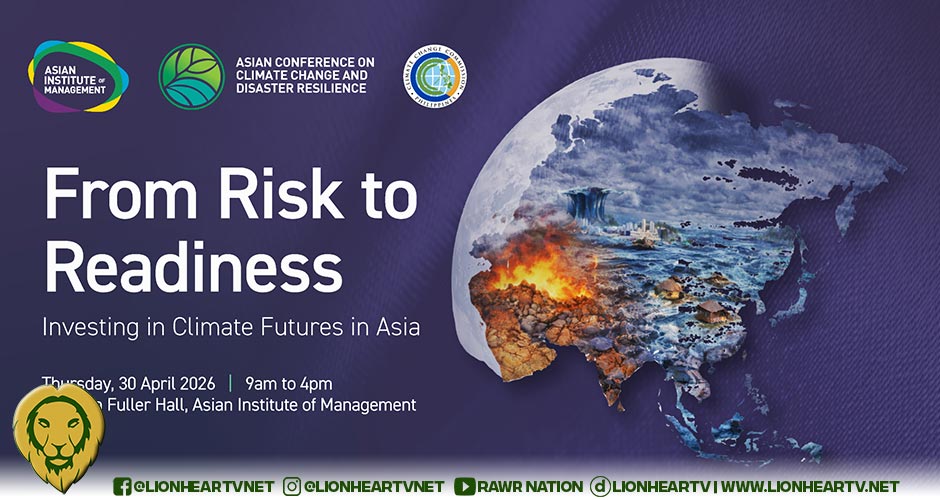
On 30 April 2026, the Asian Institute of Management (AIM) will convene regional policymakers, development finance institutions, private sector leaders, and local government executives at its Makati campus for a focused, high-level dialogue on anticipatory climate finance – mechanisms that release funding based on forecasts and risk data before the next disaster strikes
Carrying the theme, “From Risk to Readiness: Investing in Climate Futures in Asia,” ACCCDR brings together the people and institutions best positioned to shift climate finance from reactive to proactive—ensuring resources reach vulnerable communities in time to reduce impact, and not just support recovery.
“Climate change is one of the greatest threats of our time, demanding urgent and coordinated action,” said AIM President and Dean Jikyeong Kang, PhD. “AIM believes the academe must go beyond observation by equipping leaders with the strategic vision needed to strengthen systems against rising climate risks. Through the ACCCDR, the institution highlights climate finance as a key driver of both mitigation and adaptation.
The conference aims to unite business, government, and civil society to transform fragmented initiatives into integrated, practical solutions for a more resilient future.”
Discussions will also span the broader climate finance landscape, from global funding mechanisms and national investment strategies to private sector risk management and local implementation. Particular focus will be placed on “last-mile” delivery, highlighting practical cases where financing has successfully reached communities and identifying barriers that continue to limit access.
“ACCCDR strengthens leaders’ capacity to address interconnected risks—from climate change to economic crises—through coordinated governance. AIM prepares leaders to manage complex systems and build resilient societies, while the conference fosters collaboration, knowledge exchange, and practical solutions for disaster risk reduction,” said Prof. Erin Downey, School Head of the Stephen Zuellig Graduate School of Development Management.
Prof. Chad Briggs, Academic Program Director of the Executive Master in Disaster Risk and Crisis Management at AIM, emphasized the importance of shifting from reactive to proactive systems: “The ACCCDR promotes proactive climate readiness. Through this dialogue, it connects global funding, leadership, and expertise to local governments and communities, ensuring climate finance reaches the last mile and strengthens preparedness before disasters strike.”
Bridging the gap between policy ambition and operational reality requires sustained dialogue, stronger leadership capacity, and closer coordination across sectors—areas that platforms like ACCCDR aim to advance.
The shift from response to readiness will not happen overnight. As climate risks intensify, the cost of inaction—or delayed action—on climate issues will continue to rise.
Register now and join the conversation on 30 April 2026 at AIM, Makati City: ACCCDR | Asian Conference on Climate Change and Disaster Resilience – Register for ACCCDR 2026, a leading conference on climate finance and disaster resilience bringing policymakers, experts, and industry leaders together in Asia.
