


The revival of ‘Ateng’, a play by Palanca Award-winning playwright Vince de Jesus, has sparked renewed conversations about transactional relationships—one of its central themes.
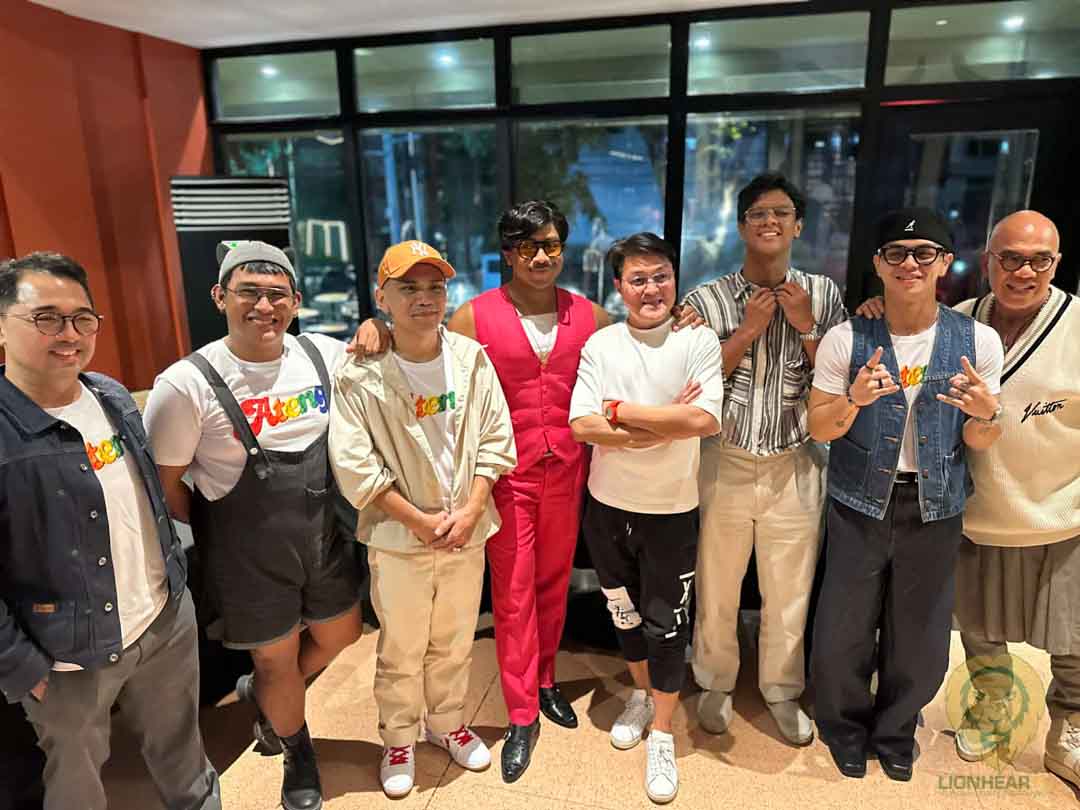
Produced by Boy Abunda and RS Francisco, the play runs from November 13 to December 7, 2025, at the Rampa Drag Club in Quezon City. With Kokoy de Santos making his theater debut alongside Dyas Adarlo, Jason Barcial, IO Balanon, Vince de Jesus himself, and Thou Reyes under the direction of Rem Zamora, ‘Ateng’ revisits the struggles and realities of queer Filipinos in the mid-2000s.
For De Jesus, the theme of transactional relationships is not merely a dramatic device but a reflection of lived experience. In an interview, he explained how such arrangements were common in the 1980s queer community:
“Based on my research (laughs)… ganon talaga noon—di ba recently, may mga ganitong interviews na tanggapin n’yo na kung ano kayo. Ganyan talaga, magbabayad ka para sa affection, at ganon ‘yung kinalakihan namin noong ’80s. Ganon talaga ang kalakaran, at kung ngayon meron pa rin, I will not blame them because kung ganon ang way mo at you can afford it without ruining your reputation, di ba? I mean, it’s your life—kung transactional, okay lang. It works for some, but not for all.”
De Jesus frames the play as a cautionary tale, where older characters like Kiwi impart lessons to younger ones like Juicy. The narrative becomes a generational dialogue that urges reflection on choices and consequences:
“Parang dito ‘yung master—in a way, nagtuturo ‘yung matanda—si Ateng, si Kiwi, sa younger Juicy na ‘ito ang buhay ko noon, sana matuto ka. Anong ginagawa mo ngayon? Hindi porke’t bakla tayo, diyan na lang tayo.’ So ‘yun, ‘ito ‘yung kinalakihan ko, wag mo nang gayahin.’ In a nutshell, it’s a cautionary tale. Parang, I’ve learned from my mistakes—sana naman ikaw rin.”
For De Jesus, transactional relationships may offer convenience or survival, but they also raise deeper questions about love, authenticity, and emotional investment.
Meanwhile, Boy Abunda offers a broader cultural lens. Known as the “King of Talk,” Abunda challenges the demonization of transactional relationships, arguing that all relationships inherently involve some form of exchange:
“Demonizing transactional relationships has gone overboard. I mean, ano ba naman ang relasyon na walang transaksyon? Nanliligaw ka sa isang babae dahil maganda. Oo, you get something out of the relationship. Naha-highlight lang ito because money comes into the picture.”
He situates this within Filipino cultural history, where courtship and marriage often carried economic or social motivations:
“Kahit in our cultural history, ‘ligawan mo ang anak niyan dahil maraming lupain’—that’s a transaction. You know, ‘ligawan mo ’yan, or sagutin mo ’yan dahil doktor,’ di ba? There is a transaction.”
Abunda even links the concept to leadership theory, noting that transactional exchanges are part of all human systems: “Even if you talk about transformative leadership, I mean, there is such a thing as transactional leadership, di ba? May ibinibigay ka kasi may nakukuha ka.”
For him, the notion of love as purely selfless is admirable but rare. His perspective normalizes transactional relationships as a natural aspect of human interaction rather than a moral flaw.
The interplay between Abunda’s pragmatism and De Jesus’s cautionary framing creates a layered dialogue. On one hand, transactional relationships are acknowledged as historical realities and cultural norms; on the other, they are examined for their emotional costs and potential pitfalls. This tension is precisely what makes ‘Ateng’ resonate today.
By staging the play in a drag club, the production underscores the intersection of performance, identity, and community visibility. It situates the narrative in spaces where queer culture thrives, making the lessons of ‘Ateng’ not just historical but urgently contemporary.
Ultimately, ‘Ateng’ is more than a play—it is a mirror reflecting cultural and personal histories, asking audiences to reconsider how relationships are shaped by survival, desire, and exchange. As Abunda concluded: “Gusto ko lang maraming makapanood ng aming play,” reminding us that theater is not just art—it is a conversation about who we are and how we love.
