

Told within the span of a single day and built around a deceptively simple premise, ‘Salvageland’ succeeds in delivering a tense and atmospheric moral thriller that feels fresh in the landscape of local cinema.
Lino Cayetano, returning to film direction after nearly two decades, uses this stripped-down narrative to ask heavy questions about right and wrong—questions rooted in real situations he encountered during his years in politics.

“Things aren’t usually black and white. There’s grey,” he said, and the film embraces that uncertainty through the story of a jaded police officer (Richard Gomez) and his idealistic son (Elijah Canlas) who find themselves entangled in violence inside a desolate “salvage land,” a place described as perfect for executions and dumping bodies.
What begins as a domestic dispute involving the volatile characters of Mon Confiado and Cindy Miranda escalates into a layered conflict that tests morals, loyalty, and survival.
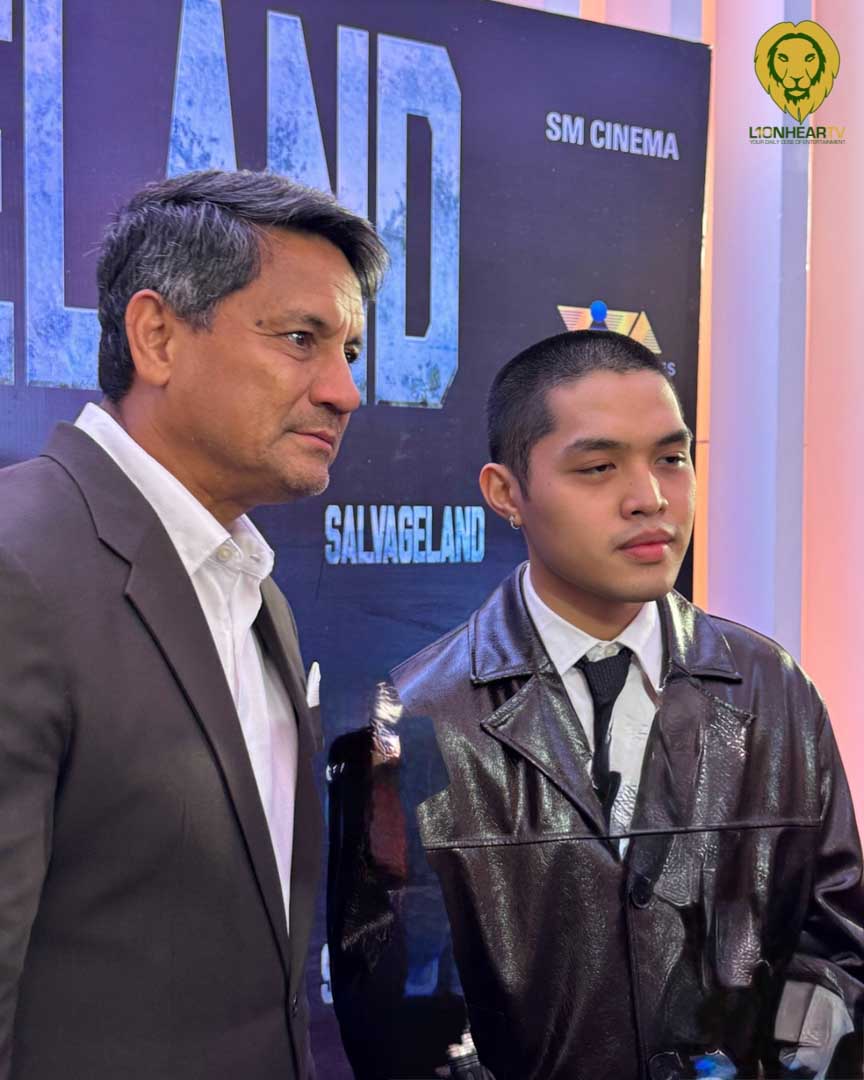
The father-and-son dynamic becomes the emotional vehicle of the film—survival shaped by a broken system versus idealism shaped by hope—and both Gomez and Canlas turn in solid performances that ground the narrative.
Mon Confiado is effortlessly unsettling, while supporting actors like Angela Morena and Apollo Abraham make the most out of their limited screen time. As a whole, the ensemble gets the job done, even if no performance stands out as exceptional.

Visually, ‘Salvageland’ is stunning. Its wide, isolating shots of lahar fields create a neo-western mood that heightens the feeling of danger and hopelessness.
The cinematography becomes part of the storytelling, reinforcing how environment shapes choices. This is where the film thrives: using silence, space, and tension to build suspense. The pacing leading to the final act also works well, allowing characters enough depth before the narrative explodes into conflict.
However, the film falters where it matters most—its big action payoff. While the buildup to the standoff is gripping, the climax suffers from staging, choreography, and editing issues that weaken the entire sequence.
Despite Richard Gomez’s character being physically fragile and visually impaired, he somehow survives waves of armed attackers who conveniently appear one at a time. The action becomes unbelievable and removes much of the danger previously established.
It’s a common trope in action films, but here it’s glaring because the movie positions itself as grounded and morally heavy. When the action collapses under implausibility, the emotional and thematic momentum takes a hit.
The film also struggles with uneven world-building and occasional drag in pacing. Some scenes rely on long monologues to spell out themes that could have been shown visually, and certain characters—such as Sally, the woman being rescued—aren’t compelling enough to justify the chaos surrounding them.
Emotional relationships, particularly between father and son, could have been strengthened to make their moments resonate more deeply.
Despite these flaws, ‘Salvageland’ remains a bold, unique entry in Philippine cinema. Cayetano’s return is thoughtful, morally charged, and ambitious in its use of landscape, atmosphere, and ethical dilemmas.
“Cinema gives us a way to talk about love, life, the good, the bad, the moral, and the immoral,” he said—and in many ways, the film succeeds at starting that conversation. Its action shortcomings don’t erase its strengths: strong performances, striking cinematography, and a story that dares to confront uncomfortable truths about justice and survival.
Rating: ★★★☆☆
‘Salvageland’ is far from perfect, but it’s the kind of film that lingers—because its most frightening element is how familiar its violence feels. (with inputs from Aldrine Benitez)