

More than 80% of the establishments in the country have basic digital infrastructure, but only 15% percent have adopted advanced Artificial Intelligence (AI) technologies, with adoption concentrated in urban areas and larger firms. The gap is not awareness but institutional capacity, and it is unevenly distributed.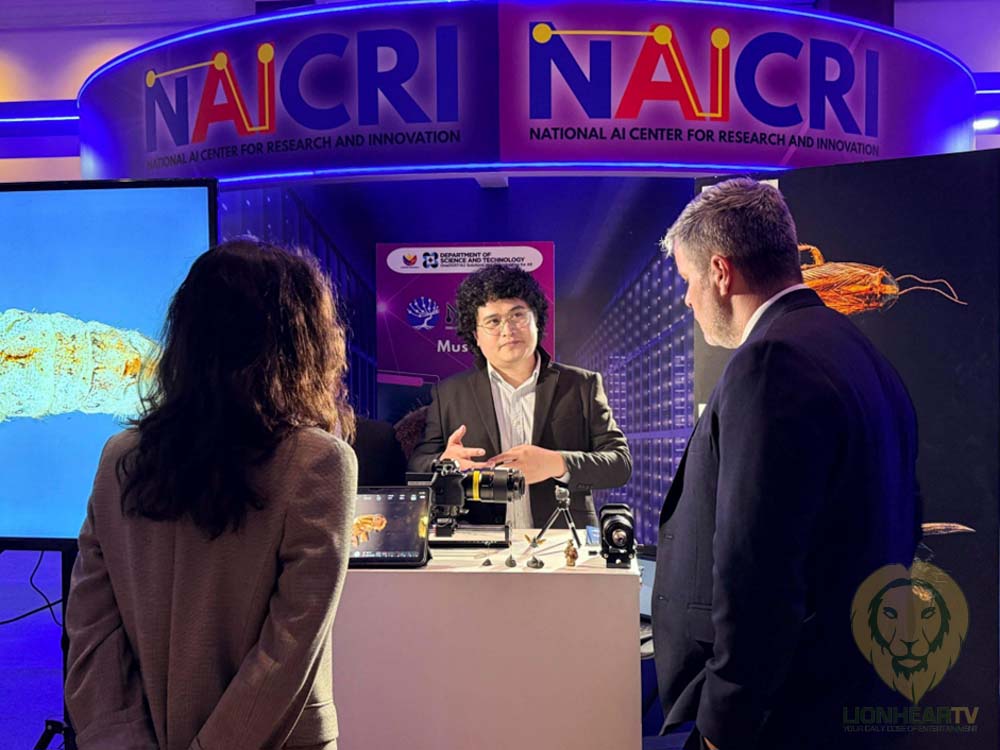
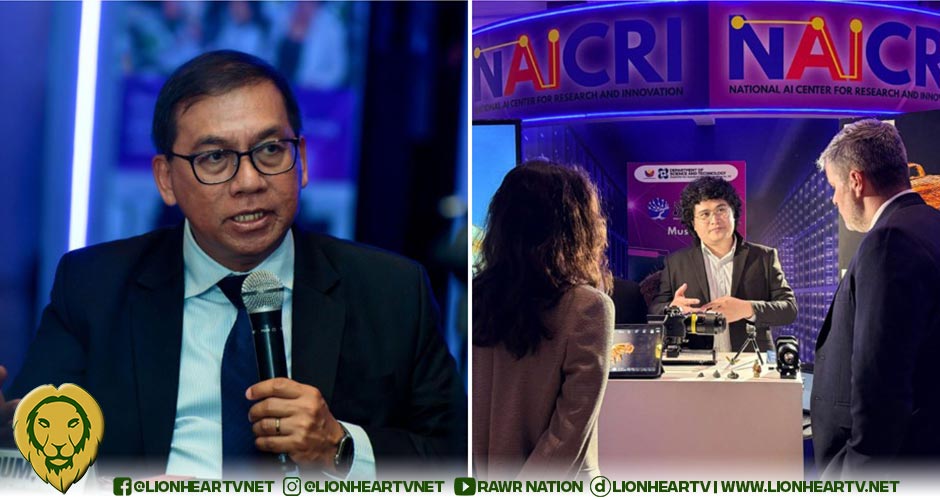
Among the featured technologies during the launch of the National Artificial Intelligence Center for Research and Innovation was Museo, an AI-powered heritage digitization initiative that uses advanced 3D reconstruction to create high-precision digital twins of artifacts. (Photo by Rachel M. Rieza, DOST-STII)
This was shared by Secretary Renato U. Solidum of the Department of Science and Technology (DOST), as until now, AI efforts in the Philippines have been opportunistic rather than orchestrated, despite having promising research and development projects, capable researchers, and willing partners, but no single institution to align them.
In addition to that, Solidum puts it, “the country faces structural challenges, including limited advanced computing power, a shortage of specialized AI talent, uneven adoption across regions, and governance frameworks that have yet to catch up with the pace of technology.”
“If these gaps are not addressed, they will constrain our ability to compete in an increasingly AI-driven global economy,” Solidum said.
Central Hub for AI research, advanced computing, and innovation
Recently, DOST launched the National Artificial Intelligence Center for Research and Innovation (NAICRI), the Philippines’ central hub for AI research, and will implement the national AI framework or the National AI Strategy for the Philippines (NAIS PH).
“If they (gaps in AI talent and other resources) are addressed strategically, they become the very foundations of our next phase of national development. That is what NAICRI is for,” said Solidum.
NAIS-PH is the National AI Strategy for the Philippines with a comprehensive framework guiding the development, deployment, and governance of AI through 2028, focusing on infrastructure, workforce, technology, and policy.
Among the key features of NAICRI is creating a shared computing backbone that enables Filipino researchers, government agencies, and enterprises to train AI models, run complex simulations, and deploy applications at an unprecedented scale.
This infrastructure ensures that AI capabilities are accessible nationwide, supporting innovation that was previously limited by technical or resource constraints.
Also, its core feature is governance and strategic coordination, recognizing that AI’s integration into critical systems like finance, health, transportation, and public administration requires robust oversight.
By embedding data protection, transparency, and ethical standards into platforms from the start, NAICRI harmonizes policies across government while fostering public trust and investment, treating governance as an enabler rather than a barrier.
Lastly, NAICRI also emphasizes regional innovation and inclusive growth, ensuring AI benefits extend beyond major urban centers.
Through regional hubs, shared computing resources, and targeted training, provinces and MSMEs gain tools for forecasting, logistics, health management, and disaster preparedness, enabling equitable access to AI-driven development across the country.
“Together, these programs form the backbone of NAICRI’s four strategic pillars: national AI computing infrastructure, AI talent and research capability, governance and strategic coordination, and regional innovation and inclusive growth,” Solidum expounded.
Meanwhile, DOST-Advanced Science and Technology Institute Director Franz A. de Leon said that NAICRI is designed to be open to partners, ideas, and shared ambitions.
He said that international partners tackled some AI challenges—disaster forecasting, tropical agriculture, and multilingual NLP—are shared challenges across Southeast Asia and the Global South.
“As the Philippines assumes the ASEAN chairship this year, with responsible AI as a cross-cutting theme, NAICRI is positioned to serve as a regional platform. Co-develop with us. Help us scale compute capacity. Send your researchers here, and let us work alongside yours,” said Dir. de Leon.
The establishment of the National Artificial Intelligence Center for Research and Innovation (NAICRI) is one of the initiatives of the Department of Science and Technology (DOST) aimed at providing science-based, innovative, and inclusive solutions across four strategic pillars: human well-being, wealth creation, wealth protection, and sustainability. These pillars embody the mantra OneDOST4U: Solutions and Opportunities for All. For more information, visit www.dost.gov.ph
 During a media briefing at the launch of the National Artificial Intelligence Center for Research and Innovation (NAICRI), Renato U. Solidum Jr., Secretary of the Department of Science and Technology (DOST), underscores the importance of strong AI governance as artificial intelligence becomes embedded in critical sectors. He emphasized that clear standards for data protection, transparency, and ethical use will strengthen public trust, attract investments, and enable NAICRI to harmonize government policies with global best practices. (Photo by Xyrus Ivan de Gracia, DOST-STII)
