
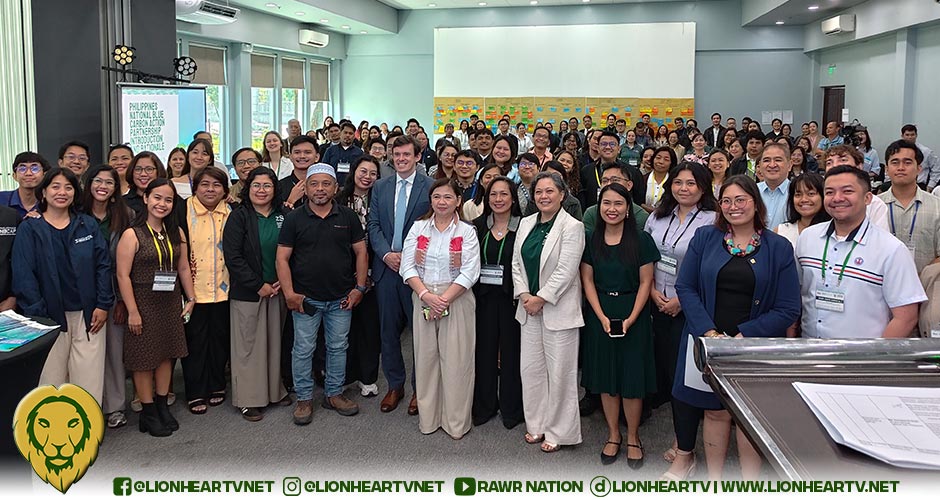

The urgent role of coastal ecosystems in the climate conversation took focus on March 26, 2026, as policymakers, environmental experts, and stakeholders gathered at Microtel UP Technohub for the National Blue Carbon Action Partnership (NBCAP) handover event, a gathering that underscored how restoring the country’s blue carbon ecosystems has become inseparable from the broader fight against climate change.

From the start, the event carried a sense of purpose that went beyond a formal handover. As participants arrived and settled into the venue, there was an unmistakable awareness that the discussions ahead would center not only on environmental priorities but also on how different sectors can work together to protect some of the country’s most important natural defenses.
When the program opened, conversations quickly moved into the pressing realities facing mangroves, salt marshes, and seagrasses—coastal ecosystems that may not always receive the same attention as forests or coral reefs, yet play a critical role in carbon capture, biodiversity, and coastal protection.
Throughout the discussions, speakers emphasized that these ecosystems are not simply environmental assets to be preserved but active climate solutions that must be restored, protected, and managed with greater urgency.
That message aligned closely with the mission of the National Blue Carbon Action Partnership, launched by the World Economic Forum to bring leaders and institutions together around a shared roadmap focused on policy development, biodiversity conservation, and community resilience.

Rather than framing the event as a technical policy exercise, the discussions consistently connected blue carbon ecosystems to real-world climate challenges already being felt in vulnerable coastal communities. Conversations highlighted how healthy mangroves and seagrass systems help absorb carbon, buffer coastlines from extreme weather, sustain marine biodiversity, and support livelihoods that depend on resilient shorelines.
And it was this intersection of environment and community that gave the event much of its urgency.
As speakers outlined pathways for restoring and scaling blue carbon initiatives, one theme surfaced repeatedly: fragmented efforts are no longer enough.

Protecting coastlines, participants stressed, requires a more synchronized approach—one where agencies, communities, and environmental stakeholders work under clearer leadership and shared accountability.
Several discussions focused on the importance of a unifying agency to help streamline coastal management efforts, with attention drawn to strengthening the role of the Department of Environment and Natural Resources (DENR) in coordinating blue carbon protection.
And for many in the room, that was where the significance of NBCAP’s handover truly rested—not in transferring responsibility alone, but in building a stronger framework for collective action.
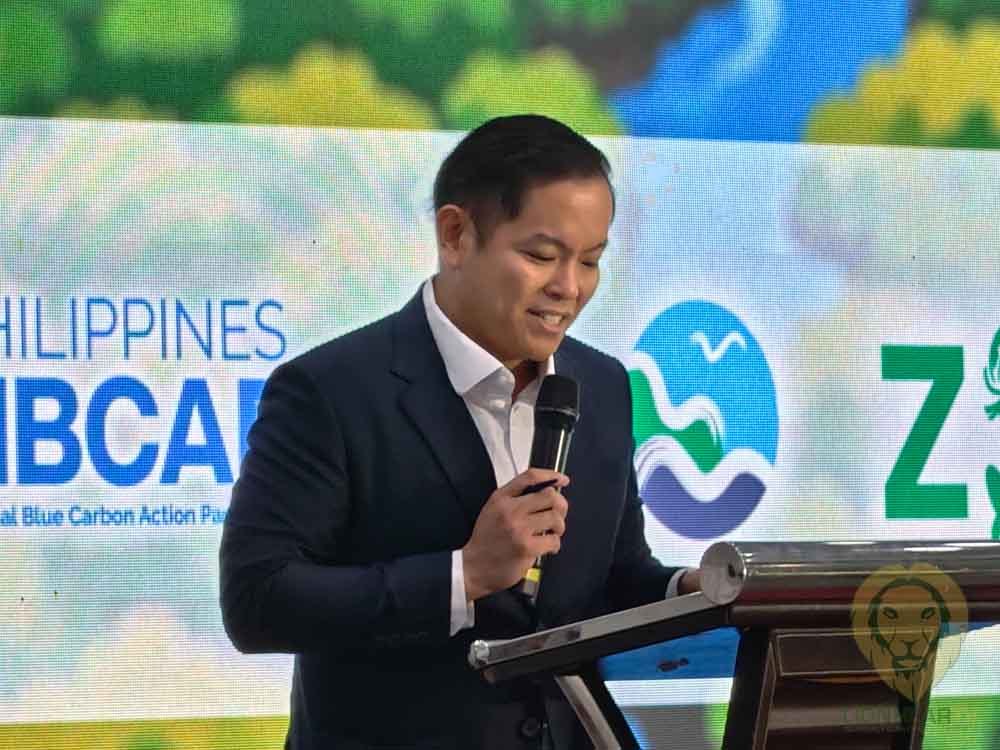
There was also a notable shift in how the event framed the country’s coastlines. They were not described merely as vulnerable spaces needing protection but as frontlines of climate action.
Because it moved the conversation beyond conservation as preservation and toward conservation as strategy.
Throughout the program, discussions returned to the idea that oceans and coastal ecosystems remain powerful allies against climate change—if given the investment, governance, and protection they require.

That perspective gave the event a tone that felt both practical and hopeful. Practical in acknowledging the scale of environmental challenges. Hopeful in recognizing that solutions already exist in nature.
Whether discussing biodiversity targets, policy pathways, or community resilience, the event repeatedly reinforced that climate solutions are not always futuristic technologies.
Sometimes they are ecosystems that have protected communities for generations, and that realization seemed to shape much of the day’s conversations.

By grounding climate action in the restoration of mangroves, salt marshes, and seagrasses, the NBCAP handover event placed nature-based solutions firmly at the center of the discussion.
As the gathering moved toward its close, what emerged was a stronger sense of shared direction. This was not simply an event about environmental advocacy—it’s about governance. Recognizing that protecting blue carbon ecosystems is not the responsibility of one institution alone, but a collective undertaking.
At Microtel UP Technohub, the handover of the National Blue Carbon Action Partnership became more than a milestone event. It became a reminder that the country’s coastlines are not just places to protect from climate change—they are part of how the country can fight it. (with reports from Cassiopeia Calamaya)
