


Amid the continuing rise in temperatures across Region I, DOST-PAGASA emphasized the importance of understanding heat index levels to help prevent heat-related illnesses and emergencies.
The discussion was featured in the eighth episode of “Tekno PreSyensya” titled “Bantay Init: Understanding Heat Index Monitoring and Rising Temperature,” which aired on April 30, 2026.
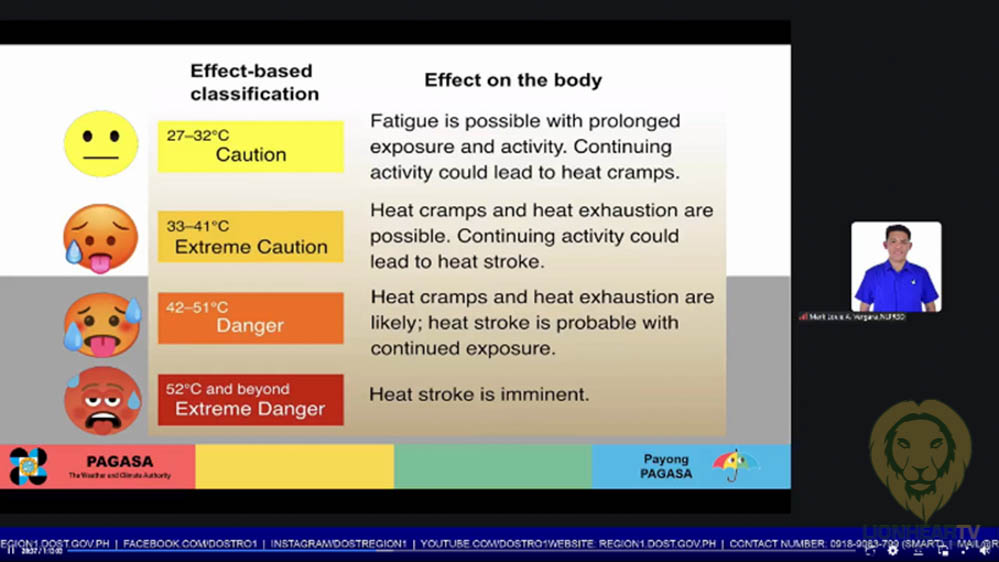 Ipinaliwanag ni DOST-PAGASA Weather Specialist II Engr. Mark Louie A. Vergara ang effect-based classifications ng heat index sa ikawalong episode ng Tekno PreSyensya na pinamagatang “Bantay Init: Understanding Heat Index Monitoring and Rising Temperature.
The episode featured Mark Louie A. Vergara, Weather Specialist II of the Northern Luzon-West PAGASA Regional Services Division, who explained the effect-based classifications of heat index and their impact on public health.
According to Engr. Vergara, the heat index, locally known as “damang init,” refers to the temperature perceived by the human body as a result of the combination of actual air temperature and relative humidity.
He explained that when relative humidity is high, the body’s ability to cool itself through sweating slows down, causing people to feel hotter and increasing the risk of heat-related illnesses.
PAGASA classifies heat index levels into several effect-based categories:
• 27°C to 32°C — “Caution,” where fatigue may occur;
• 32°C to 41°C — “Extreme Caution,” where heat cramps and heat exhaustion are possible;
• 42°C to 51°C — “Danger,” where heat cramps and heat exhaustion become more likely and may lead to heat stroke;
• 52°C and above — “Extreme Danger,” considered highly dangerous with a significant risk of heat stroke.
The weather agency stressed that even during the “Extreme Caution” category, prolonged exposure to heat can already trigger heat-related health conditions.
DOST-PAGASA continues to issue heat index forecasts and advisories, particularly during the warm and dry season from March to May.
The agency encouraged the public to regularly monitor updates through its official website and social media platforms, including the iHeatMap or Interactive Heat Index Monitoring and Prediction system, which provides real-time heat index data across different parts of the country.
Residents were likewise reminded to watch out for symptoms of heat stress such as excessive sweating, dizziness, fatigue, vomiting, and dehydration.
Authorities advised those experiencing symptoms to immediately stop physical activities, rest in shaded or cool areas, and drink enough water. Severe cases, especially those involving loss of consciousness, require immediate medical attention.
Through the “Tekno PreSyensya” program, DOST Ilocos Region continues to strengthen public awareness by providing timely and science-based information on issues directly affecting public health and safety.
The full episode may be viewed on the official Facebook page of DOST Ilocos Region.
