


The Department of Science and Technology, through the Philippine Textile Research Institute (DOST-PTRI), recently led a ceremonial retirement of old Philippine flags ahead of the country’s Independence Day celebration, while renewing calls for more sustainable ways to dispose of national symbols.
In accordance with Republic Act No. 8491, worn-out or damaged Philippine flags must be disposed of through dignified burning. The law states that retired flags should be “solemnly burned to avoid misuse or desecration.”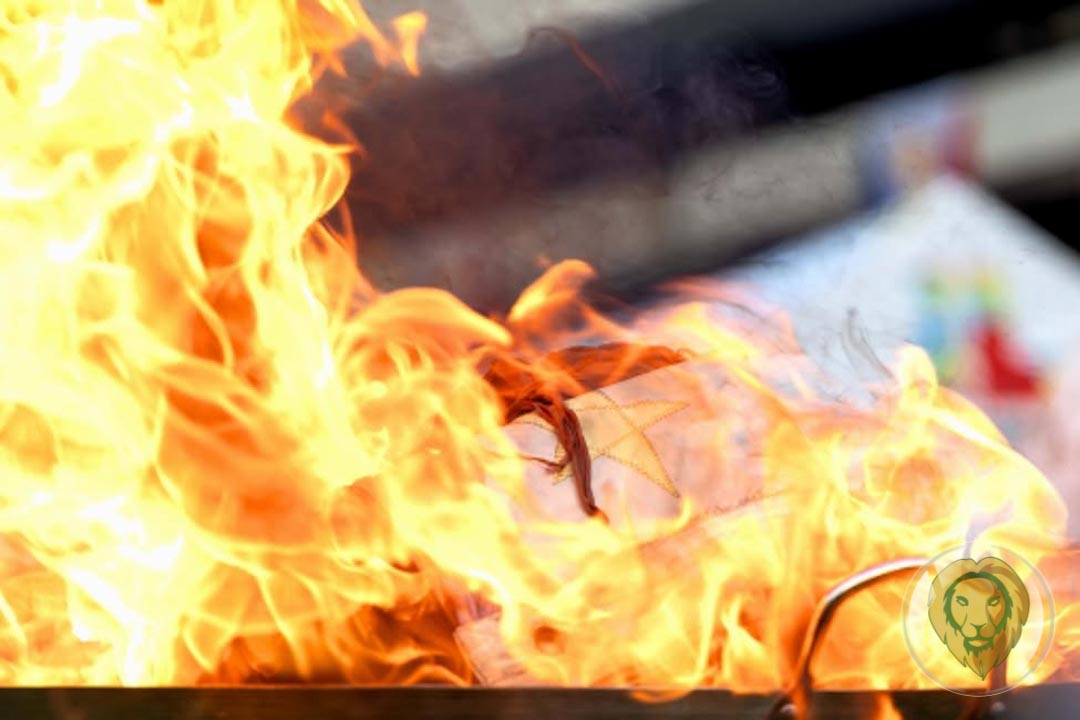
Pinangunahan ng Department of Science and Technology-Philippine Textile Research Institute ang pagsusunog ng mga lumang watawat ng Pilipinas alinsunod sa itinakda ng Republic Act No. 8491Flag and Heraldic Code para sa marangal na disposal ng mga watawat at mga pambansang simbolo ng bansa. (Kuha ni Xyrus Ivan De Gracia, DOST-STII)
During the ceremony, DOST officials emphasized the need to revisit the law and explore environmentally friendly alternatives such as recycling and repurposing retired flags while preserving their dignity and symbolic value.
According to DOST-PTRI Director Julius L. Leaño, the institute is advocating amendments to the provision that mandates burning as the sole method of flag retirement.
“Nakalagay kasi mismo sa titik ng ating batas na talagang ang pagsusunog po ang pamamaraan ng pagre-retiro ng watawat,” Leaño explained.
He said the agency hopes recycling can eventually be recognized as an acceptable alternative because the process transforms the material into something entirely different from its original form.
“Bagkus, binibigyan natin ng panibagong buhay ang watawat,” he added.
Leaño noted that recycling allows retired flags to serve a new purpose instead of simply becoming waste. Through physical fiber recovery, textile materials are separated into reusable fibers that can be utilized in various applications.
According to DOST-PTRI, around 90 to 95 percent of the material from retired flags can be recovered through this process.
Meanwhile, Renato U. Solidum Jr. said the country should begin exploring more sustainable alternatives while maintaining respect for the Philippine flag.
“Luma na ang ating batas kaya kailangan natin itong baguhin. At maaari natin itong gamitin ng tama,” Solidum said.
He stressed the importance of reducing waste and promoting environmental sustainability.
“Siyempre, nakasaad sa batas na dapat itong sunugin. Ngunit sana sa hinaharap, mabago natin ang batas sa pamamagitan ng muling paggamit ng watawat para sa mas kapaki-pakinabang na layunin, lalo na sa ating adbokasiya para sa circular economy. Kailangan nating tiyakin na ang bagong batas ay hindi lamang magbibigay-pugay sa ating watawat kundi magsusulong din ng paggamit ng mas kaunting plastik at mas maraming natural fiber,” he added.
DOST-PTRI continues to conduct research on potential uses for retired flags beyond their traditional disposal. Solidum said the recovered fibers could be repurposed for various applications while supporting the country’s circular economy goals.
Leaño also announced that DOST-PTRI accepts retired Philippine flags year-round. Members of the public may coordinate directly with the institute or through provincial science and technology offices for the proper surrender and retirement of old flags.
To date, DOST-PTRI has collected 3,333 retired Philippine flags for proper disposal and potential recycling initiatives.
As one of DOST’s attached agencies, DOST-PTRI develops science-based, innovative, and inclusive textile solutions guided by the department’s strategic pillars of human well-being, wealth creation, wealth protection, and sustainability under the OneDOST4U: Solutions and Opportunities for All initiative.
