

A new chapter in Korean storytelling is set to captivate global audiences as Perfect Crown prepares for its highly anticipated premiere on April 10, 2026, via Disney+. Blending romance, political undertones, and modern-day elegance, the series introduces a reimagined Korea where monarchy continues to exist alongside contemporary society, creating a world that feels both familiar and intriguingly distant.
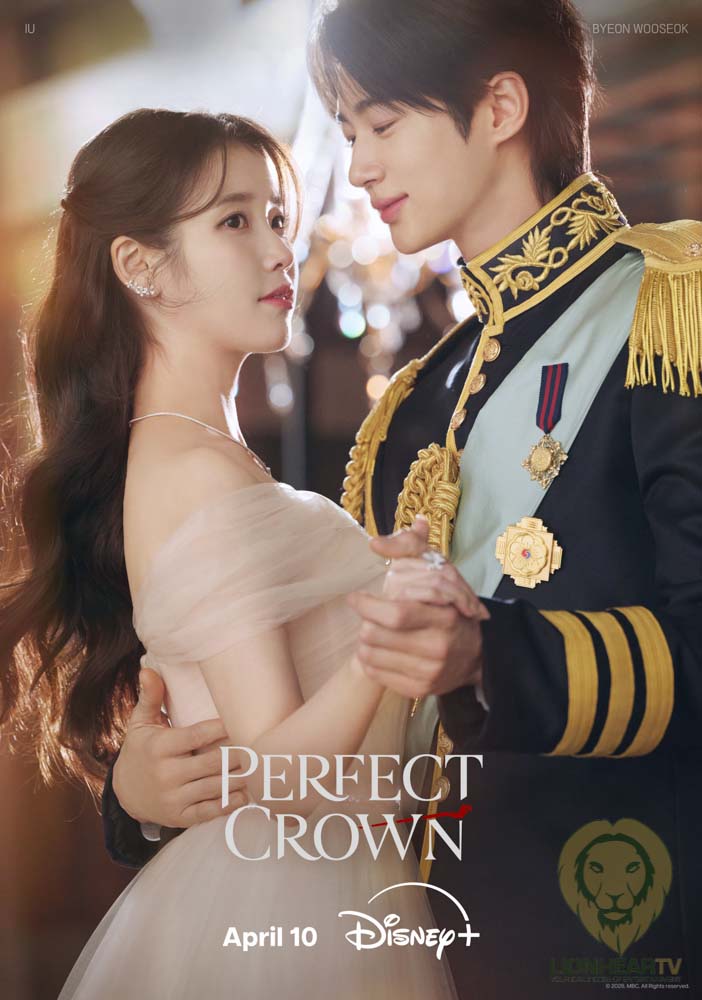
At its core, Perfect Crown is a story about access, identity, and the quiet negotiations people make to belong. It follows Sung Hee-joo, portrayed by IU, a powerful and successful heiress whose wealth grants her influence in business, but not acceptance within the country’s most exclusive royal circles. Despite her accomplishments, she remains on the outside looking in, navigating a world where lineage still outweighs merit.
Refusing to accept the limits imposed on her, Hee-joo takes a bold and calculated step that sets the story in motion. She proposes a contract marriage to Grand Prince I-an, the second son of the royal family, played by Byeon Woo-seok. For Hee-joo, the arrangement is strategic, a gateway into a world that has long excluded her. For I-an, it is a compromise shaped by duty, expectation, and the unspoken pressures of royal life.
What begins as a mutually beneficial agreement slowly unfolds into something far more complex.
The series carefully builds the emotional tension between two individuals who initially view each other as means to an end. Hee-joo is driven, outspoken, and unafraid to challenge tradition, while I-an is reserved, disciplined, and bound by the invisible weight of his position. Their differences create friction, but also a compelling dynamic that evolves as they spend more time navigating both public scrutiny and private vulnerability.
As their relationship develops, Perfect Crown moves beyond the premise of a contract marriage and into a deeper exploration of emotional growth. Moments that begin as calculated interactions gradually reveal genuine connection, forcing both characters to question their original intentions. The series leans into this transformation, showing how proximity, shared struggles, and quiet understanding can reshape even the most carefully constructed boundaries.
Set against a backdrop of royal protocol and modern influence, the story also examines the complexities of power. The palace is not just a symbol of prestige but a space where appearances must be maintained and personal desires often suppressed. Grand Prince I-an embodies this conflict, living a life that demands composure while quietly concealing parts of himself that do not align with royal expectations.
Through his character, the series highlights the emotional cost of duty.
Meanwhile, Hee-joo’s journey reflects a different kind of struggle, one rooted in proving worth in a system that resists change. Her ambition is not portrayed as vanity but as determination shaped by years of exclusion. She challenges the rigid structures of the monarchy, not through rebellion, but through persistence and calculated decisions that gradually shift her position within that world.
Directed by Park Joon-hwa, the 12-episode romantic comedy balances lighthearted moments with deeper, more introspective themes. While it offers the charm and wit expected from the genre, it also grounds its narrative in emotional realism, allowing characters to grow in ways that feel earned rather than convenient.
Visually, the series promises a rich and immersive experience. From grand palace interiors to modern cityscapes, the setting reinforces the duality of the story, where tradition and progress coexist. Every detail contributes to a sense of scale, yet the storytelling remains intimate, focusing on the personal journeys unfolding within that larger world.
The pairing of IU and Byeon Woo-seok is already generating strong anticipation, not only because of their individual star power but also because of the layered dynamic they bring to their roles. Their chemistry is expected to carry the emotional weight of the series, particularly as the narrative shifts from calculated partnership to something more sincere.
Ultimately, Perfect Crown offers more than a romantic storyline. It presents a reflection on how identity is shaped by both circumstance and choice. It asks what it means to belong in a world defined by hierarchy and what individuals are willing to risk to claim their place within it.
As audiences prepare to step into its world, the series positions itself as a compelling blend of romance and social commentary, where love is not immediate, power is never simple, and every decision carries consequence. With its layered narrative, strong performances, and visually striking setting, Perfect Crown stands poised to become one of the most talked-about Korean dramas of the year. (with reports from Shania Haluber)