

‘Avatar: Fire and Ash’, the third installment in James Cameron’s epic sci-fi franchise, delivers once again on breathtaking visuals and technical prowess—but struggles to sustain momentum across its nearly three-hour runtime.
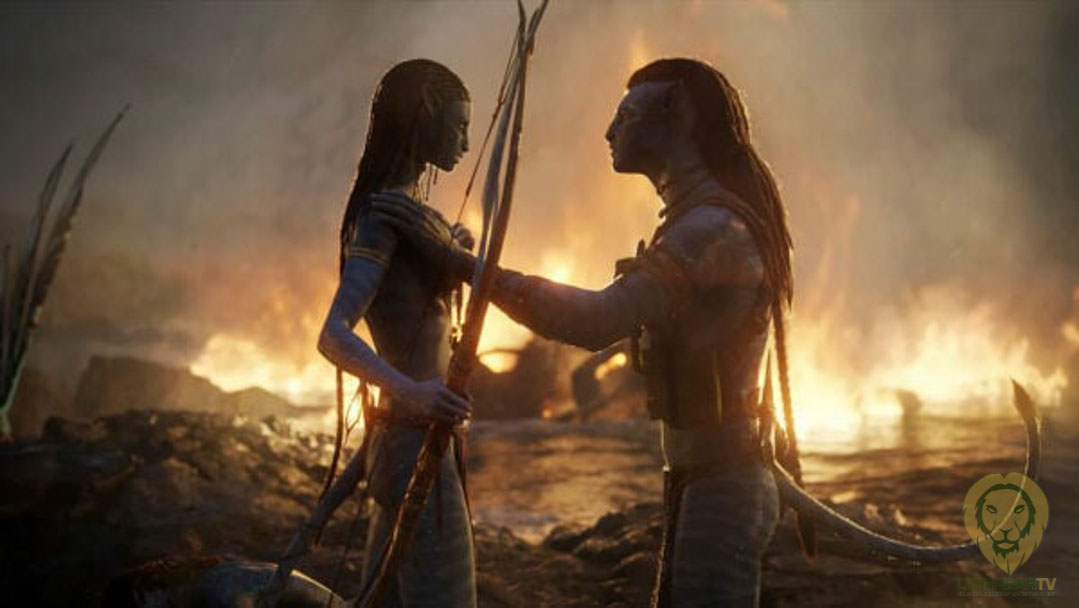
From a purely cinematic standpoint, the film is undeniably impressive. The cinematography and visual effects are top-tier, clearly designed for IMAX viewing, where Pandora’s scale, color, and detail feel immersive and grand. Cameron’s mastery of large-scale action remains evident, particularly in aerial combat sequences and scenes involving massive machinery, reminiscent of his work in ‘Aliens’ and ‘The Terminator’.

Set after the death of Jake Sully and Neytiri’s eldest son, Neteyam, the story explores grief while introducing a new threat: the Ash People, a violent Na’vi tribe whose volcanic homeland was destroyed. Led by Varang (Oona Chaplin), the clan has turned away from Eywa, the All-Mother, and aligned itself with the Sky People. David Thewlis joins the cast as Peylak, leader of the Wind Traders, another newly introduced Na’vi group.

Narratively, the film heavily centers on Spider, making Fire and Ash feel very much like his story. As a human raised among the Na’vi—and the biological son of Jake’s nemesis, Colonel Miles Quaritch—Spider becomes the emotional and plot-driven pivot of the movie. Quaritch, now reborn as a human-Na’vi hybrid clone, seeks revenge against Jake while attempting to reconcile with his estranged son.
Despite the introduction of new tribes, the film feels surprisingly restrained in presenting new creatures, which may disappoint viewers expecting a wider expansion of Pandora’s ecosystem. The Ash People, however, are thematically interesting, flirting with a metaphor about indigenous groups siding with colonizers during historical inflection points.
Musically, Miley Cyrus’ ‘Dream as One’ stands out as a fitting and memorable addition to the film, with strong emotional pull and an undeniable LSS factor.

The biggest drawback lies in pacing. Just as the film seems poised to reach a climax, it frequently slows down, killing momentum. The final act, in particular, suffers from repetitious battle sequences that drain tension instead of escalating it. While the duration is not entirely wasted—there are scattered moments of emotional and narrative payoff—the uneven flow weakens the overall impact.
The story also suffers from overcrowding. With multiple clans, subplots, and a large ensemble cast, character development becomes uneven. Aside from Spider and Kiri, most characters receive limited depth. Jake’s characterization, in particular, feels inconsistent; having once fully embraced the Na’vi way and Eywa’s sentience, he now reverts to military thinking and even questions Eywa—an understandable reaction for a grieving father, but one that feels at odds with his earlier growth.

The film continues the franchise’s spiritual themes, emphasizing family and interconnectedness, but leans heavily into mystical elements, including communing with deceased loved ones through sacred trees. This worldview may resonate with some viewers while feeling excessive or repetitive to others.
Ultimately, ‘Avatar: Fire and Ash’ is often impressive and occasionally thrilling, but its excessive length, crowded narrative, and repetitive final act prevent it from reaching the emotional and storytelling heights it aims for. While it improves on the passivity of ‘The Way of Water’ by pushing the story forward, it still spreads itself too thin.

Rating: ★★★★☆ (3.8/5 stars)
‘Avatar: Fire and Ash’ opens in Philippine cinemas on December 17 and sets the stage for Avatar 4 in 2029 and Avatar 5 in 2031.