
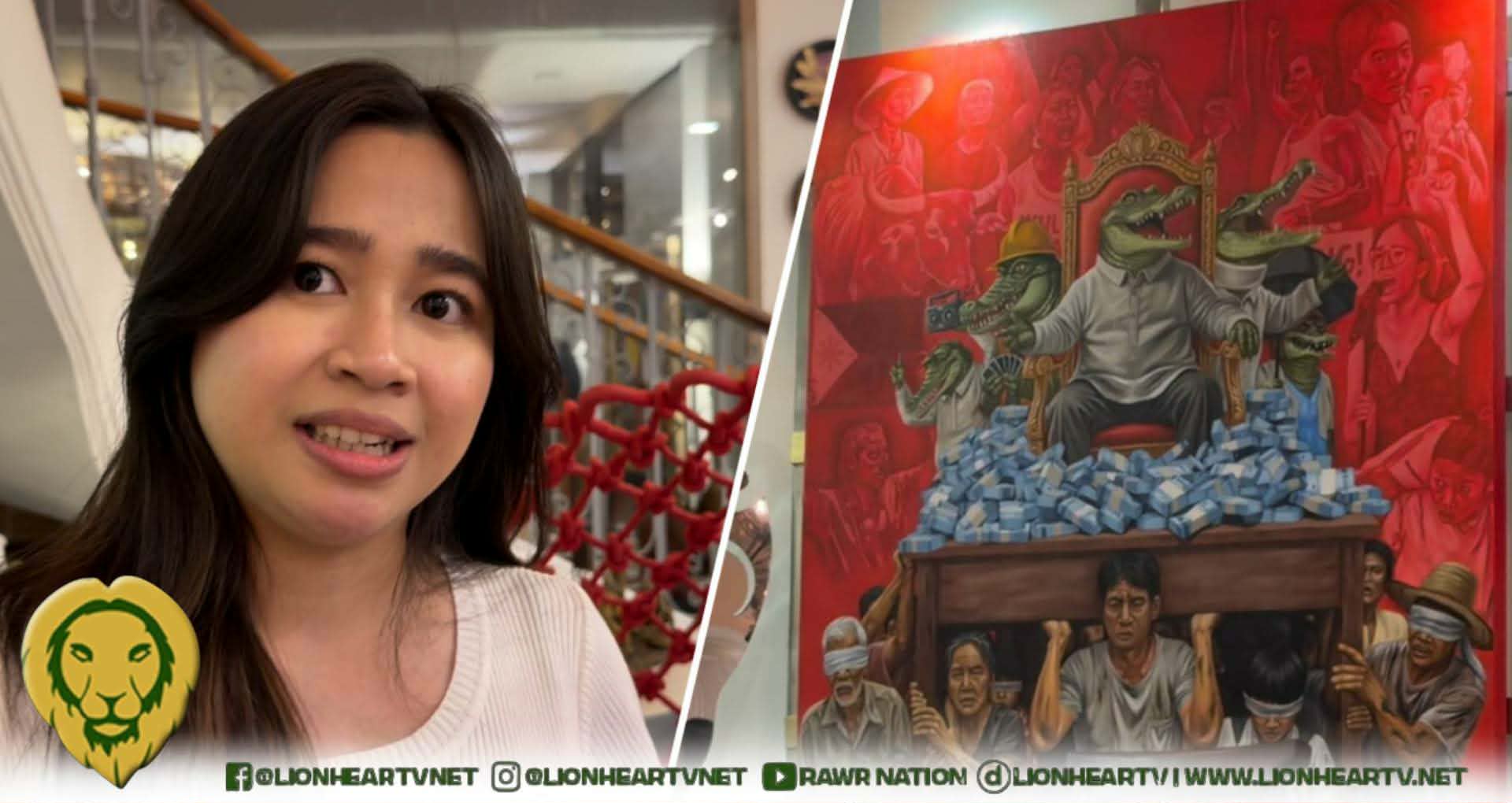

In a quiet corner of Boy Abunda’s home, three large canvases lean against the wall — each one a silent indictment of a scandal that gripped the nation.

They are the work of 22-year-old Julie Anne Baltar, a Fine Arts summa cum laude graduate of Philippine Women’s University and one of the broadcaster’s academic scholars, who has just given LionhearTV an exclusive, on-site look at the paintings and the story behind them.
The collection, which has grown from a single commissioned piece into what is now known as “Buwayaserye,” was born out of the flood-control corruption scandal that erupted into public view. Baltar recalled that Abunda wanted a way to make sure the controversy would not simply fade from memory. “Nagkaroon ng idea si Tito Boy na magpagawa ng paintings about doon, para lang naalala ng mga tao, ma-preserve ‘yung issue na hindi malilimutan,” she said, explaining that as his Fine Arts scholar, she was the natural choice for the project.
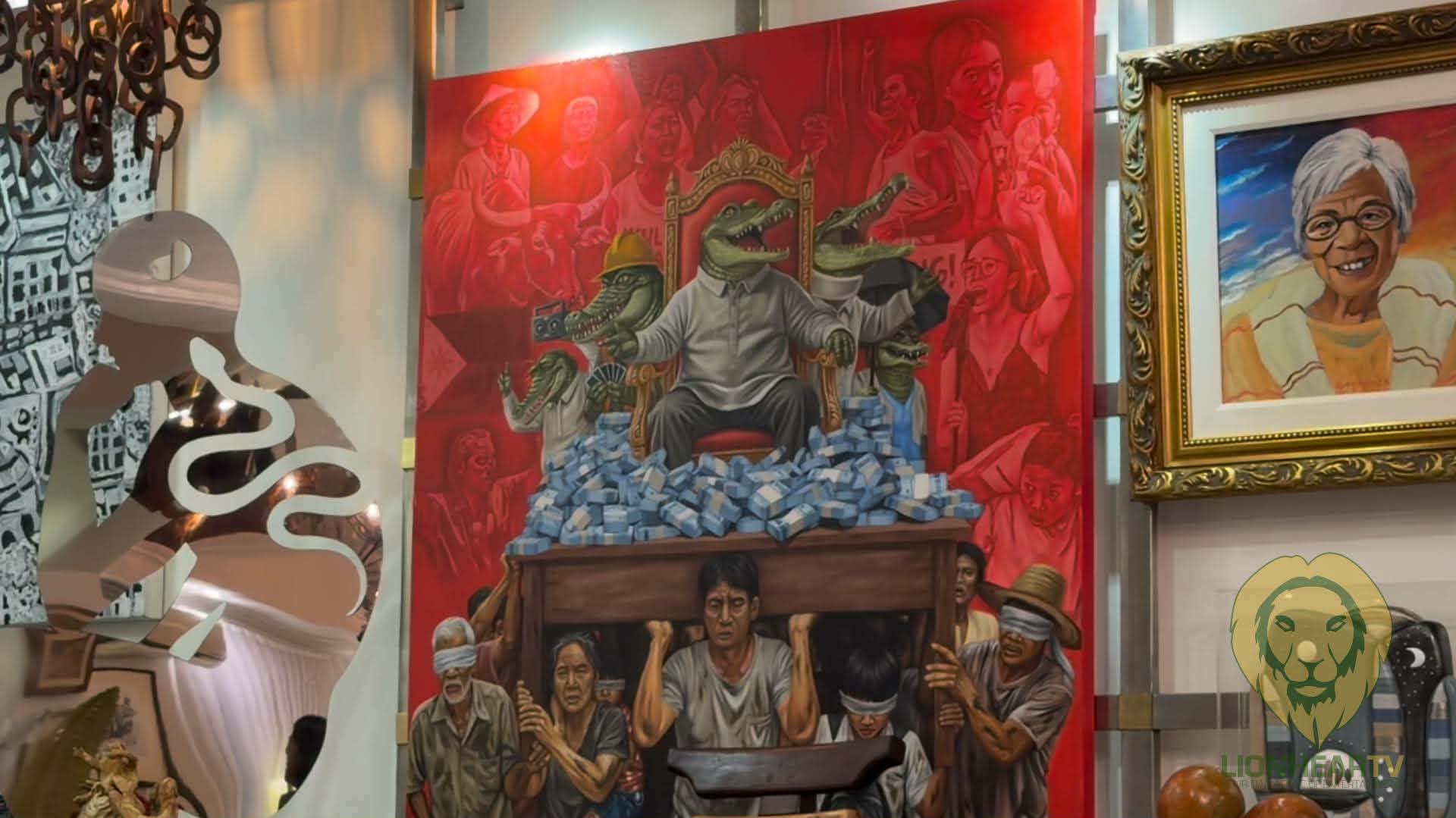
What began as one artwork eventually expanded, first into a trilogy, then into a nine-painting series, as Abunda kept developing the concept further. Baltar described their process as a genuine back-and-forth: he would give her the background and context, they would conceptualize together, and revisions would follow until the vision felt right.
Working closely with someone of Abunda’s stature was not without its pressures. “Nakaka-intimidate po, at first,” Baltar admitted, noting that his reputation for intelligence made this first major project feel especially high-stakes. “Mas pinush ko rin po ang sarili ko noon para ma-satisfy sya kung ano ‘yung idea na gusto niya’ng kalabasan,” she said.
Each painting, she explained, follows a disciplined process — conceptualization first, then execution, at a pace of up to five hours a day, spread out over roughly a month and a half per piece, with deliberate breaks in between so as not to be overwhelmed.
Fittingly, Baltar painted to the sound of Gloc-9’s “Upuan,” a song she remembered rapping along to as a child without fully grasping its meaning. Revisiting it as an adult, against the backdrop of the flood-control anomalies, gave the lyrics new weight for her — a meditation on public officials who forget they are meant to serve, not merely to occupy their seats.
The three paintings each carry a distinct message. The first flips the image of politicians being “carried” by the people they serve, set against scenes of poverty and poor healthcare. The second, titled “Their Luxury is Our Misery,” turns its gaze on so-called nepo babies who benefit from — and stay silent about — their parents’ alleged corruption. The third, “Usog, Luhod, Lunod,” examines how control over institutions and the justice system keeps accountability just out of reach.
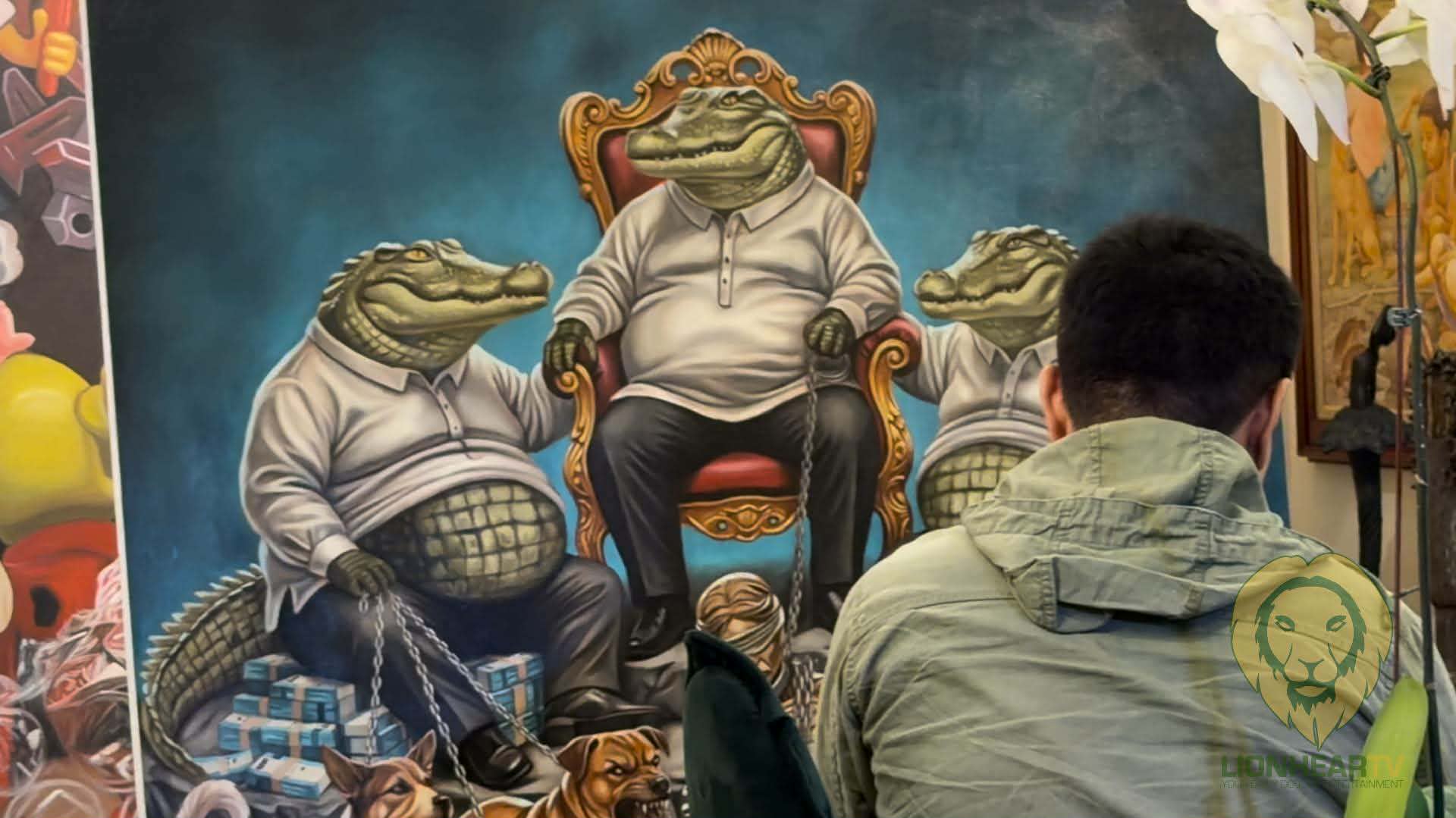
For Baltar, whose own path to a diploma was nearly derailed by financial hardship before Abunda’s scholarship intervened, the paintings carry a personal charge beyond the political. Asked what art means to her, her answer was simple and resolute: “Kapag nawalan ka na ng pagkakataon na magsalita, sining ang magsasalita para sayo.”
