
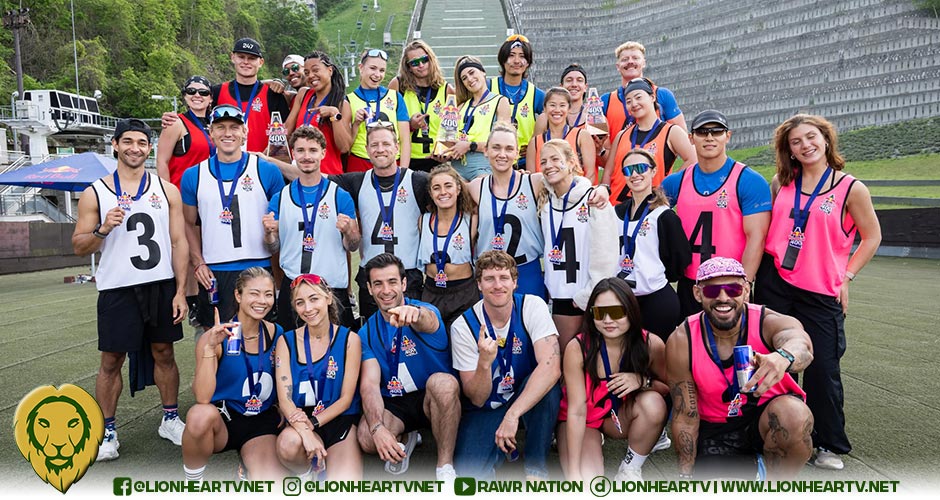

Imke Salander (Germany), Stien Edmund (Belgium), Heber Cannon (USA) and Ryota Takano (Japan) battled their way up to the top of the Okurayama Ski Jump Hill in Sapporo, Japan in this unique version of the original Red Bull 400 race, where team-based fitness challenges tested the participants’ speed, strength and body & mind skills in the ultimate 400m uphill challenge.
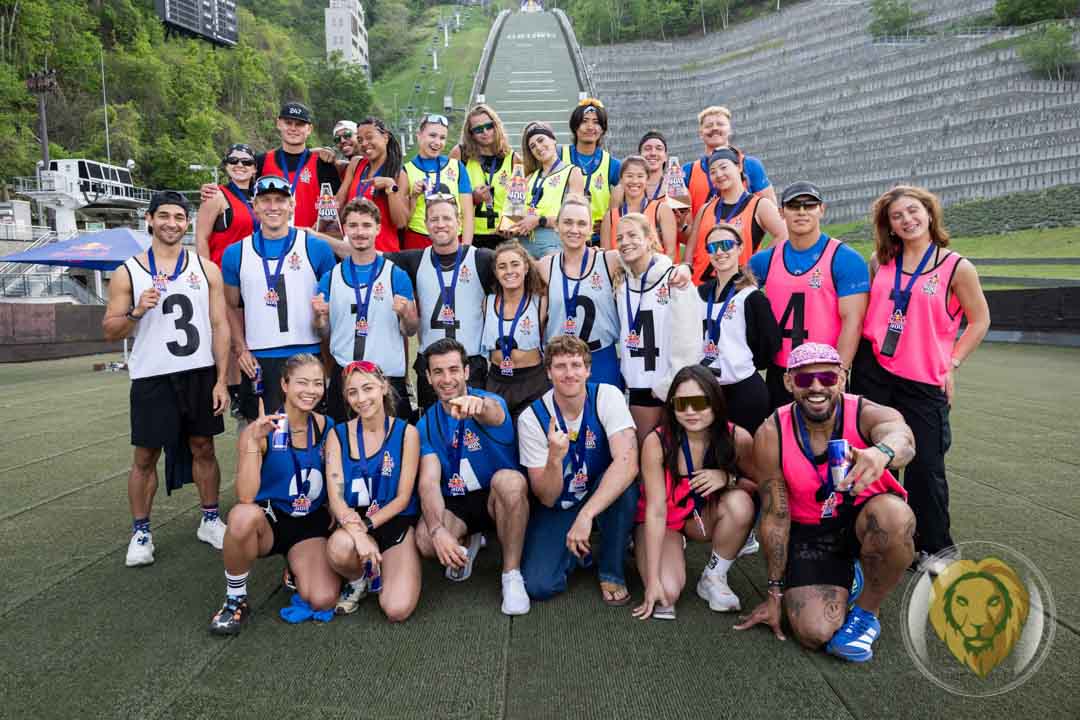
15 May 2026, Okurayama Ski Jump Stadium, Japan.
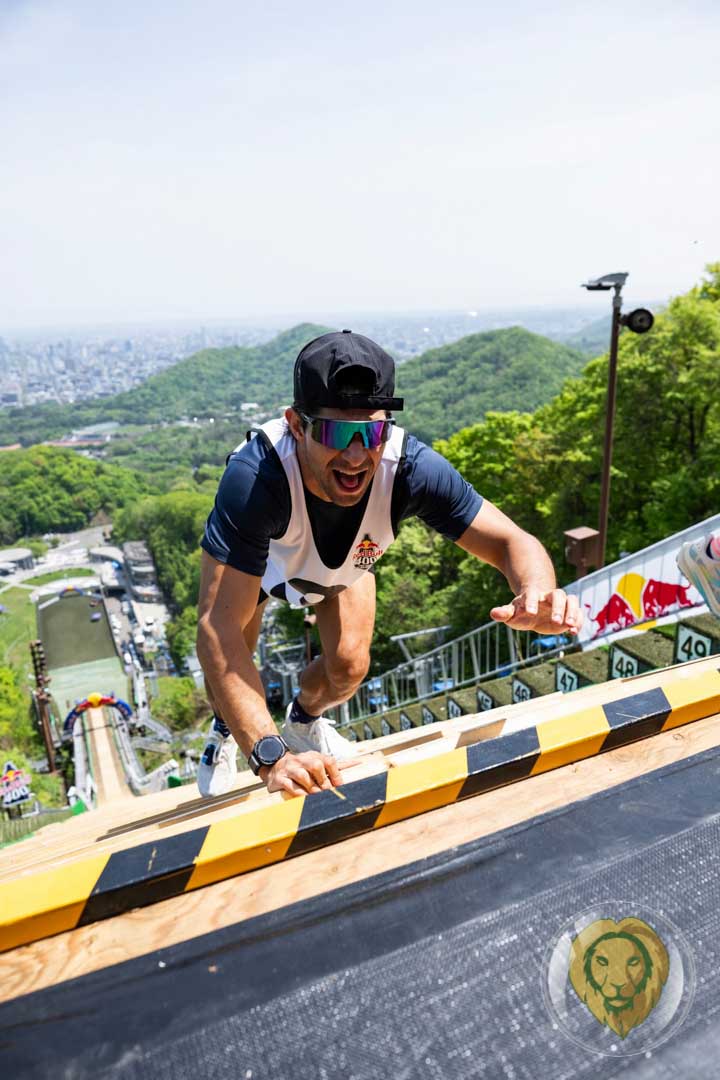
28 of the world’s fittest creators have undergone the ultimate fitness challenge, the Red Bull 400 Team Ascent, in a unique race format that placed their strength, agility and ability to build bonds at speed under the microscope as they raced 400m up the Okurayama Ski Jump hill. Representing the Philippines was Filipino creator Wil Dasovich, who competed alongside global names such as Korean athlete Yun Sung-Bin.
This race format was a first of its kind, taking the iconic Red Bull 400 – widely renowned as the world’s toughest uphill race, where participants are pitted against a 400m challenge up a ski jump slope – and amped up the difficulty. The creator-only contest saw 28 of the planet’s fittest social media personalities from 20 countries face three unique fitness challenges across three race heats. Unlike the standard Red Bull 400, they’d be competing in teams of four.
Imke Salander (Germany), Stien Edmund (Belgium), Heber Cannon (USA) and Ryota Takano (Japan) came out on top to take home the inaugural global title of Red Bull 400 Team Ascent.
“The Red Bull 400 Team Ascent is different to the Red Bull 400 because it is a team effort,” said winning captain Imke Salander, who finished third at Red Bull 400 Lahti, Finland, in 2024. “You have to hype each other up, you have to support each other, it’s not like an individual race.
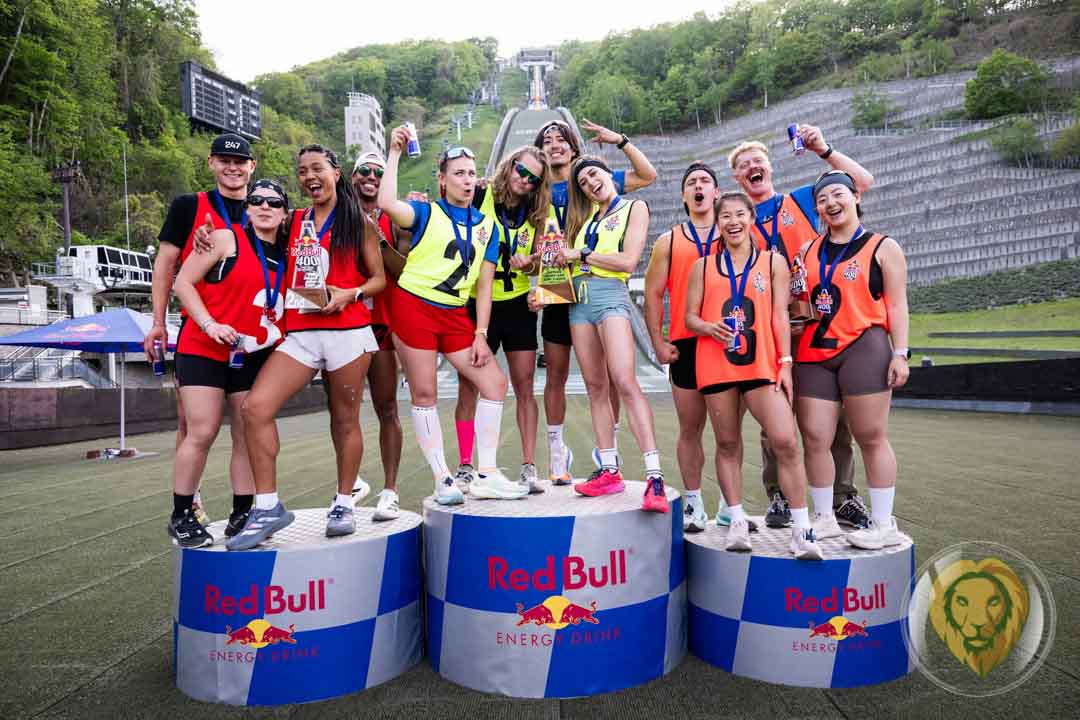
The quartet beat teams including Jannis Reichmuth (Switzerland) and Taylor Learmont (Canada) in the final, using skills such as mental resilience and cooperation, unparalleled physical abilities, reserves of strength, and superior knowledge around fueling their efforts across the day to come out on top in a close-fought contest.
“Succeeding in a sport like this, you have to like to suffer,” said Heber Cannon, one third of the filmmaking fitness trio, The Buttery Bros. “You have to go into the pain cave, make yourself comfortable and dive in because you’re going to be there for a while. The power output required to get to the top of that hill is unlike anything I’ve done, but we got it done and it was really fun.”
“It’s a tough course; you need some cardio, strength and basically everything – it’s a combination,” added Stien Edmund.
The location also posed its own unique difficulties. Held on the Okurayama Ski Jump in Hokkaido’s capital Sapporo, the fitness creators would have to gain 130m of vert during the 400m race (a height similar to the city’s iconic Sapporo TV Tower landmark), while gradients would max out at 37° – an incline steeper
than the summit section of Mount Fuji. A regular host of the original Red Bull 400 since 2017, the mountain’s course record is 3m 23.13s, set by Ultra Runner and Red Bull Athlete, Japanese Ruy Ueda in 2019.
What is Red Bull 400 Team Ascent?
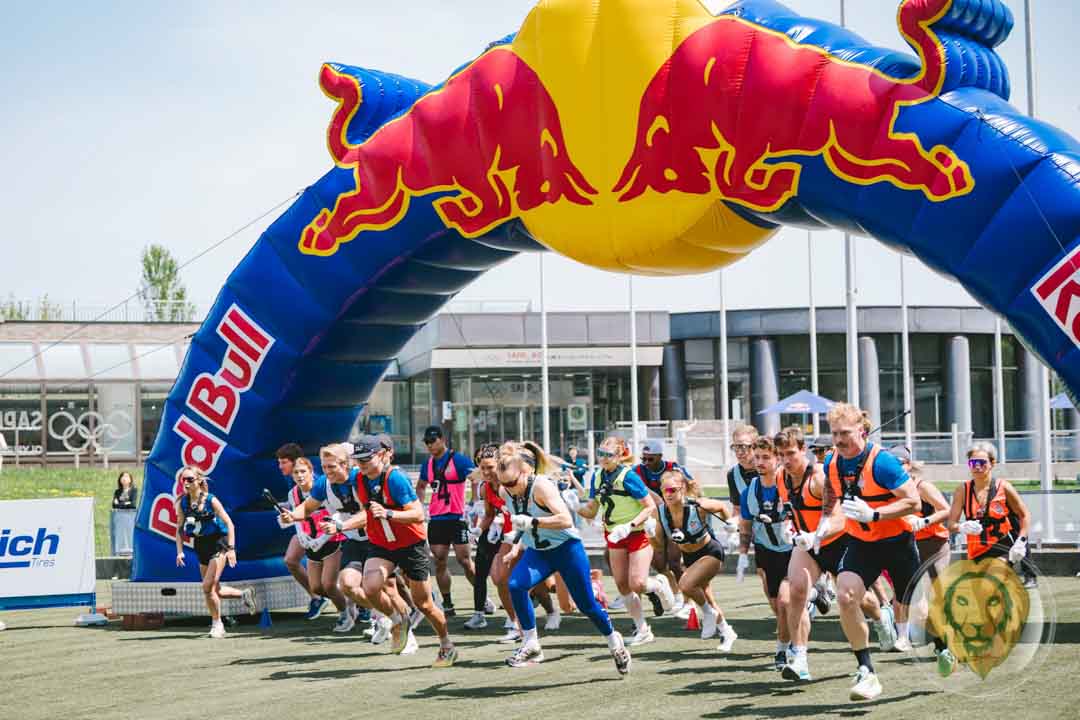
Teams were made up of four creators – two men and two women – led by a captain who had previously competed in a Red Bull 400. Remaining team members were selected randomly by a draw at the event’s welcome dinner. With a little over 24 hours between team selection and competition day, the quartets needed to gel quickly.
For the contest, all teams went head-to-head in a mass start, and while the course of the race was the same and the aim in each of the three heats was to reach the top the fastest, the creators would face three unique challenges en route to the summit that would test their speed, strength and team-building skills.
The first race was devised by Japanese ultrarunner and Sapporo course record holder, Red Bull Athlete Ruy Ueda and was a team-centred twist on the standard Red Bull 400 of running up the hill. While the objective was for each creator to reach the top as fast as possible, points would be awarded by individual rank and then combined for a team score – meaning a team could be better off working together to get to the top rather than relying solely on the abilities of its strongest runners.
“Running ability and running uphill ability was tested in this challenge,” said Ruy Ueda. “All of them are experienced in fitness and therefore they have power, that’s why I wanted to organise a challenge that tested their ability to simply run and climb.”
Challenge two was created by 2024/2025 HYROX Elite 15 World Champion and Red Bull Athlete Alexander Roncevic and was centred on strength. In addition to the 400m uphill battle, each team would have to carry a combined 40kg to the finish. The total weight could be spread across the four creators, but once a team member had reached the top, there was no going back to help another with their load, meaning the right distribution was crucial from the start. Speed was still key too – the fastest team to complete the challenge gaining the most points, while the other teams would be awarded a descending number of points based on their ranking.
“Last year, I did Red Bull 400 while wearing a backpack and it was very hard,” added Ueda. “But everybody was able to climb up with the weights and that really impressed me. It was enjoyable to see the teamwork that went with how to distribute weights and it was impressive to see that with teamwork they can overcome challenges.”
The top three teams from the first two heats qualified for the final, which was a relay that combined the speed and strength elements of the first two runs with a new mind & body challenge devised by Parkour Red Bull Athlete Jason Paul. The unique test honed in on the bonds that the creators had made during the experience and would see two members of each team compete as a pair, where the catch was that they would have one leg tied together, meaning they would have to move in sync to reach the hill’s halfway point. The baton would then be passed on the next team member, who would face the next challenge.
“For my unique sporting challenge, I didn’t just want to test the creators in endurance or strength – we know we can do that – but I wanted to test their coordination,” said Jason Paul. “We tied two creators together and that way, they have to work hard as a team, but also do something challenging coordinatively, which Parkour is very much about – it’s moving the body in new ways, finding new challenges, doing movements that are unfamiliar. Often, the hardest moves in Parkour are not the ones that need the most strength or flexibility or endurance, but they’re the ones that are really technical. And that’s what I wanted them to feel.”
The final’s three challenges allowed the team members to specialize based on their own unique strengths. After the body & mind challenge, the strength task took up the next 100m before the final 100m was a sprint to the finish.
The winning team paired Stien Edmund and Heber Cannon for the body & mind challenge, while Ryota Takano took up the strength mantle. They were in second place until the final challenge though, where team captain Imke Salander used her speed, agility and Red Bull 400 experience to overcome the time gap and sprint to the summit.
Road to Red Bull 400 Team Ascent
The road to Red Bull 400 – Team Ascent started well before finals day, with each individual creator sent a dedicated training plan devised by Ueda, Roncevic and Paul to help them prepare for the unique challenges that they would face. After arriving in Japan, there were a further two events – a Parkour tutorial led by Jason Paul and shake out run led by Ruy Ueda – to help the creators gel in their new teams.
One of the creators were The Buttery Bros – a trio of American fitness enthusiasts and filmmakers who pit themselves against some of the world’s toughest strength and cardio challenges.
“The events leading up to the Red Bull 400 – Team Ascent were fantastic, especially the Parkour one where we were interacting with our teams,” said Marston Sawyers. “We’d just met the night before, we weren’t entirely sure what everyone’s personalities were like, and when you’re interacting on a Parkour movement, which I don’t think anyone had really done before, and you’re having to trust your team mate literally going upside down on cement, it requires a lot of faith in other humans that they will catch you.
“Outside of that, there were cool little interactions over dinner that really bonded this energy of getting to know the people and all of the other creators. They’re from so many different countries and so many different walks of life, so it’s really cool to find a common ground and know that we all share a love of fitness, doing cool stuff and things that are challenging us.”
Red Bull 400 continues
While the dust has just settled on the Red Bull 400 Team Ascent, the action continued Saturday 16 May in Sapporo with the 2026 edition of the standard Red Bull 400. The Red Bull 400 tour then continues in locations around the world, with Courchevel, France (July 2026), Liberec, Czech Republic (August 8), Bischofshofen, Austria and Planica, Slovenia all confirmed for 2026.
Find out more at Red Bull. Media can download a wide variety of moving and still images, which is free of charge for editorial usage in Red Bull Content Pool.
