


A tense story conference at B Hotel in Quezon City introduced Roots of Contagion as a high-stakes botanical survival thriller that transforms a familiar academic environment into a sealed arena of fear, containment, and escalating biological danger. Presented to media and guests, the film was positioned as both an edge-of-the-seat horror narrative and an awareness-driven story centered on disease prevention, hygiene, and community responsibility.
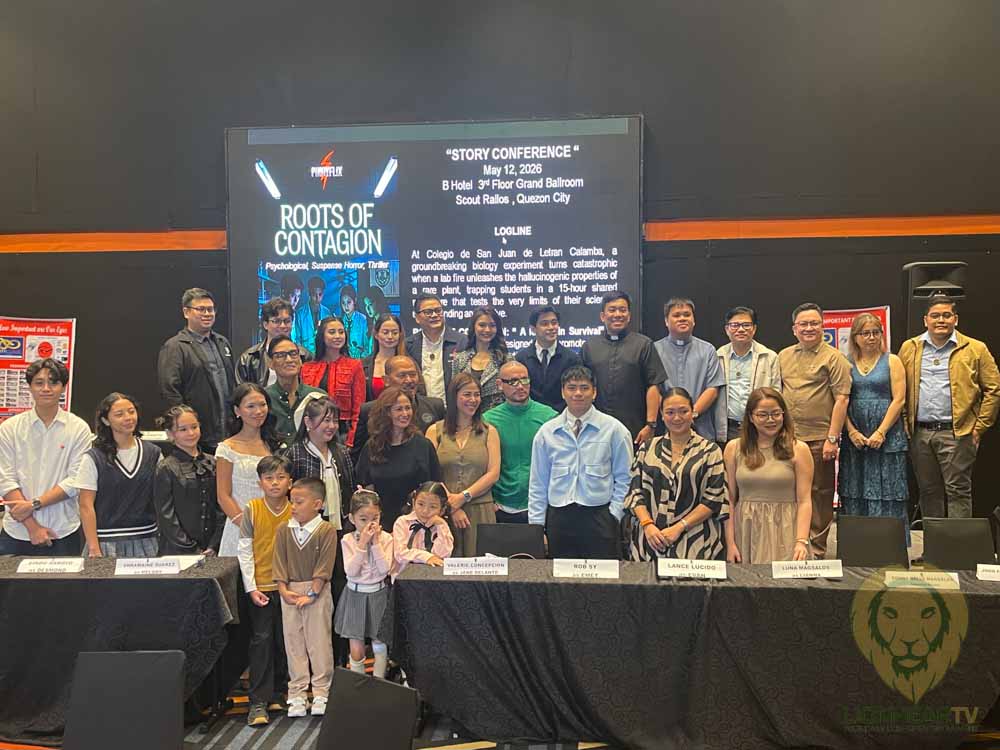
Set within Colegio de San Juan de Letran Calamba, the story follows a group of senior high school biology students whose academic fieldwork leads them to the discovery of Datura metel, a rare plant species long thought to be extinct. What begins as a breakthrough in botanical research quickly shifts into a campus-wide crisis after a lab incident triggers the release of dormant viral properties within the organism. The school is placed under immediate lockdown, turning hallways, laboratories, and classrooms into confined spaces where survival becomes uncertain, and trust begins to fracture.
At the heart of the narrative is Leslie Torres, played by Kate Yalung, a highly driven biology student whose obsession with rare plant species places her at the center of the outbreak’s origin. Her character becomes both discoverer and unwilling key to the unfolding catastrophe, carrying the emotional weight of responsibility as the situation spirals beyond control. Around her, the story builds a complex network of relationships shaped by pressure and fear, including Chesca Avila, portrayed by Althea Ablan, whose dominant social presence is challenged by the collapse of normal campus hierarchy, and Trevor Alvarez, played by John Arcenas, whose loyalty is divided between personal relationships and survival instincts.
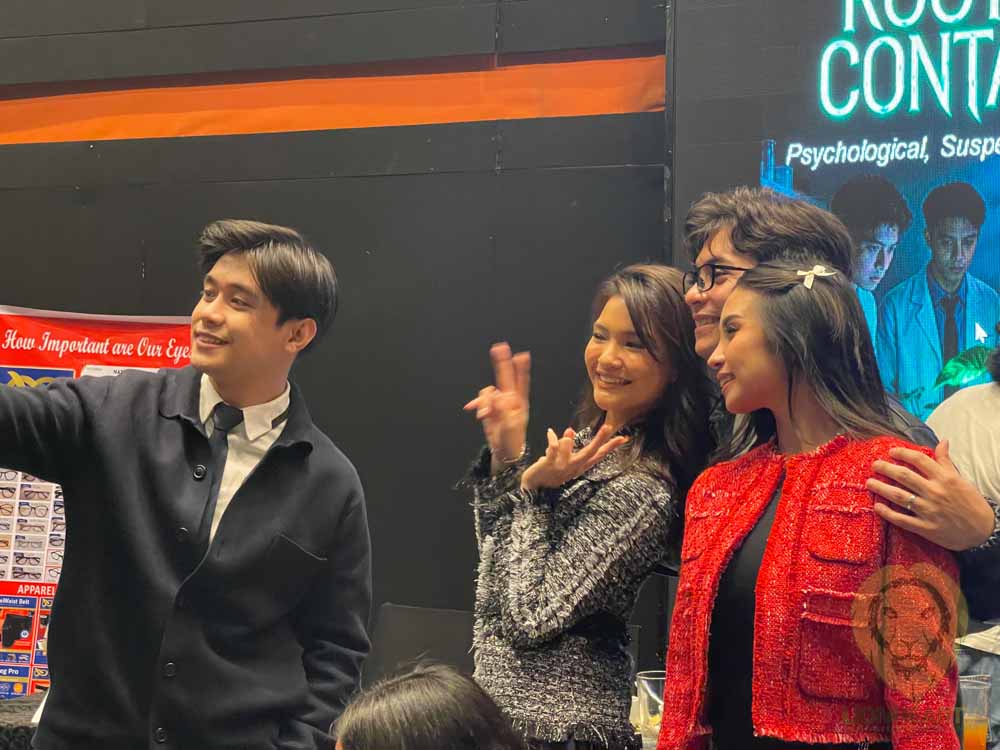
The tension intensifies through Kurt Almeda, portrayed by Abdul Rahman, whose physical strength and reputation as a campus bully evolve into reluctant leadership as chaos spreads. Supporting characters add further dimension to the survival narrative, including students documenting events through social media, academically inclined peers attempting to analyze the biological threat, and grounded figures who act as stabilizers in an increasingly unstable environment.
The story conference also revealed that the danger extends beyond the plant itself. Faculty members and campus authorities emerge as central forces in the lockdown, with figures such as Dr. Ramirez, Ms. Jane Delante, and campus security personnel enforcing strict containment protocols under increasingly questionable motives. Their presence introduces a parallel conflict where control, secrecy, and survival intersect, deepening the film’s moral tension.

Outside the campus, the narrative expands through the families of the trapped students, whose attempts to intervene add urgency and emotional weight to the unfolding crisis. These parallel storylines highlight the divide between institutional decisions and personal desperation, reinforcing the film’s broader commentary on preparedness and response during emergencies.
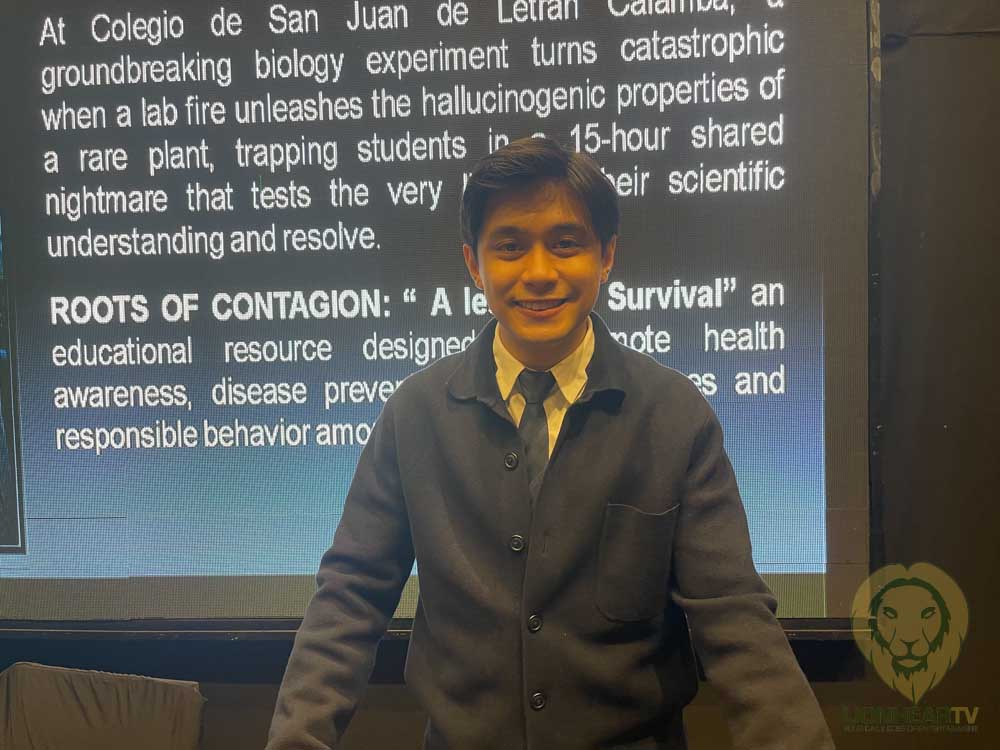
Directed by Jose Jr. Olinares, Roots of Contagion is framed as more than a conventional horror film, blending scientific realism with suspense-driven storytelling. The production emphasizes that fear in the film is not only derived from the spreading organism but also from human decisions, systemic failures, and the consequences of unchecked ambition.
With its layered narrative of science gone wrong and survival under containment, Roots of Contagion positions itself as a grounded thriller where knowledge becomes both weapon and vulnerability, and where every choice inside the lockdown carries life-or-death consequences. (with reports from Lau Balocos)
